Image


Fast, affordable Internet access for all.
In late October 2019, Christopher travelled to the D.C. area to attend a Broadband Communities Economic Development event and while he was there, he sat down with Executive Director Adrianne Furniss and Senior Fellow Jon Sallet from the Benton Institute for Broadband & Society. This week, we get to sit in on their conversations about the recent change at Benton from "foundation" to "institute" and about their recent report, Broadband for America's Future: A Vision for the 2020s.
First, Christopher speaks with Adrianne, who discusses the reasons why the organization has recently changed in order to stay current with their mission and with the times. She talks a little about the history of Benton and describes some of the reasons for developing the report.
Christopher spends most of the interview with Jon Sallet, who authored the report and who has a long career in antitrust and communications. After working in D.C. in telecommunications and Internet policy for several decades, he's seen the influence of the Internet grow. In this report, Jon analyzes stories and situations from around the U.S. and establishes a vision that will help us move forward to connect as many people as possible. He and Christopher discuss the four major factors that, if nurtured correctly, can help us integrate broadband into all sectors of society and maximize its usefulness. Christopher and Jon give special time to competition, an issue that arises repeatedly in the work at Benton and in our work at the Institute for Local Self-Reliance.
The interview will spark your interest in the report that provides more depth into the way broadband can be used as a versatile social tool. Broadband for America's Future: A Vision for the 2020s [PDF] is filled with examples in which local communities have been able to expand local connectivity to achieve goals that went beyond better Internet access.
This show is 41 minutes long and can be played on this page or via Apple Podcasts or the tool of your choice using this feed.
Transcript below.
We want your feedback and suggestions for the show-please e-mail us or leave a comment below.
Listen to other episodes here or view all episodes in our index. See other podcasts from the Institute for Local Self-Reliance here.
Thanks to Arne Huseby for the music. The song is Warm Duck Shuffle and is licensed under a Creative Commons Attribution (3.0) license.
Residents and businesses in Carencro, in the northern region of Lafayette Parish of Louisiana, now have access to LUS Fiber. The expansion is the latest step in efforts to deploy the Fiber-to-the-Home (FTTH) network to every community within the Parish.
Growing Footprint
In 2018, the publicly owned network began offering services in Youngsville and Broussard, an expansion that had been more than two years in the making. As the utility adds more expansions to their list of accomplishments, they'll also add knowledge on how to contend with challenges and demand will grow.
According to Teles Fremin, Interim Director of LUS Fiber:
“The residents of Carencro have expressed their interest in LUS Fiber for many years. We are extremely honored that so many residents throughout Lafayette Parish appreciate the value that LUS Fiber can bring to their communities.”
Local leaders in Carencro look forward to the economic development potential that comes with bringing fast, affordable, reliable connectivity to the community of about 9,000. The suburb of Lafayette has shown slow but steady population growth since 2000, and high-quality Internet access will keep that trend alive.
Currently, much of the residential community relies on Cox Cable and AT&T DSL for Internet access. Businesses have very little access to fiber connectivity; LUS Fiber will be able to fill that gap.
Carencro Mayor Glenn Brasseaux:
“The tremendous growth in residential and commercial development in Carencro makes this a great time for LUS Fiber to offer services here. We welcome LUS Fiber and are pleased that our citizens and businesses will have a range of advanced options to choose from for their telecommunications needs.”
Learn More About LUS Fiber
In 2018, Christopher has a great interview with Terry Huval, one of the men who spearheaded the development of the network and has since retired from the utility. Check out the interview to learn more about the development of LUS Fiber:

Which would you choose — a broadband subscription with download speeds of 15 Megabits per second (Mbps) or a much faster gigabit plan for the same price?
The choice is clear, and it’s one that low-income households in Hillsboro, Oregon, may soon make, thanks to the city’s planned municipal fiber network. Earlier this year, Hillsboro announced that its new broadband utility, HiLight, will offer gigabit connectivity for only $10 per month to qualified low-income residents. In comparison, Comcast’s Internet Essentials program provides low-income families in the city speeds of just 15 Mbps for roughly the same monthly cost.
Hillsboro isn’t the first community to leverage its publicly owned fiber network for digital inclusion efforts. Municipal networks across the country are providing low-cost connectivity, affordable devices, and digital skills trainings to their communities, bringing the educational, economic, and healthcare benefits of broadband access to more people.
Defining Digital Inclusion
Digital inclusion is the practice of ensuring digital equity, which the National Digital Inclusion Alliance defines as “a condition in which all individuals and communities have the information technology capacity needed for full participation in our society, democracy and economy.”
Broadband availability is only one of many “digital divides” that explain who is and isn’t connected. For instance, income and affordability also play a role. According to the Pew Research Center, adults with annual incomes of $75,000 or more are almost twice as likely to have broadband access at home than adults with annual incomes of less than $30,000. Among those without home broadband access, the high cost of a subscription is most commonly cited as the top reason why, Pew reports.
After five years of planning, meetings, and overcoming obstacles, the town of Estes Park has officially launched its Trailblazer Broadband Internet service to pilot neighborhoods.
Necessity is the Mother of Invention
The Broadband journey started back 2015 when the residents of Estes Park experienced catastrophic outages due to ice and flooding which led to long telecommunications outages. It bacame obvious to community leaders that the town needed a different solution that entailed reliability and redundancy, not available from the incumbent provider. The city held a referendum and with the support of 92 percent of those voting, the town of Estes Park opted out of SB 152.
Fast, Affordable, Reliable Connectivity for Residents and Tourists
Estes Park, considered the gateway to the Rock Mountain National Park, depends on its tourism industry and current Internet speeds may deter vacation goers who need to remain connected to work during time away from work. With the introduction of high-quality Internet access at their resorts and lodging, Estes Park will have an edge over their competition as well as ensuring future economic development opportunities for the entire region.
For town officials, staff, and the majority of residents, the implementation of high-quality Internet access is a welcomed project.
“This is truly a tremendous milestone for the community,” said Town Administrator Travis Machalek, at the town's official opening ceremony celebration on September 25th.
The expected project construction cost is around $26 million. Based on an anticipated take rate of 30 - 40 percent, the community expects to pay off the investment in 10 - 12 years.
Trailblazer Broadband is being rolled out to pilot neighborhoods and is expected to serve the entire town in three to five years. The schedule is based primarily on construction feasibility, population density, and potential revenue.
Check out this marketing video on Trailblazer Broadband:

Fourteen years ago, voters in Waterloo, Iowa, overcame a campaign aimed to prevent them from developing publicly owned Internet infrastructure. They voted to allow the city to create a municipal telecommunications utility in the fall of 2005, but the idea languished. Recently, however, leaders in Waterloo have taken up the initiative and are moving ahead.
Time to Advance
At their September 25th meeting, trustees on the Waterloo Telecommunications Utility board unanimously voted to hire a consultant in order to move forward on the plan that voters approved back in 2005. Two local organizations have conducted studies on connectivity in the Waterloo area within the past year.
“I think it’s time,” said board member Rich Kurtenbach, “We’ve got communities all around us that have their own utilities when it comes to broadband.”
Since 2005, the community has never approved funding to develop a publicly owned broadband network. The Telecommunications Utility board has met to discuss the possibility of asking the community for funding on several occasions and at one time requested enough to hire a consultant once, but the measure failed. The issue has been on the shelf since 2014 and, according to Chris Wedland of the city attorney’s office, “This board has had a unique history and it has had large gaps in its operating history.” Now that the board is active again, their first step has been to select a consultant to help them with next steps.
Waterloo doesn’t have a municipal electric utility like many of the other Iowa cities that have already deployed Internet network infrastructure. As Mayor Quentin Hart commented, “At some point we’re going to have to get some experts in here to start helping us move the process forward.”
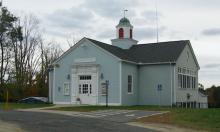
Community members in Shutesbury, Massachusetts, are now receiving fast affordable, reliable connectivity in their homes and businesses delivered via their publicly owned broadband infrastructure.
It's Happening and People Are Loving It
In late August, officials from Shutesbury announced that they expected testing and verification to be completed in early September. The company hired for installation had scheduled more than 200 premises for September and was making plans to hire additional installers to speed up the process. Shutesbury expects to have most of the town connected to the network by the end of 2019.
In May, 87 percent of the town had already signed up and subscribers have continued to trickle in. Folks in Shutesbury are now beginning to obtain the Internet access they’ve been chasing for more than five years.
No, Charter, Not You
In 2017, the town rejected a proposal from Charter Spectrum that would have connected 96 percent of the community of around 1,700 people. The offer from the cable comany had come about when the state agency tasked with distributed state funding suddenly had a change of heart. The Massachusetts Broadband Institute (MBI) decided that the big corporate ISPs, which had refused to upgrade services in the area in the past, should have another opportunity to use state funding to build high-quality Internet access infrastructure. Read more about decisions from MBI that delayed connectivity to many rural towns and strengthened monopoly power for companies that had refused to connect the region.
Less than a year ago, we reported on Dalton, Georgia’s transition to becoming the first gigabit city in the state. In August, the community took it up a notch when they began offering 10 gigabit residential Internet access from Dalton Utilities’ OptiLink.
As Foretold by Hank
When we interviewed Chief Technical Services Officer Hank Blackwood last November about the new gigabit tier, he told us that 10 gig plans were in the works. The boost in capacity is part of the city’s long-term vision to lure more tech innovators to Dalton. In addition to attracting firms able to offer more jobs, community leaders want to provide an environment ripe for entrepreneurs who may find working from home the secret sauce.
From the press release announcing the new 10 gig service for $349.95 per month:
“We are proud to offer our residents the very best in ultra-high-speed Internet and next-generation video, delivering services wanted and needed by so many communities,” says Dalton Utilities’ Hank Blackwood, Chief Technical Services Officer. “Very few areas have this level of fiber optic capability.”
Subscribers can still sign up for OptiLink at gigabit, 100 Megabit per second (Mbps), 75 Mbps, and 50 Mbps services. When bundled with phone or OptiLink’s new VidLink service, subscribers can cut stand-alone rates by around $5 per month. All tiers provide symmetrical service.
Check out residential OptiLink rates here.
Sweet Sixteen
Since 2003, residents and businesses have enjoyed access to fiber optic connectivity from Dalton Utilities. Like other public utilities, in the late 1990s utility management originally decided on fiber optic infrastructure investment as a way to better manage and control other utilities such as electric, water, gas, and water. As Dalton developed their supervisory control and data acquisition (SCADA) system, larger businesses in the community approached them and asked for connectivity via the fiber network.

Applicants in the first round of the U.S. Department of Agriculture’s (USDA’s) ReConnect Loan and Grant Program requested over $1.4 billion to finance rural broadband expansion, exceeding available funds by more than $800 million. Despite tough competition, much of the funding may go to community broadband networks, since more than half of the applicants are publicly or collectively owned, including electric and telephone cooperatives, local governments, and federally recognized tribes.
As was the case in previous federal programs, most community broadband providers applying for ReConnect funds plan to deploy modern, high-speed fiber networks. Unlike the large telecom monopolies, which are letting their rural networks rot even while raking in government subsidies, community owned networks frequently leverage federal funds to deploy future-proof fiber optics in their rural service areas.
ReConnect Review
In 2018, Congress authorized $600 million for the ReConnect program to expand high-quality connectivity in rural America by providing grants and loans to Internet access providers. The first round of ReConnect applications closed earlier this summer with $200 million available in each of the three funding categories:
Earlier this year, Congress approved an additional $550 million for the program, which the USDA will distribute after awarding round one funds.
On August 29th, people in Fort Collins, Colorado, gathered together at the city’s Lincoln Center to celebrate the launch of Connexion, their municipal fiber optic network.
Establishing Rates
Prior to the get together, the utility announced pricing and services for residential subscribers. Symmetrical gigabit Internet access will be available for $59.95 per month; residents will also have the option to sign-up for 10 gigabit speeds for $299.95 per month.
Business rates are still in the works.
Connexion is also offering bundles that include voice and video. While they’re still developing details on video service, subscribers can choose a voice and Internet access package at this early stage. The utility will not impose data caps and, as expected, there are no contracts.
Connexion has expressed their commitment to network neutrality, a policy that helped drive the local comunity to develop the municipal network.
Sweet Launch
The event was especially glorious to folks involved in the 2017 vote to change the city’s charter. At the time, big corporate ISPs dedicated close to a million dollars toward influencing the vote to prevent the amendment. Measure 2B was on the ballot to update the city’s authority to invest in a publicly owned network. With a de facto duopoly on Internet access in Fort Collins, incumbents wanted to halt any change, but the measure succeeded and the initiative moved forward.
Learn more about how a group of grassroots organizers was able to defeat Comcast and friends in episode 282 of the Community Broadband Bits podcast. We spoke with Glen Akins and Colin Garfield, two residents that worked tirelessly to lead the initiative.

Hillsboro, Oregon, has decided that fast, reliable, and affordable Internet access is a top priority. As they continue to fine-tune their fiber optic network plans, community leaders recently announced pricing and speed tiers for HiLight, expected to launch in 2020.
$55 Gig!
This summer, the Hillsboro City Council confirmed proposed pricing to reflect the community's commitment to bringing high-quality Internet access to each premise; HiLight will offer symmetrical gigabit Internet access for $55 per month to residents. According to the Oregonian, the rate is about half what Comcast charges. HiLight will also provide a 4 gigabit option for $300 per month, which is comparable to Comcast’s price for 2 gigabit service.
Subscribers will also have the option to sign-up for VoIP services for $20 per month, but the utility will not offer video.
Low-income households will be able to subscribe to gigabit service for $10 per month, but the community is still working out details for eligibility. Comcast’s plan for similarly situated folks allows Internet access at 15 Megabits per second (Mbps) download while providing slower upload speeds.
Like many other publicly owned networks, Hillsboro plans to offer symmetrical service to allow subscribers to take full advantage of fiber optic connections. With the ability to send as well as receive data-intensive files, subscribers are more likely to work from home, complete distance learning educational programs, engage in telehealth apps, and partake in innovative technologies.
The Timeline
The city plans to take an incremental approach and dedicate about 10 years toward completion of citywide deployment while avoiding debt. Hillsboro has decided to allocate around $4 million each year for the next 7 years toward the build. City financial experts estimate the network will begin generating revenue in 11 years and will pay for itself in 17 years.