
Another aspect of RUC’s community focus is the fact that it provides customers with two local TV channels, in contrast to Charter, which offers none. In the wake of a Wisconsin law that removed requirements that cable operators provide financial support for PEG (public, educational and government) access channels, Rice says RUC is working on plans to continue operating its local channels, to make them more attractive and, in doing so, to further differentiate its service from Charter’s in terms of being responsive to the local community.
Oklahoma City Network Offers Unique Research Opportunities
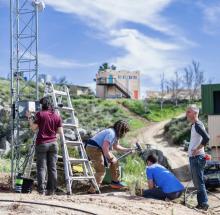
Though it may not be a major selling point for communities considering building a network, they can offer tremendous research potential. Local communities are more approachable for researchers and more likely to form mutually beneficial partnerships. Consider an interesting story about the Oklahoma City Wi-Fi network and weather researchers.
This is a massive network -- at 555 square miles, the largest in the world. Local universities have teamed up with the city to closely monitor the weather constantly throughout the network. This data is useful in tracking how air currents move around a city - which is really helpful for those trying to understand and mitigate terrorist chemical or biological weapon attacks... for instance.
This is just one of some 200 applications the City uses its network for:
Steve Eaton, information security architect for Oklahoma City, characterizes the project as the most unique application the city utilizes. The Wi-Fi network currently runs about 200 applications that range from video surveillance to GPS tracking systems.

Comments
Weather Research Net
To hell with the terrorist jive. The key focus is TORNADOES. There's a region in the Midwest called "Tornado Alley" (Wikipedia) where that kind of weather does millions of dollars in damage and kills people every year. And Oklahoma is in the middle of that region.
Also, consider the recent blizzards in Washington, D.C. and points north. Think how a network of weather stations and traffic cameras could help in dealing with the snow drifts. Also, what if webcams and lidar units were mounted to cover blind spots in rail transit systems. There might be a reduction in accidents as a result. The costs could be shared when the ROW is shared between passenger and freight services.
Tornadoes
Just for the record, I am familiar with tornadoes as a Midwest resident. And yes, I did realize the network is also used for that but I try not to mine articles for content, leaving a reason to click thru to the original source. But thanks for noting there is more to the story!
Post new comment