Image


Fast, affordable Internet access for all.
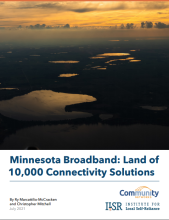
In a new report, the Institute for Local Self-Reliance showcases the diverse range of approaches communities and local Internet Service Providers (ISPs) have taken to expand affordable, high-quality Internet access in Minnesota. It includes a series of case studies that detail how communities are meeting the connectivity challenges of a broken marketplace shaped by large monopoly service providers.
Download Minnesota Broadband: Land of 10,000 Connectivity Solutions [pdf] here.
The profiled projects include municipal networks, public-private partnerships, cooperatives, and private investment. They run from the most rural areas of the state to Minneapolis. Some examples include:
Ry Marcattilio-McCracken, co-author of the report and Senior Researcher with ILSR’s Community Broadband Networks initiative, said of the report’s findings:

Our new report, Minnesota Broadband: Land of 10,000 Connectivity Solutions [pdf], showcases the diverse range of approaches communities and local Internet Service Providers (ISPs) have taken to expand affordable, high-quality Internet access in Minnesota. It includes a series of case studies that detail how communities are meeting the connectivity challenges of a broken marketplace shaped by large monopoly service providers.
The profiled projects include municipal networks, public-private partnerships, cooperatives, and private investment. They run from the most rural areas of the state to Minneapolis. Some examples include:
Ry Marcattilio-McCracken, co-author of the report and Senior Researcher with ILSR’s Community Broadband Networks initiative, said of the report’s findings:
Minnesota communities and local ISPs have found creative and sustainable ways to build future-proof networks across the state, despite a broken marketplace and state barriers that favor slow-moving, out-of-state monopoly providers clinging to outdated technology. Lawmakers must stand up for the cities and towns that sent them to the legislature, and remove the obstacles that prevent a more competitive market and local broadband solutions.

A recent announcement by fiber network builder, operator, and consulting firm Lit Communities signals both a proof of concept for a new public-private partnership and that progress is accelerating for residents in one region of Ohio who will soon enjoy Fiber-to-the-Home (FTTH) service from a new provider.
In a press release last week [pdf], the company announced it had secured significant funding from private firms Stephens Capital Partners and The Pritzker Organization to support its work in partnering with communities that are looking to leverage their existing information infrastructure to finish connections to residents in cities and towns around the United States. The news means an infusion of cash for Lit Communities’ local last-mile venture, Medina Fiber, which will bring new fiber service to tens of thousands of homes in Medina County (pop. 180,000) at lower costs by utilizing the existing publicly owned, middle-mile open access Medina County Fiber Network (MCFN).
Publicly Owned Middle-Mile Supporting Privately-Owned Last-Mile
The collaboration will allow Lit Communities to save money and expedite residential rollout by connecting to MCFN. It is also a sign of success for local officials who have been looking for ways to use the existing infrastructure to spur high-speed Internet access beyond government buildings, schools, and commercial transport to hundreds of thousands of Ohioans in the near future.
MCFN will continue to own and operate the middle-mile portion of the network, with Medina Fiber owning and operating the last-mile residential connections as a private entity, paying MCFN for backhaul with the fees it generates from households that choose to subscribe.
Privately-owned broadband infrastructure builder and operator SiFi Networks is sprouting roots in cities from California to the Commonwealth of Massachusetts.
The Fullerton FiberCity network was SiFi’s first FiberCity — a privately built, financed, and operated open access network. Network construction in Fullerton started in November 2019 and involved over 600 miles of micro-trenching underground fiber, a technique designed to minimize traffic and neighborhood disruption sometimes associated with ripping up roads to install fiber conduit. The first residential customers were hooked up in June, with an anticipated completion date in the fall of 2021.
And while construction of the fiber network in Fullerton isn’t quite finished yet, eight other communities across the country are in the process of becoming the next SiFi fiber cities.
Salem
In Salem, Ma., SiFi Networks announced at the end of November it had completed a “construction trial” which is a “practice run” ahead of the actual construction of the citywide network, slated to start this spring.
Once completed, the Salem project, in which SiFi Networks is partnering with GigabitNow, will offer the city’s 43,180 residents an alternative to the monopoly services of Comcast. GigabitNow, which will be the Internet Service Provider (ISP) for Salem FiberCity, estimates they will be able to begin providing services as early as summer 2021.
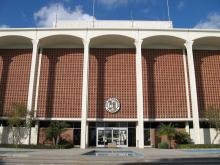
In the city of Fullerton, California (pop. 140,000), privately owned infrastructure builder and operator SiFi Networks has turned on the first section of what will be a city-wide, open access Fiber-to-the-Home network. The project makes Fullerton SiFi’s first FiberCity — a privately built, financed, and operated open access network it plans to duplicate in more cities across the country in the future. When complete next fall, the Fullerton FiberCity network will pass every home and business in the city, with the company's subsidiary, SiFi Networks Operations, selling wholesaling capacity to as many Internet Service Providers (ISPs) as want to enter the market.
A Different Approach
Image
SiFi’s FiberCity model remains somewhat unique in the United States, and is much more common in Europe and Asia. CEO Ben Bawtree-Johnson attributes their success to cracking the economic code for private investment in open access information infrastructure, which has seen more attention in recent years as investors and fund managers have seen opportunities. “[O]ur vision really is to create as many last-mile fiber optic networks as we can across the USA in a long term sustainable fashion,” Bawtree-Jobson remarked on an episode of the podcast last fall. “[W]e're all about long term, dry, low yielding, risk mitigated investments, so everything we do is based around 30-year plus type investments.”
It was about five years ago that we brought consultant Eric Lampland from Lookout Point Communications into the office for episode 80 of the Community Broadband Bits Podcast. We've completed more than 300 other episodes since then, but his insight still rings true on the many indirect cost savings of community broadband networks. As activity in our office slows down a little for the holiday season, we thought this would be a great time to revisit the conversation with Eric to remind listeners of some of the reasons why so many communities are interested in taking control of their connectivity options with public investment. Enjoy!
Today, Lisa and I are joined by Eric Lampland for a discussion of how a community could justify building a community owned network from the indirect benefits that it would create, including the savings that each household realizes from competition driving down prices. Eric Lampland is the CEO and principal consultant of Lookout Point Communications, which helps local governments that are building a network or considering an investment.
Eric and I start by discussing how quickly the cost savings per household add up to equal more than the cost of building a network and we digress from there, covering other topics related to community owned networks. This includes how big cable companies would respond to this approach.
I have to note that most community networks have not been justified on this basis - the vast majority of community networks were designed to pay their full costs and they are doing so. Here, we discuss the general benefits of these networks that are often sidelined in the policy discussion and how they alone may justify a fiber network.
Toward the end, we begin discussing open access, something we will likely return to in the future as Eric has long both advocated for open access and has some insights into the technical challenges of building such a network.
This show is 25 minutes long and can be played on this page or via Apple Podcasts or the tool of your choice using this feed.
Transcript below.
We want your feedback and suggestions for the show-please e-mail us or leave a comment below.
Listen to other episodes here or view all episodes in our index. See other podcasts from the Institute for Local Self-Reliance here.
Thanks to Haggard Beat for the music, licensed using Creative Commons.
This spring, SiFi Networks and Fullerton, California, announced that they will be working together to deploy an open access Fiber-to-the-Home (FTTH) network across the city of 140,000 people. SiFi will fund and build the network and has already signed up two providers to offer Internet access service to the public. This week, Christopher speaks with Ben Bawtree-Johnson, CEO of SiFi Networks.
Ben and Christopher discuss the plan, the company, the partnership, and the project. They talk about the advantages of encouraging competition wherever the market allows and other reasons for advancing the open access model. In addition to encouraging multiple ISPs in the community, the infrastructure will allow smart city applications and innovation to thrive.
Project construction will include microtrenching, a method that SiFi feels confident will work in Fullerton and considers key to the deployment schedule. Ben provides some detail on the project's “three-layer” open access model that will include a separation of infrastructure, operations, and provision of services.
Learn more about the different open access models on our open access page.
This show is 25 minutes long and can be played on this page or via Apple Podcasts or the tool of your choice using this feed.
Transcript below.
We want your feedback and suggestions for the show-please e-mail us or leave a comment below.
Listen to other episodes here or view all episodes in our index. See other podcasts from the Institute for Local Self-Reliance here.
Thanks to Arne Huseby for the music. The song is Warm Duck Shuffle and is licensed under a Creative Commons Attribution (3.0) license.

Hillsboro, Oregon, has studied the possibility of investing in high-quality fiber connectivity for residents and businesses since 2014. After considering the pros and cons, this northwest city of 105,000 has decided to move ahead, with spring 2019 as a target launch date of its own Internet access service.
Communications Utility and Beyond
In January, the City Council approved establishing a communications utility, creating a communications fund, and taking the necessary steps to develop a dig once policy in the city’s code. Elected officials had not yet decided if the community would pursue a city-wide network, but wanted to create an environment that would offer future options and encourage private sector partners to invest in Hillsboro.
The city already owns fiber optic resources that it uses for municipal facilities, schools, traffic signals, and other purposes. They plan to use that network as a foundation to expand in order to bring better connectivity throughout the community. With a wider network, Hillsboro hopes to adopt public Wi-Fi, better public safety notifications, and applications for smart-meters for utility services as well as real-time parking and traffic updates.
Keeping it Affordable for All Segments
Hillsboro plans to offer gigabit connectivity at around $50 per month but hopes to provide the same symmetrical service to lower-income households at a lower rate. In addition to equitable access for all income levels in Hillsboro, the city wants to ensure that students have the ability to compete.
“For our students, for our businesses, and for our entire community, we are moving forward now to expand the City’s fiber network to include Internet service,” said Hillsboro Mayor Steve Callaway. “We want to ensure affordable, equitable high-speed access to keep Hillsboro competitive with cities around the world."
The city wants to ensure that network neutrality protections remain in effect in the community for individuals and businesses. Encouraging entrepreneurs and making high-quality access with good customer service affordable for all subscribers are more goals they intend to pursue.
Incremental

At this year's Broadband Communities Summit in Austin, Texas, the Coalition for Local Internet Choice (CLIC) hosted a special program on April 30th. As part of the program, Blair Levin presented the keynote address. His comments focused on the process used by the FCC's Broadband Deployment Advisory Committee (BDAC) as they examine connectivity in the U.S. and make recommendations on the best ways to expand deployment.
Levin is a strong, open minded advocate for universal broadband access. He's currently Non-Resident Senior Fellow from the Metropolitan Policy Project at the Brookings Institution, but he's also Executive Director of GigU and advises both private and public organizations. Levin has held past stints at the Aspen Institute and the FCC where he oversaw the development of the National Broadband Plan; he's filled many other roles throughout his career. Levin's many years in public, private, and academic sectors have given him experience and an understanding of a wide range of challenges. He’s also obtained a keen insight into possible outcomes. In his keynote address, Levin predicted that the current BDAC process needs to be improved or wealth will find its way to private enterprises with nothing to gain for the public.
In his speech, Levin noted his own experiences with both local and federal governments and that the former were typically “responsive, pro-active, effective and respected in building communities that improve the lives of their residents.” He goes on to state that he believes that local governments need more authority and freedom if we are to move the country forward.
Levin believes that the BDAC is a good idea — bringing multiple stakeholders in the conversation on how we can deploy broadband faster in the U.S. After all, whether we rely more on wireless solutions or FTTP, we need to deploy more fiber and do it faster and more efficiently. He also believes that it’s important to achieve a balance when considering best practices due to the intimidating economics of network deployment. He also goes on to note that there has been some value achieved from BDAC, including the recommendation that states adopt one touch make ready policies.
Do municipal fiber networks offer lower prices than the their competitors? Yes, almost always, according to a study from Harvard's Berkman Klein Center called Community-Owned Fiber Networks: Value Leaders in America.
David Talbot, a Fellow at Harvard's Berkman Klein Center for Internet and Society, joins us for episode 289 of the Community Broadband Bits podcast to discuss the study, conclusions, and challenges. He was last on episode 162 to talk about a report they did on muni fiber in Massachusetts.
We talk about the challenges of doing an analysis like this, the range of results, and how pricing from munis tends to not only be lower but also more transparent.
This show is 19 minutes long and can be played on this page or via Apple Podcasts or the tool of your choice using this feed.
Transcript below.
We want your feedback and suggestions for the show-please e-mail us or leave a comment below.
Listen to other episodes here or view all episodes in our index. See other podcasts from the Institute for Local Self-Reliance here.
Thanks to Arne Huseby for the music. The song is Warm Duck Shuffle and is licensed under a Creative Commons Attribution (3.0) license.