
open access

Canada Joins Rest of World With Open Access Requirement

Last year, when the Berkman Study (pdf) by Harvard (commissioned by the FCC) revealed the secret behind impressive broadband gains in nearly every country over the past decade, we hoped the FCC would learn something from it. Maybe it did, and maybe it didn't -- what is clear is that it did not have the courage to embrace pro-competition policies.

Canada's telecom regulator, the Canadian Radio-television and Telecommunications Commission (CRTC) has shown more courage in confronting powerful interests that want to monopolize the future of communications.

They have decided to require the big telecom carriers share their network with independent ISPs in an open access type arrangement.

Until this decision, the established telecom companies could "throttle" third-party services, by slowing them down or limiting downloads.

In Canada, these huge companies also claim that such regulations will decrease their investment in next-generation networks, likely a hollow threat. Regardless, it is a strong argument for public ownership of essential infrastructure. How many communities should be denied next-generation communications because some massively profitable global company is having a snit with the regulator?

Far better for communities to be self-determined, by building their own networks. When networks are run as infrastructure, they are open to independent service providers, just as the roads are open to shipping companies on equal terms.

Canada's regulator has made a difficult decision - but as Karl Bode reminds us, let's wait to see if they actually enforce it.

UTOPIA Confronts Critics, Continues New Strategy

More towns in Utah are deciding whether to support UTOPIA's new plan to expand the network and recover from the significant errors of the first managers. Under the new management, UTOPIA has added new ISPs and thousands of new subscribers, a significant turn around for a network many had written off as a failure.

Unfortunately, UTOPIA has too much debt and no capital to expand the network to bring new subscribers online. As we have consistently maintained, building next-generation networks is challenging in the best of circumstances - and the circumstances around the towns in Utah are far from ideal.

Most of the information in this post comes directly or indirectly from the Free UTOPIA blog which has excellent independent coverage of the network (as well as stinging critiques of wasted opportunities like the broadband stimulus).

I strongly recommend following FreeUTOPIA, but I wanted to comment on some of the recent developments.

As UTOPIA and some member cities have formed a new agency to fund further expansion. Five cities have agreed to be part of the new Utah Infrastructure Agency with at least 2 deciding against and more still considering what they want to do. The Salt Lake Tribune has tepidly endorsed the plan (which involves some changes regarding rogue providers - something I want to follow up on).

The Utah Taxpayers Association (which is funded by Qwest and Comcast, among others) decided to mount a big protest in Orem to convince the City to abandon UTOPIA. Rather than simply waiting to see what effect the rally would have, UTOPIA responded decisively.

The Utah “Taxpayers” Association thought it would get an upper hand with a BBQ in Orem just before the city council voted on a new construction bond. Unfortunately for them, the plan backfired when UTOPIA made a surprise appearance at the event with their “mobile command center” and started actually talking directly with the meeting attendees, many of whom had no opinion of UTOPIA yet and came to get more information. According to my sources, about half of the 250 or so attendees ended up registering their interest in UTOPIA services, a major coup for the network that upstaged their most vocal opponent.

This is the latest in a long line of lessons that all point in the same direction: communities must boldly defend their right to self-determination. When confronted with well-funded incumbent opposition, some will tend to ignore the lies in hopes that they will fall on deaf ears or out of the mistaken belief that responding to them would legitimize even ludicrous claims.

Lies that go unanswered become truths in the minds of many. And while claims like this may seem unbelievable, they offer opportunities:

One of the questions alluded to the city requirements for lawn watering during dry summer conditions. The question generally was phrased as “Since the city only allows you to water your lawn only three days per week, how do you feel about the city offering you cable TV service where you could only watch television three days per week?”

An outrageous question like this offers an opportunity for media attention - and the more media attention a community network can get for free, the better - which is key to educating people on the merits of a network.

As this rally in Orem demonstrates, what may be perceived by some as a monolithic block of anti-community network folks can really be a disparate group of people. In this case, many people who came out were unsure about UTOPIA and just wanted information. If UTOPIA reps and supporters had not rolled into the rally with the command center, those folks would have heard only one side and many would have undoubtedly talked to neighbors and friends about it - spreading the deceits of the Utah Taxpayers Association.

Groups like UTA have tremendous bankrolls, but when confronted with the truth, can be exposed as a sham for the monied interests they represent.

US Broadband Policy: Competition for Some!

A recent article discussing testimony from the President of the industry trade group, National Cable & Telecommunications Association (NCTA) reminded me once again that Congress and the FCC have utterly given up on true broadband competition for millions of of Americans.

As with the broadband stimulus funds being handed out by the Commerce Department, NCTA is concerned that the USF money not go to overbuild its members. "It would be a poor use of scarce government resources to subsidize a broadband competitor in communities--including many small, rural communities -where cable operators have invested risk capital to deploy broadband services," McSlarrow says.

This seems like a common sense argument. Why would we want to subsidize broadband for those who already have a single option (underserved) when others have no choice at all (unserved)? Unfortunately, building networks to solve the problem of the unserved is all but impossible without simultaneously serving some who are underserved. This is because the unserved are often in areas so remote and expensive to serve, there is no sustainable business model to serve only them.

So the idea that we could somehow only target the unserved with networks is extremely suspect. Unless we want to endlessly subsidize networks in these areas (which companies like Qwest emphatically want because they would likely collect those subsides endlessly), we need to encourage sustainable networks that reach across those already served, underserved, and unserved.

He added that it also might discourage the incumbent from continuing to risk that capital. "Government subsidies for one competitor in markets already served by broadband also might discourage the existing provider from making continued investments in its network facilities.

I certainly respect this argument up to a point. But when it comes to essential infrastructure, we know that most existing providers (particularly absentee-owned massive companies) are delaying investments in network facilities anyway because the lack of true competition allows them to delay making the investments more common in our international peers (where true competition exists, often as a result of smarter government policies than we can muster here). The principle of self-determination for communities means that they must not be held hostage by the whims of some absentee company when it comes to the infrastructure investments that will make or break them in the near future.

To solve this problem, federal (or state) government subsidies (preferably loans on favorable terms and grants only when necessary) should be available to the networks that are structurally accountable to communities (local gov, nonprofit, coops) and should encourage open access networks that will create the competition subsidies to privately owned companies render all but impossible.

It is an elegant solution and one in which everyone benefits except for a few companies that have relied on their monopoly power to boost profits. Those companies who have earned the respect of subscribers will undoubtedly thrive in a system with true competition.

Click! Partners with Community Media to Push Local Content

The American Cable Association has profiled Tacoma's Click! network. Click! is an HFC network owned by the city, via the public power utility. Tacoma Power only offers one retail service: cable television. Voice and broadband data services are provided by independent services providers who use the network on an open access basis.

The network has been quite successful. Some 25,000 households subscribe and it has kept competitor rates (Comcast, for instance) far lower than nearby Seattle, for instance. I previously noted the economic development victories attributable to the network.

"If you're a cable TV customer or an Internet customer of any company in our footprint, you pay between 35% and 49% less than if you are not in our footprint," said Diane R. Lachel, Click! Network's Government and Community Relations Manager. "That's really significant. That's what the Telecom Act of 1996 was all about. That's the kind of competition Congress intended."

Other communities aspiring for successful networks should study the approach of Marketing and Business Operations Manager Mitch Robinson. Click! has embraced local content - something every community should do to differentiate itself from absentee-owned incumbents.

One Robinson innovation was the localization of video-on-demand (VOD). The inspiration for this product was the lack of Tacoma community news from the TV stations based in Seattle, about 30 miles northeast of Click!'s headquarters. Tacoma tends to make the local TV news mostly when the news is bad.

In response, Click! decided to build relationships with a multitude of local nonprofits to create a steady inventory of VOD segments exclusively available to Click! viewers.

One VOD service, called Safe Streets, shows how to energize a neighborhood by curbing gang activity, setting up block watches, cleaning up derelict properties, and scrubbing away unsightly graffiti.

Click! also has exclusive VOD rights with The Grand Cinema, a local independent movie theater that also sponsors local film festivals. Through the Click! partnership, local film makers expand their viewing audience to customers hungry for local content.

"We just continue to add hours and hours of that type of exclusive content," Lachel said.

They also offer tech tutorials to teach their customers how to take advantage of Click! services, something that has been extremely popular with subscribers.

Many of these benefits to the community are ignored when critics attack community broadband networks purely on whether the network runs in the red or in the black. This network offers a unique outlet for local community media, as well as truly competitive broadband market -- something most will only have if their community builds and owns the necessary infrastructure.

Powell Buys FTTH Network From Itself, For Itself

Powell, a small community in Wyoming, has bought its own network from the investors who financed it [Powell Tribune], eighteen years ahead of schedule. For a short history of Powellink, see Breaking the Broadband Monopoly.

The decision, unanimously agreed to by City Council, came from the realization that the City's reserves were earning very little interest while they were paying a higher interest rates to those who financed the network. So they decided to invest in themselves.

Under the new agreement, Powellink will become a fifth enterprise for the city, joining the electric, water, waste water and sanitation enterprises. The other four enterprises will loan Powellink the $6.5 million, and payments from service providers using Powellink — such as TCT — will go back to the enterprises to pay off the loan.

City Administrator Zane Logan had previously told me that he thought Powellink was a much better approach to attracting jobs to the area than the approach frequently used by communities - tax breaks to companies in return for creating jobs. In the Powell Tribune article, he explained how this approach allows Powell to be more self-reliant.

Logan said he believes the new agreement will help Powell during a difficult economic climate. The state cut its funding of cities and towns this year, and sales tax revenues are down.

“We’re trying to help ourselves and not be dependent on the state,” he said. “The Legislature is saying cities need to take care of themselves, and I like to think that Powell is doing that.”

Local cooperative TCT had the right to another four years of exclusive operation as the sole service provider but gave that up, meaning the network will now be open access. In return, TCT does not have to guarantee revenue to the City (as it agreed to do in each year it was an exclusive service provider).

These changes come about as Cablevision bought Bresnan, the cable incumbent that had radically lowered rates to compete with Powellink. It will be interesting to see how Cablevision continues or changes company policy in Powell.

Photo courtesy of Ernie Bray

Ontario County Open Access Middle Mile Network In the News

Stop the Cap! has the authored the most recent of several articles examining a unique middle mile broadband approach in the Finger Lakes region of New York. Their title summarizes the motivation: Ontario County, NY: We Need Fiber So Badly, We Just Did It Ourselves. That story includes a video clip of a recent CNBC Power Lunch 2 minute piece about the Axcess Ontario initiative (complete with the factual error that "no provider offers 100Mbps;" in fact, several community broadband networks offer 100Mbps and Chattanooga has moved beyond with a 150Mbps offering).

Ontario County has a population of some 100,000. To stay relevant in the modern era, they determined the County had to do something to improve broadband availability, so they created a nonprofit called Axcess Ontario, an initiative sufficiently impressive for the County's CIO to receive an award - State Public Sector CIO of the Year.

In creating Axcess Ontario (originally named Finger Lakes Regional Telecommunications Development Corp), the County wanted to be locally self-reliant and did not seek funding from the federal government:

Unlike numerous similar attempts in other parts of the country, Ontario County funded its network without dollars from the American Recovery and Reinvestment Act. Those who created Axcess Ontario were insistent the project shouldn't rely on the availability of outside funding, according to Edward Hemminger, CIO of Ontario County.

The network's startup costs were $7.5 million, which the municipality generated through the Ontario County Office of Economic Development/Industrial Development Agency. The organization is a quasi-government agency created by the state to generate economic activity. Businesses pay the agency for various services, the revenue from which pays for initiatives like Axcess Ontario.

In order to mollify the private sector, the county created Axcess Ontario as a nonprofit with the majority of board seats held by private companies. The network is open access, encouraging private providers to extend it to the last mile and allowing community anchor institutions like hospitals to choose what service provider they want to use.

By May 2010, the network claimed credit for bringing five companies into the area. This story describes one service provider on the network, OneStream.

Historically, these middle mile initiatives have not been successful at solving the last mile problem because even those Axcess Ontario will guarantee affordable backhaul (an ongoing, operating expense), the initial capital costs of building a last-mile network are too extreme for the private sector.

They have applied be a Google Gibabit community, hoping their middle mile investment will catch the Goog's eye.

“Our community had the vision, knowledge and the foresight to invest in a fiber infrastructure that is critical to American innovation and economic growth,” Hemminger said. “The fiber ring ensures our community will never be left behind in the global economy, and this week we can see with the Google Experiment that Ontario County may, in fact, have an opportunity to lead the way.”

In Virginia, nDanville Brings Home the Jobs

Danville's open services fiber-optic network has brought a new employer with some 160 jobs to town. EcomNets is investing almost $2 million to build a green data center to the area.

More jobs may be on the horizon as the White Mill renovation continues and should be finished in coming month (original coverage here and here).

Though the public power utility owns this network, it does not offer services. The network, which currently services municipal locations, schools, and some 75 businesses with Internet access, leaves independent providers to provide the actual services. They welcome major carriers like Comcast and Verizon, who have thus far refused to use open access networks to expand their customer base.

Currently, the network has a single service provider, though the utility has spoken with others and expects more service providers to join the network when it begins making residential connections.

As for when it will begin offering residential access, the City Council will discuss that on July 6 in a work session. The Utility has recommended the City start the next phase, servicing some 2,000-3,000 homes.

Wired West Plans Muni Open Access Fiber in Western Massachusetts

A grassroots effort in the broadband desert of Western Massachusetts has been organizing local communities to build a publicly owned, open access FTTH network to everyone in the partner towns (universal access). This story notes that 33 Towns had joined the effort by early May, but the current map of supporting towns show 39 supporting towns now.

Some towns voted to join unanimously; very few have opted not to join the dialogue. Towns are asked to pass this proposed warrant article at their Town Meeting (a practice common in the New England area):

Article [X]:
To see if the Town will vote to enter into immediate discussions with other Western Massachusetts municipalities with the intent of entering an inter-municipal agreement, by and through the Select Board, pursuant to Chapter 40, Section 4A of the Massachusetts General Laws, for the purpose of establishing a universal, open access, financially self-sustaining communication system for the provision of broadband service, including high-speed Internet access, telephone and cable television to the residents, businesses and institutions of these municipalities; or act in relation thereto.

The preamble to the warrant article [pdf] offers the context:

WiredWest Communications, a community broadband network representing citizens in more than 30 towns in Berkshire, Franklin, Hampden and Hampshire counties, has studied how to make high-speed Internet access available to every household and business in our rural towns and has concluded that a universally-accessible, municipally-owned fiber-optic network, open to all providers, is the best solution. We believe that commercial Internet providers, such as Comcast and Verizon, will never expand significantly to reach unserved customers and will certainly never deliver universal coverage. Building it ourselves is our only alternative.

Participating towns will "be convened and pressing issues of governance and inter-municipal agreements will be addressed" in late June.

Though nothing is finalized (obviously), they explained one financing option in the Town Meeting handout [pdf from Google Docs]:

We expect to finance the construction primarily by low-interest loans (municipal bonds) plus additional loan guarantees or funding from state, federal, or private sources. Loan payments are paid by revenue from the use of the network – not by increased assessments to taxpayers. Overall capital required to construct the network is dependent on several variables that are currently unknown – foremost being the size of the network and the extent that the state and federal government will build some of the network – but we expect the cost to be between $50 and $150 million. The towns together will decide on the budgeting details, but towns are choosing to participate with the expectation that this will incur no additional debt burden, although start-up funds for administrative, technical, legal and marketing needs may be spread across all – probably 40 or more – member towns at a cost of about $1 to $2 per resident. With the passage of this article, our town joins with the other towns to ultimately set the budget and if we decide that participating in WiredWest is too burdensome for whatever reason, then we can quit.

The people organizing this effort admit they have a long way to go and recognize the difficulty, but they are taking it seriously and have done their homework.

We don’t have all the answers, a detailed business model hasn’t been determined, and this isn’t going to be easy, but we’ve thought long and hard about our broadband dilemma in western Mass and believe that a community-owned fiber optic network is the best way to achieve universal access and provide the best quality services in cooperation with existing telecommunication providers.

Once the warrant article is passed in participating towns and the towns come together to form a joint entity then all of the nitty-gritty details will be worked out. Together, democratically, in the best interests of the residents, the towns will determine the best course of action: we’ll nail down costs more precisely, perform market research to determine the number of residents who are likely to subscribe to various services (e.g. internet, phone or TV), figure out the best structure for governing, building and operating the network, settle on the technical details of the network “architecture”, work closely with public and private institutions to determine the best financing strategy, and we’ll “run the numbers” over and over to ensure that we can make this work.

Palm Coast FiberNET Opens for Business

The nation's newest open access network opened for business this week - Palm Coast FiberNET in Florida. This network is intended to serve businesses and is not currently a FTTH build. The network uses the City of Palm Coast's fiber assets:

The City of Palm Coast is making its high performance fiber network available for business and commercial use in Palm Coast. The goal of this effort is to create business opportunities for private sector service providers, lower the cost of telecom and broadband for local businesses, and to help attract new businesses and job opportunities to the City. Broadband connections to businesses will provide Internet access, a wider variety of telephone, videoconferencing, and other business class services.

The opening ceremonies (a cutting of the fiber) were covered on Office Divvy, who noted that the network currently has two providers and a plan to connect most businesses in town over the next two years. Services to their facility will be up in early June.

This is a similar approach as used in several networks in Virginia, including the Wired Road, and nDanville. Rather than trying to build citywide all at once, these networks expand as opportunities arise and funding is available.

Clarification: The City has already expanded its fiber assets to create this network; the post should not be read as the City merely leasing fiber it already had.

Chelan PUD, Citizens, Ponder Fiber Expansion in Rural Washington

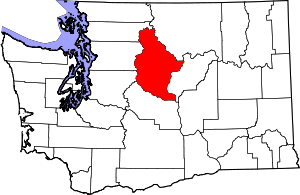
The Chelan Public Utility District in Washington began its county-wide fiber-optic network build. They have since passed some 80% of the county but are temporarily pausing expansion efforts. Chelan is a rural county and the network is not expected to break even for quite some time.

In Washington, state law limits the powers of public utility districts to offer broadband. As with communities in Utah, these public sector entities are forced to operate an open access network and are unable to offer services directly. While the open access model is a great one for some communities (and one we encourage when the numbers work), it can be difficult to implement depending on local circumstances.

The Wenatchee World recently covered the decision to hire a consultant to identify means of lowering costs. The network has cost $80 million to get to this point and will require an additional $40 million to connect the remaining 15-20%.

The network can provide access to over 30,000 residents, businesses, and community anchors (schools, hospitals, muni facilities). Subscribers choose from a variety of service providers for services and take rates vary from 30%-60% depending on the area.

The network is operating at a loss (probably due to a combination of the high costs of FTTH in rural areas, the low take rates, and lower revenues from operating on a purely wholesale basis). Residents were conflicted about the network's inability to pay for itself but a majority have continued to support it because they often have no other broadband options. However, the current economic climate has resulted in more concern about the costs.

Chelan PUD has apparently covered the losses from broadband (as well as some sewer and water services) with the sales of surplus electricity on the wholesale market. Those prices are rather low right now, forcing the PUD to make some difficult choices.

Some residents are frustrated by the delays:

Sanders has already laid underground conduit for her own house and two of her neighbors’, following assurances from PUD staff that it would speed the installation process.

Another resident, Rachel Imper who lives on Brown Road, said she needs a fast Internet connection to exchange writing assignments that she works on from home.

She said she’s currently paying for an expensive satellite service. No other options are available.

The fiber expansion will pause at least until the consultant reports back this summer. At that point, the PUD and citizens will have to decide how to balance the need for broadband against its costs.

This is the real world - Chelan's PUD hasn't "failed" because it is not wildly profiting from broadband services like Comcast. It is providing an essential service - one that many locals would not have in the absence of the PUD.

The PUD has applied for stimulus funds to finish the network and the Governor supports their application [pdf]. Though Chelan seems the exact type of unserved and underserved that should be prioritizing, no one knows the likelihood of their application being accepted. If funded, all but 2% of the county will have fiber access.

Syndicate content