Image

Fast, affordable Internet access for all.
This week on the podcast, Christopher is joined by Jennifer Hawkins, CEO of One Neighborhood Builders (ONB). ONB is a nonprofit organization based in Providence, Rhode Island that works to improve lives through housing and community connection. In 2020 we spoke with Jennifer about the wireless mesh network the nonprofit piloted to address community needs at the onset of the Covid-19 pandemic. It launched to much fanfare, and ONB has been steadily working to increase its reach and impact since.
After three years and half a million dollars in capital costs, the ONE|NB Connects network has improved its wireless service to 100Mbps symmetrical speeds. And while not everyone in the Olneyville neighborhood can access the network inside of their homes (it's a gap network, after all), with thousands of unique users per month able to access reliable connections for as long as they need, Jennifer tells Chris that they are starting to see the benefits for households facing significant health and economic disparities in the community. They end the show by talking about how ONB is using the expertise it has built along the way to plan for even more durable changes: baking wired infrastructure into new affordable housing MDUs.
Read a case study of the impact of the ONE|NB Connects network for more.
This show is 33 minutes long and can be played on this page or via Apple Podcasts or the tool of your choice using this feed.
Transcript below.
We want your feedback and suggestions for the show-please e-mail us or leave a comment below.
Listen to other episodes here or view all episodes in our index. See other podcasts from the Institute for Local Self-Reliance here.
Thanks to Arne Huseby for the music. The song is Warm Duck Shuffle and is licensed under a Creative Commons Attribution (3.0) license.
If you don't quite have enough good broadband podcast content in your life (we don't know how that's possible with a backlog of almost 500 episodes of Broadband Bits and nearly 40 episodes of the Connect This! show), you're in luck. The always-wonderful 99 Percent Invisible podcast, in a recent episode, takes on last-mile network infrastructure as part of its bonus Future of.. series.
In "The Future of the Final Mile," Roman Mars uses the evolution of broadband access over a handful of years in Detroit and Chattanooga to illustrate what happens when a community sucessfully takes the future of its information infrastructure into its own hands. With interviews from local residents and broadband advocates, the episode addresses the uneven broadband marketplace, efforts to address inequitable access in Detroit through a citizen-created wireless mesh network, and a full fiber-to-the-home build in Chattanooga. Mars and his co-producer ask a lot of good questions about why more communities don't take bold steps, why preemption persists in 17 states, and what communities can do.
The episode is 41 minutes long. Listen to "The Future of the Final Mile" here, or read the transcript here.
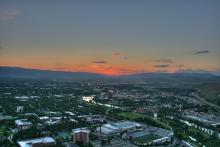
A year after a group of local broadband champions got together to see how they could improve Internet access in Missoula, Montana, the Missoula Valley Internet Cooperative has successfully raised funds and designed, deployed, and launched a wireless mesh network delivering 150 Megabit per second (Mbps) symmetrical service to more than 50 of 550 pre-registered households for, on average, $40-60/month. The community-owned option has injected some welcome competition to a stagnant local broadband market, with a second network already in the planning stages in a community to the north.
Both efforts are being driven by the Pacific Northwest Rural Broadband Alliance (PNWRBA), a Missoula, Montana-based nonprofit aiming to build resiliency, local capacity, and expand quality Internet access to the region by making use of a variety of community-oriented business models. The nonprofit serves not only to coordinate grassroots organizing efforts, but provide technical assistance and lead policy engagement with local leaders. It is running a dual mission. First, to bring faster and more affordable Internet access via a community-owned model to the area. And second, to prove out a series of models in the region with the hopes of generating additional community-based approaches to improving broadband in the region and beyond.
Grant Creek
Join us live on Monday, October 25th at 5pm ET for Episode 23 of the Connect This! Show, where co-hosts Christopher and Travis Carter (USI Fiber) will be joined by Neil Mylet and Deb Simpier (Althea Networks) to talk about grassroots networking. They'll dive into into the hardware and software considerations made in building hyperlocal networks, and bringing together people passionate about returning knowledge and control to build more resilient communities.
Subscribe to the show using this feed, or visit ConnectThisShow.com
Email us broadband@muninetworks.org with feedback, ideas for the show, or your pictures of weird wireless infrastructure to stump Travis.
Watch here or below on YouTube Live, or via Facebook Live here.

While Cleveland was ranked one of worst-connected cities in America in 2019 by the National Digital Inclusion Alliance (NDIA), nonprofit, DigitalC is chipping away at this reputation with a fast-tracked initiative aimed at bringing affordable broadband to the people that need it. The nonprofit’s Wireless Internet Service Provider, EmpowerCLE+ launched in 2018 and quickly accelerated in 2020 in response to the pandemic. EmpowerCLE+ provides “fast, reliable Internet speeds for $18/month, and is hoping to double its capacity to 6,000 households in the coming year.
Currently, households are receiving service via a fiber-fed mesh millimeter wave network. The expansion will include additional fiber for Multi-Dwelling Units (MDUs) as well as new wireless deployments, including Citizens Broadband Radio Service (CBRS) network. The new CBRS expansion will help the network overcome geographical obstacles and bring additional service to homes it was not able to reach before with just millimeter wave technology.
Connecting the Unconnected
According to DigitalC's website, the nonprofit came from OneCommunity, formerly known as OneCleveland and founded in 2003 to build a backbone fiber network connecting hospitals and other nonprofits throughout the metropolitan area. In 2014, OneCommunity sold its fiber assets to Everstream, a Cleveland-based ISP serving communities throughout the midwest and parts of the east coast with fast, reliable Internet through fiber.
In 2015, DigitalC was established to “make Greater Cleveland's digital future more equitable.” The nonprofit spent the last six years focused on connecting communities of color and immigrant communities that have experienced redlining in the city.
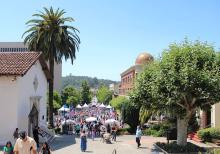
With vaccines rolling out tier by tier, state by state, and restaurants, bars and public spaces starting to reopen one by one, there seems to be a desire to say, “Wow, things are going back to normal!” Unfortunately, the public health crisis exacerbated healthcare, education, and economic inequities that have long existed in low-income and communities of color across the country and have no chance of going away any time soon. But some community leaders have stepped up and come to the table with one piece of the puzzle in bridging these inequities — better Internet access to these communities.
Over the summer, we covered several communities that jumped to action and came up with quick ways to implement long-term solutions.
The city of San Rafael, which sits on the coast of northern California in Marin County, continues to strengthen, expand, and research the use of the network it built over the summer and fall for one unserved area hit hard by the economic, education, and health impact of Covid-19. And on the other side of the country, Meta Mesh in Pittsburgh, Pennsylvania continues construction on a pilot project that is hoping to connect unserved families by the end of this summer.
Focusing on the Future
In San Rafael, California, the city, Marin County and a nonprofit organization — the Canal Alliance — all joined forces to bring free Wi-Fi to the Canal neighborhood.
Image
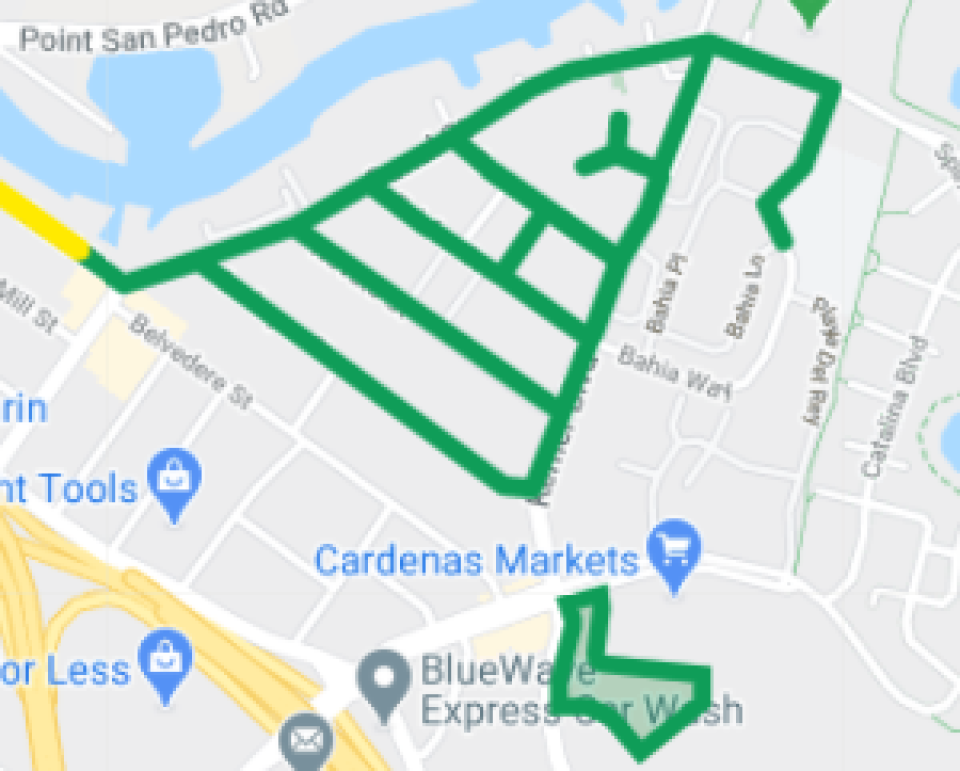
This week on the podcast, Christopher is joined by Jennifer Hawkins, President and Executive Director of One Neighborhood Builders (ONB), a community development organization based out of Rhode Island. She talks about about the Olneyville neighborhood, situated on the west side of Providence, and how significant health disparities in that community led her organization to jump into action over the summer to build a free wireless network for the residents. Jennifer and Christopher talk about mapping the network, placing hardware on ONB-owned buildings, and putting up 12 access points to cover more than half of the community with robust wireless. She shares why the project’s been worth it, and the health outcomes they hope to achieve once it goes online.
This show is 32 minutes long and can be played on this page or via Apple Podcasts or the tool of your choice using this feed.
Transcript below.
We want your feedback and suggestions for the show-please e-mail us or leave a comment below.
Listen to other episodes here or view all episodes in our index. See other podcasts from the Institute for Local Self-Reliance here.
Thanks to Arne Huseby for the music. The song is Warm Duck Shuffle and is licensed under a Creative Commons Attribution (3.0) license.
When the pandemic hit American shores this past spring and cities around the country began to practice social distancing procedures, Rhode Island-based nonprofit One Neighborhood Builders (ONB) Executive Director Jennifer Hawkins quickly realized that many of those in her community were going to be hit hard.
As spring turned to summer, this proved especially to be the case in the Olneyville neighborhood in west-central Providence, where Covid-19 cases surged among low-income residents with fewer options to get online to work, visit the doctor, and shop for groceries. This, combined with the fact that the area suffers from an average life expectancy an astonishing eight years shorter than the rest of the state, spurred the nonprofit into action, and it began putting together a plan to build a free community wireless network designed to help residents meet the challenge. One Neighborhood Connects Community Wi-Fi hardware is being installed right now, with plans for the network to go online by Thanksgiving of this year.
How it Came Together
When Jennifer Hawkins started looking for solutions to the lack of connectivity in the area in March, she ran into a handful of other communities likewise pursuing wireless projects to close the digital divide, including Detroit, New York City, and Pittsburg. Along with One Neighborhood Builder’s IT partner, Brave River Solutions, she explored options and ultimately decided a fixed, point-to-point wireless network could succeed in the neighborhood. This was in no small part because ONB owns 381 apartments, 119 single-family homes, and 50,000 square feet of commercial and community space across Olneyville. It meant that two of the primary obstacles to standing up a fixed wireless network cheaply and quickly — finding suitable hardware installation locations and negotiating Rights-of-Way — were nonexistent, and a fast, less expensive design and rollout was possible.
This week on the show Christopher is joined by Mason Carroll (Monkeybrains), Deborah Simpier (Althea Networks), and returning champion Travis Carter (US Internet).
The group collectively imagines what they would recommend to the FCC if they were called upon to help facilitate urban wireless deployment in the name of more affordable, equitable Internet access. They dig into different approaches, dissect the 5G hype, and mull the recent opportunities offered by Citizens Broadband Radio Service (CBRS). Putting on their private Internet Service Provider (ISP) hats, Mason, Deborah, and Travis tell Christopher what they'd be looking for from cities considering building publicly owned infrastructure — conduit or fiber — in the name of incenting more competition. Finally, they spend some time talking about the particular challenges and solutions presented to urban wireless by apartment complexes and other types of multi-dwelling units (MDUs).
Subscribe to the show using this feed.
Email us broadband@muninetworks.org with feedback and ideas for the show.

US Ignite has announced a new initiative called Project Overcome which will fund five projects looking for novel solutions to broadband connectivity problems in communities around the United States.
Th endeavor, funded by a $2 million National Science Foundation grant, will “support the selection and buildout of five proof-of-concept network deployments designed to connect both rural and urban communities in novel ways.” More than three-quarters of the funding will go directly to project awards, with the aim to:
[C]ollect data to measure the technical and social impacts of different connectivity strategies [in order to] discover patterns of success that can be repeated on a larger scale across the country, and to catalog the distinctions that emerge based on variations in the communities served.
The Application Process
An RFP will come out in the next few weeks, with winners chosen by early spring. From the website, competitive applications will:
Be chosen based on the use of innovative technologies, such as mesh networks and new spectrum access solutions, as well as creative deployment models that leverage both public and private sector partners. Participating teams should draw from some combination of academic, nonprofit, industry, government, student, and volunteer partners. The five proposals ultimately selected will reflect a mix of population density characteristics, demographics, geographic regions, housing types, local and industry collaborations, and technical approaches.