Image

Fast, affordable Internet access for all.
In this episode of the Connect This! Show, co-hosts Christopher and Travis Carter (USI Fiber) are joined by Christy Batts (CDE Lightband), Robert Boyle (Planet Networks), and Jim Troutman (Jim Troutman (Tilson Broadband & NNENIX) for an exciting technical conversation.
The panel will dig into serving MDUs, building passive vs active networks and more!
Subscribe to the show using this feed on YouTube Live or here on Facebook Live, or visit ConnectThisShow.com.
Email us broadband@muninetworks.org with feedback and ideas for the show.
Watch here on YouTube Live, here on Facebook live, or below.
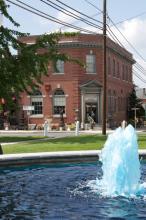
In the heart of Adams County, Pennsylvania, not far from the site of the pivotal Battle of Gettysburg and where President Abraham Lincoln later delivered his famous 1863 Gettysburg address declaring “a new birth of freedom,” plans are being drawn up in the battle for better broadband.
In the borough of New Oxford, ten miles east of the county seat (Gettysburg), the non-profit media group Community Media of South Central Pennsylvania is leading the charge to bring Fiber-to-the-Home (FTTH) victory for the approximately 102,000 residents spread out across the rural county’s 520 square miles.
But with restrictive state laws that protect incumbent providers from competition by not allowing municipalities to provide broadband service, and scarce funding for non-governmental entities to build broadband infrastructure, victory is far from certain.
Small Steps, Big Broadband Problem
The goal right now, Community Media’s Director of Operations Mark Wherley told us this week, is to secure $3 million to bring fiber access to 1,200 homes in New Oxford and Abbottstown, two of the 34 municipalities that make up Adams County, encircling Gettysburg.
Image
Working in conjunction with the Adams County Economic Alliance, Community Media is looking to tap the state’s Redevelopment Assistance Capital Program (RACP) for funds to start building the network. Through RACP, Community Media would be eligible to receive between $1 million and $5 million, provided they are able to raise a 50 percent matching contribution.
If we want to talk technical stuff on the Community Broadband Bits podcast, we know Eric Lampland is one of the best guys to call. Eric is Founder and Principal of Lookout Point Communications. Earlier this month, he and Christopher presented information about 5G at the Iowa Association of Municipal Utilities Telecommunications Conference. They took some time during the conference to sit down with the mics and have a conversation for episode 299 of the podcast.
There’s been scores of hype around the potential of 5G and, while the technology certainly opens up possibilities, Eric and Christopher explain why much of that hype is premature. 5G networks have been touted as an affordable answer to the pervasive problem of rural connectivity, but like other wireless technology, 5G has limitations. Eric breaks down the differences between evolutions of wireless technologies up to now and explains what needs they will fulfill and where we still have significant work to do.
Eric also helps us understand GPON and NG-PON2, the technology that much of Fiber-to-the-Home (FTTH) relies upon. He describes how the technology is evolving and how new possibilities will influence networking.
For information on 5G, we recommend you check out these resources from Next Century Cities:
Guest Blog: What Can Cities Do To Prepare for the Next Generation of Mobile Networks? by Tony Batalla, head of Information Technology for the city of San Leandro, California.
Next Century Cities Sends Mayoral Letter to FCC in Defense of Local Decision-Making, Releases New Market Research on 5G, Smart City Deployments - Read the full letter here.
Report: Status Of U.S. Small Cell Wireless/5G & Smart City Applications From The Community Perspective, by RVA, LLC Market Research & Consulting
This show is 33 minutes long and can be played on this page or via Apple Podcasts or the tool of your choice using this feed.
Transcript below.
We want your feedback and suggestions for the show-please e-mail us or leave a comment below.
Listen to other episodes here or view all episodes in our index. See other podcasts from the Institute for Local Self-Reliance here.
Thanks to Arne Huseby for the music. The song is Warm Duck Shuffle and is licensed under a Creative Commons Attribution (3.0) license.
Sonic is one of the best ISPs in the nation - well beloved by its California subscribers and policy geeks like us in part because of its CEO and Co-Founder, Dane Jasper. Dane combines a tremendous amount of technical and business knowledge in a thoughtful and friendly personality. And while we don't always agree, we are always interested in what he is thinking about.
Dane joins us for Community Broadband Bits episode 261, where we focus on how cities can invest in infrastructure that will both allow firms like Sonic to thrive and permanently break any concerns about a monopoly over Internet access. Dane encourages cities to focus on dark infrastructure -- conduits or dark fiber that allow ISPs more freedom to pick and perhaps change the technologies they want to deploy services.
We also talk about network neutrality and a very brief history of Sonic.
Additionally worth noting, Sonic gets five stars from the "Who Has Your Back" evaluation from the Electronic Frontier Foundation.
This show is 35 minutes long and can be played on this page or via Apple Podcasts or the tool of your choice using this feed.
Transcript below.
We want your feedback and suggestions for the show-please e-mail us or leave a comment below.
Listen to other episodes here or view all episodes in our index. See other podcasts from the Institute for Local Self-Reliance here.
Thanks to Arne Huseby for the music. The song is Warm Duck Shuffle and is licensed under a Creative Commons Attribution (3.0) license.
While at the annual Iowa Association of Municipal Utilities Broadband Conference, I forced Ken Demlow to be our guest on Community Broadband Bits Podcast 247. Ken is the Sales Director for Newcom Technologies, where he has worked with many different fiber-optic deployments on the ground and is a fun guy to talk to more generally.
Our discussion focuses on two main topics - the benefits of using fiber-optic connections to smart-grid applications rather than relying on wireless and the challenges that Google faced in getting on the poles in Nashville to build its fiber-optic network (which seems to be stalled).
Ken had a front-row seat to the work in Nashville to get Google Fiber on poles but our conversation focuses on what is publicly known. We aren't breaking any insider secrets, but this is a very good discussion about the tremendous challenges of dealing with attachments on over 100,000 poles when contemplating a citywide metro fiber build. For people who haven't done it, this will explain why encouraging private sector competition at the physical network level is very difficult. And we keep it interesting - from possibly the worst idea for a sci-fi antagonist ever and how make-ready could fit into Greek myths.
This show is 29 minutes long and can be played on this page or via Apple Podcasts or the tool of your choice using this feed.
Transcript below.
We want your feedback and suggestions for the show-please e-mail us or leave a comment below.
Listen to other episodes here or view all episodes in our index. See other podcasts from the Institute for Local Self-Reliance here.
Thanks to Break the Bans for the music. The song is Escape and is licensed under a Creative Commons Attribution (3.0) license.
When we last spoke to people from Lincoln, Nebraska, about their innovative conduit program to improve Internet access, we focused on how they had done it - Conduits Lead to Competition, podcast 182. For this week and episode 228 of the Community Broadband Bits podcast, we focus more on the community benefits their approach has led to.
We are once again joined by David Young, Fiber Infrastructure and Right of Way Manager in the Public Works Department. We offer a shorter background about the history of the project before focusing on the franchise they developed with local ISP Allo. Allo is building citywide Fiber-to-the-Home and has agreed to provision 15 VLANs at every endpoint. We talk about what that means and implications for schools specifically.
We also touch on permitting issues for local governments and David explains his philosophy on how to speak to the community about potential projects in an engaging manner.
This show is 30 minutes long and can be played on this page or via Apple Podcasts or the tool of your choice using this feed.
Transcript below.
We want your feedback and suggestions for the show-please e-mail us or leave a comment below.
Listen to other episodes here or view all episodes in our index. See other podcasts from the Institute for Local Self-Reliance here.
Thanks to mojo monkeys for the music, licensed using Creative Commons. The song is "Bodacious."
Located in the Denver metro region and shaped like a barbell, Centennial has effectively used dig once policies to build conduit and fiber assets that have attracted Ting to the community. Tim Scott is the Director of Fiber Infrastructure for the city and joins us on Community Broadband Bits podcast episode 222. Centennial took advantage of a project installing fiber for Intelligent Transportation Signaling. But just putting in more fiber was not sufficient to establish a carrier-grade network that ISPs would want to use. Tim explains what they had to do to attract ISP interest. Centennial's shape is very conducive to their strategy (which may be a tautology - they chose that strategy because it works for them). At any rate, their arterial corridors run quite close to the majority of premises and therefore a well-designed fiber backbone network is more attractive in that community than others.
This show is 29 minutes long and can be played on this page or via Apple Podcasts or the tool of your choice using this feed.
Transcript below.
We want your feedback and suggestions for the show-please e-mail us or leave a comment below.
Listen to other episodes here or view all episodes in our index. See other podcasts from the Institute for Local Self-Reliance here.
Thanks to mojo monkeys for the music, licensed using Creative Commons. The song is "Bodacious."
Having few options for high-quality telecommunications service, Virginia's Roanoke Valley formed a broadband authority and is building an open access fiber-optic network with different options for ISPs to plug-in. In addition to being our guest on Community Broadband Bits episode 221, Frank Smith is the Roanoke Valley Broadband Authority CEO and President. We discuss their various options for ISPs to use their infrastructure and the various services their network is providing, including access to conduit and dark fiber leases. We also discuss why they formed a state authority to build their carrier-grade network. Though they have had some pushback from incumbents - something Frank seems unphased by in calling the Authority "the new kid on the block" - they have built local support by building relationships with local organizations like Blue Ridge PBS. Read all of our Roanoke Valley Broadband Authority coverage here.
This show is 29 minutes long and can be played on this page or via Apple Podcasts or the tool of your choice using this feed.
Transcript below.
We want your feedback and suggestions for the show-please e-mail us or leave a comment below.
Listen to other episodes here or view all episodes in our index. See other podcasts from the Institute for Local Self-Reliance here.
Thanks to mojo monkeys for the music, licensed using Creative Commons. The song is "Bodacious."
The Internet is one of those things that is right there in front of our face but can be hard to define exactly. Community Broadband Bits Episode 216 answers that question and picks up right where episode 213 left off with Fred Goldstein, Principal of Interisle Consulting Group. Having already discussed the regulatory decisions that allowed the Internet to flourish, we now focus on what exactly the Internet is (hint, not wires or even physical things) and spend a long time talking about Fred's persuasive argument on how the FCC should have resolved the network neutrality battle. We also talk about why the Internet should properly be capitalized and why the Internet is neither fast nor slow itself. These are core concepts that anyone who cares about getting Internet policy correct should know -- but far too few do. Not because it is too technical, but because it does require some work to understand. That is why this is such a long conversation - probably our longest to date in over 200 shows.
This show is 40 minutes long and can be played on this page or via Apple Podcasts or the tool of your choice using this feed.
Transcript below.
We want your feedback and suggestions for the show-please e-mail us or leave a comment below.
Listen to other episodes here or view all episodes in our index. See other podcasts from the Institute for Local Self-Reliance here.
Thanks to Roller Genoa for the music, licensed using Creative Commons. The song is "Safe and Warm in Hunter's Arms."
On the heels of releasing our video on Ammon, Idaho, we wanted to go a little more in-depth with Bruce Patterson. Bruce is Ammon's Technology Director and has joined us on the show before (episodes 173 and 86). We recommend watching the video before listening to this show. We get an update from Bruce on the most recent progress since we conducted the video interviews. He shares the current level of interest from the first phase and expectations moving forward. But for much of our conversation, we focus on how Ammon has innovated with Software-Defined Networks (SDN) and what that means. We talk about how the automation and virtualization from SDN can make open access much more efficient and open new possibilities. Check out Ammon's Get Fiber Now signup page or their page with more information.
This show is 27 minutes long and can be played on this page or via Apple Podcasts or the tool of your choice using this feed.
Transcript below.
We want your feedback and suggestions for the show-please e-mail us or leave a comment below.
Listen to other episodes here or view all episodes in our index. See other podcasts from the Institute for Local Self-Reliance here.
Thanks to Forget the Whale for the music, licensed using Creative Commons. The song is "I Know Where You've Been."