Image


Fast, affordable Internet access for all.
This week on the podcast, Christopher is joined by Karl Bode, a returning guest who has long covered tech and the telecommunications industry. After a short conversation about the continued absence of monopoly abuse in policy conversations about broadband access and affordability today, Karl and Christopher tackle the proposed return to net neutrality announced by Chairwoman Rosenworcel last week.
They talk about how we got here in the first place, including the landmark decision by the Commission in 2015 to largely abdicate responsibility for Internet-related regulatory activities and the states that stepped in to fill the void. They end the show by considering for a bit what it might be like to have an expert federal agency whose activities governed by a strong regulatory framework and the teeth to enforce its mandate to extend fast, affordable, reliable Internet access for all.
This show is 38 minutes long and can be played on this page or via iTunes or the tool of your choice using this feed. You can listen to the interview on this page or visit the Community Broadband Bits page.
Transcript below.
We want your feedback and suggestions for the show-please e-mail us or leave a comment below.
Listen to other episodes here or view all episodes in our index.
Subscribe to the Building Local Power podcast, also from the Institute for Local Self-Reliance, on iTunes or Stitcher to catch more great conversations about local communities, the concentration of corporate power, and how everyday people are taking control.
Thanks to Arne Huseby for the music. The song is Warm Duck Shuffle and is licensed under a Creative Commons Attribution (3.0) license.
This week on the podcast, Christopher is joined by returning guest Blair Levin. Levin has served as former chief of staff to FCC Chair Reed Hundt as well as executive director of the National Broadband Plan (2009-2010). Nowadays, he's a nonresident senior fellow at Brookings, and joins Christopher to unpack all that we might expect to see at play over the coming year. The show covers a lot of ground, from the renomination of Gigi Sohn to the FCC and the issues likely brought by a complete commission, to how much impact (and where) BEAD will have, to the real benefits and obvious weak spots in the Affordable Connectivity Program, to the upcoming battle between DISH, the cable monopolies, and the fixed wireless offerings from the mobile providers, and much more.
This show is 53 minutes long and can be played on this page or via Apple Podcasts or the tool of your choice using this feed.
Transcript below.
We want your feedback and suggestions for the show-please e-mail us or leave a comment below.
Listen to other episodes here or view all episodes in our index. See other podcasts from the Institute for Local Self-Reliance here.
Thanks to Arne Huseby for the music. The song is Warm Duck Shuffle and is licensed under a Creative Commons Attribution (3.0) license.
In the year since Gigi Sohn has been nominated to fill the fifth and final seat on the Federal Communication Commission (FCC), we have been perplexed as to why Gigi hasn't been confirmed yet, as you can see here and here. We were also signatories to a letter of support signed by 250 industry and public interest groups.
And yet remained mystery remained.
Having hunted for an answer for the last several months, The Verge published a piece yesterday, after reaching out to everyone from Fox News, Comcast and former FCC Chairman Ajit Pai to Democratic Senators Joe Manchin and Kyrsten Sinema, a number of current and former members of Congress, FCC Chairwoman Jessica Rosenworcel and FCC nominee Gigi Sohn, even the Fraternal Order of Police.
Here's a few snippets of what they reported:
The inability to get Gigi confirmed at the FCC has left the commission deadlocked with two Democrats and two Republicans. That means the commission in charge of regulating all telecom in the United States, including how you get your internet service, is unable to get much done...
Gigi was nominated to the FCC over a year ago, and throughout her career, she has been popular with just about everyone. She is known as an incredibly talented telecom regulator who has been willing to work across the aisle ...
They even interviewed Chris Ruddy, CEO of the conservative news outlet Newsmax:
Chris Ruddy: I’ve strongly supported her nomination. I’ve known her for some time. I think she’s a person of integrity. We probably disagree on a lot of issues. In fact, I know we disagree on any number of big issues. She would probably identify herself as liberal, maybe progressive, and I would say I’m conservative.
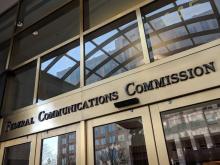
For more than a year and a half, the nation’s top telecommunications regulator has been stuck in limbo, thanks to a combination of federal dysfunction and industry lobbying. Now the nomination of popular reformer Gigi Sohn to the FCC is facing a full frontal assault by telecom monopolies dedicated to preventing the agency from standing up to monopoly power.
After an inexplicable nine-month delay, President Biden nominated consumer advocate Gigi Sohn to the FCC late last year. Sohn, Co-Founder and CEO of consumer group Public Knowledge and a former advisor to FCC Chairman Tom Wheeler, is well versed in media and telecom policy, and broadly popular across both sides of the aisle.
Yet since her belated nomination, Sohn has been met with a bevy of telecom, media-industry, and politically constructed allegations designed to derail her nomination, ranging from false claims that she’d harm rural America, manufactured allegations that she hates police, and false assertions that she’s looking to censor conservative voices in media.
All of these efforts serve one function: to ensure the nation’s top telecommunications regulator remains mired in partisan gridlock and a 2-2 commissioner voting split. Without a clear voting majority, the agency can’t embrace reforms that are widely popular with the public, whether that’s restoring the FCC’s consumer protection authority, or restoring recently-discarded media consolidation rules.
On this episode of the Community Broadband Bits podcast, host Christopher Mitchell is joined by occasional guest host Sean Gonsalves, ILSR’s Senior Reporter, Editor, and Researcher to take a hard look at our philosophies around competition and telecommunications regulation.
Sean briefly recaps a recent update by ILSR Researcher and Writer Jericho Casper on preemption developments over the last year. While both Arkansas and the state of Washington regulators opened up opportunities for public entities to get into the broadband market, Ohio treaded dangerously close to squashing competition. Chris and Sean plug the recent GIS position that opened up on our team.
The two get down to the nitty gritty reality of competition in telecommunications, that it tends to be more of the exception than the rule in a market that has historically dominated by monopoly power. They discuss how regulation capable of overcoming this dynamic will be the most impactful locally and not in Washington, D.C.
This show is 52 minutes long and can be played on this page or via Apple Podcasts or the tool of your choice using this feed.
Transcript below.
We want your feedback and suggestions for the show-please e-mail us or leave a comment below.
Listen to other episodes here or view all episodes in our index. See other podcasts from the Institute for Local Self-Reliance here.
Thanks to Arne Huseby for the music. The song is Warm Duck Shuffle and is licensed under a Creative Commons Attribution (3.0) license.
This week on the podcast we're joined by Berin Szoka, President of TechFreedom, to talk about the pressing broadband issues of today and tomorrow. Christopher and Berin share what they see as the biggest barriers to universal, high-quality Internet access today, including the jurisdictional issues facing communities large and small, as well as the regulatory solutions which would facilitate more rapid and efficient infrastructure deployment.
They debate whether we should spend public dollars not just on rural broadband where there are no options, but in town centers with slowly degrading copper networks where monopoly providers have signaled little intent to ever upgrade that infrastructure.
Christopher and Berin then dive into an issue Berin has been working on for the past few years: the Section 230 debate, and what it means for the future of the Internet if content platforms become liable for the third-party content they host.
This show is 51 minutes long and can be played on this page or via Apple Podcasts or the tool of your choice using this feed.
Transcript below.
We want your feedback and suggestions for the show-please e-mail us or leave a comment below.
Listen to other episodes here or view all episodes in our index. See other podcasts from the Institute for Local Self-Reliance here.
Thanks to Arne Huseby for the music. The song is Warm Duck Shuffle and is licensed under a Creative Commons Attribution (3.0) license.
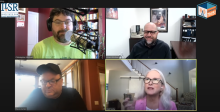
This episode, co-hosts Christopher and Travis Carter (CEO, US Internet) are joined by Deb Socia (President/CEO, The Enterprise Center), and Brian Worthen (President, Visionary Communications and CEO, Mammoth Networks) to talk about overbuilding.
The group talks about the importance of reclaiming the term as what it really is: plain old competition. They discuss the economics of building competitive broadband infrastructure in rural and urban areas, pending and related Washington Public Utility District legislation, and why we don't see more small, competitive fiber builders around the country.
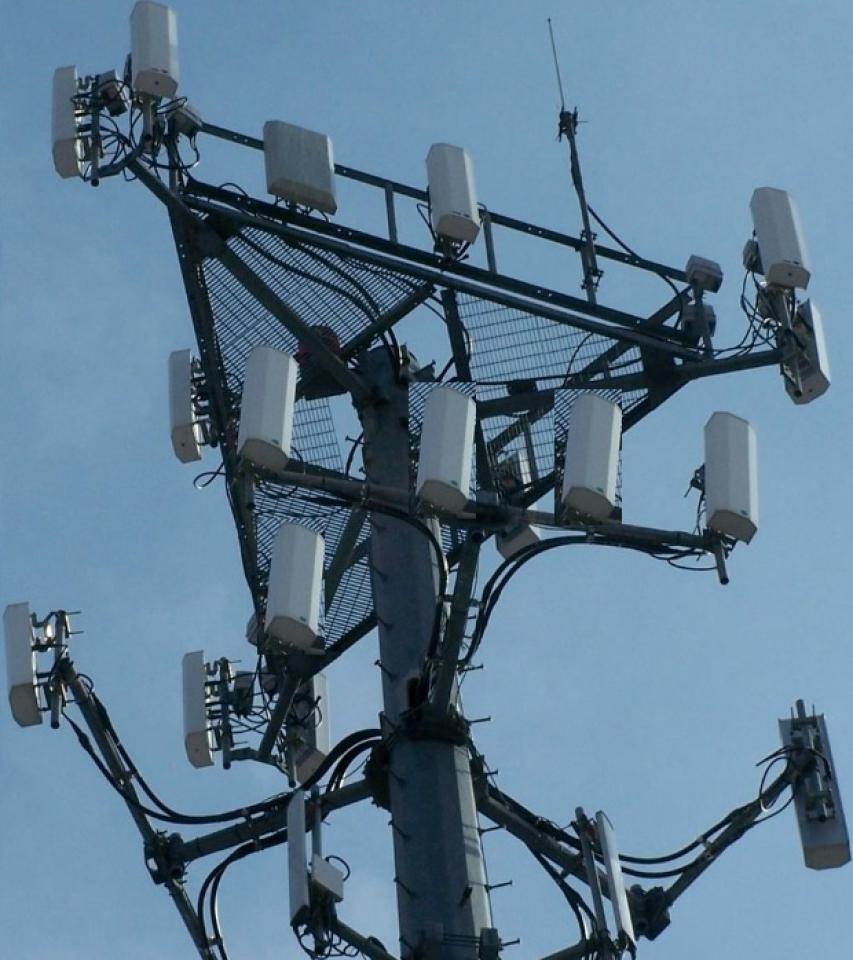
We also get the first installment of a recurring segment during the episode, wherein Christopher asks Travis to identify a picture of random piece of wireless infrastructure from the area around his house.
Referenced during the discussion was Benton Institute for Broadband and Society Senior Fellow John Sallet's recent paper "Broadband for America’s Future: A Vision for the 2020s."
Subscribe to the show using this feed.
Email us with feedback and ideas at broadband@muninetworks.org
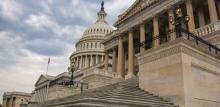
Last week, House Republicans introduced a bill package ostensibly to promote broadband expansion and competition across the country. In reality, the legislation is a wish list of monopoly cable and telephone companies that will protect them from competition and decrease their accountability to the public. It would also ban communities from building their own networks or engaging in public-private partnerships.
A Rights of Way Free-for-All
About a third of the bills in the Boosting Broadband Connectivity Agenda would preempt regulations (including application timelines and fee schedules) set by government subdivisions on wireless deployment. The major mobile carriers are already in the process of slowly rolling out 5G networks which will require the installation of hundreds of thousands of small-cell sites over the next several years. AT&T spent more than $23 billion on the recently concluded 3.7 GHz C-band auction, with T-Mobile spending $9.3 billion. Verizon outspent every other bidder combined at $45 billion. Establishing shorter shot clocks and maximum fees for the installation of new hardware in public Rights of Way would simultaneously reduce the income municipalities receive and lead to the proliferation of poles and attachments across the country with limited public input. We’ve already seen how it has negatively impacted cities like Milwaukee and Tucson.
Image

On Episode 265 of the Techdirt podcast, Sonic CEO Dane Jasper joins host Mike Masnik to talk about how the broadband market in the United States is a failed competitive market, how the regulatory environment brought us from a place with thousands of Internet Service Providers (ISPs) to one where the vast majority of households have just one or two options at basic broadband speeds of 25/3 Megabits per second (Mbps), the arbitrariness of imposing usage caps and future of net neutrality, and the array of other interrelated issues that will dictate the way Internet access looks over the next decade.
Happy Holidays!
As Mayors must concern themselves with everything from public safety and health to the development of the local economy and the provision of essential municipal services, they tend to have a particular focus on the infrastructure necessary to support it all, amid a cacophony of competing interests.
Over the summer, having reached consensus on the fundamental importance of “the digital infrastructure of tomorrow,” a particular focus of the United States Conference of Mayors 88th National Annual Meeting was to issue a resolution declaring the necessity of “Preserving Local Public Rights-of-Way and Regulatory Authority to Most Effectively Deploy 5G Broadband Access and Bridge the Digital Divide during the COVID-19 Pandemic.”
Image

The Mayors’ resolution comes in response to the Federal Communications Commission’s (FCC's) 2018 preemption of local governments’ authority to regulate 5G infrastructure in their cities.
At the heart of the regulatory debate: local governments’ ability to determine the amount of fees to charge mobile carriers that want to place 5G equipment in Rights-of-Way. In addition to putting limits on those fees, the FCC Order also sets strict timelines by which cities and towns must respond to carrier applications. The FCC decision, issued over the objections of industry observers and policy experts, essentially eliminates local communities’ ability to negotiate in order to protect their own Rights-of-Way and the poles, traffic lights, and other potential structures within those Rights-of-Way.
Preempting Local Authority