Image


Fast, affordable Internet access for all.
Dickson, Tennessee (pop. 15,500) was the third municipal electric system to take power from the Tennessee Valley Authority after its creation in 1933, but the utility actually predates the regional electric generation system by almost 30 years. Today, it’s entering a new phase of life, parlaying its 117-year history of bringing affordable electric service into an $80 million fiber-to-the-home (FTTH) build that will see every household in its footprint (37,000 meters) get future-proof Internet access within the next four years.
A Cooperative in Municipal Clothing
Established in 1905, the very first Dickson Electric System (DES) customers received their power from a single 150-horsepower external combustion steam engine. DES upgraded its capacity in 1923, switching to two 150-horsepower oil-burning engines. A little more than a decade later, the TVA was established and DES took service, joining the maturing regional electric system and bringing its 650 customers and 50 miles of line into what would eventually be a group of more than 150 local power utilities almost a century later.
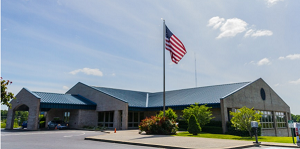
Today, Dickson Electric territory covers almost 800 square miles across Dickson, Hickman, Cheatham, Williamson, Humphreys, Houston, and Montgomery Counties (with the bulk of its customers in the first three), across about 2,600 miles of distribution line to 37,000 locations.
With a little less than a year left in its projected build schedule, Fort Collins (pop. 168,000) continues to make progress on its municipal fiber-to-the-home (FTTH) network, while also releasing new resources to help keep citizens informed and help households with affordability challenges stay online.
When we last checked in on Fort Collins' Connexion a little more than a year ago, the network was nearing a milestone, having spent roughly 49 percent of its construction budget. Today, the network is well over the halfway point of its $142 million-dollar build. In fact, it expects to be done placing vaults and with boring work in July.
Along the way, local officials have taken steps to increase transparency and improve communication with local residents. Last summer, it released a construction map of the networks' anticipated 357 fiberhoods, delineating which areas were in design, under construction, or fully lit.
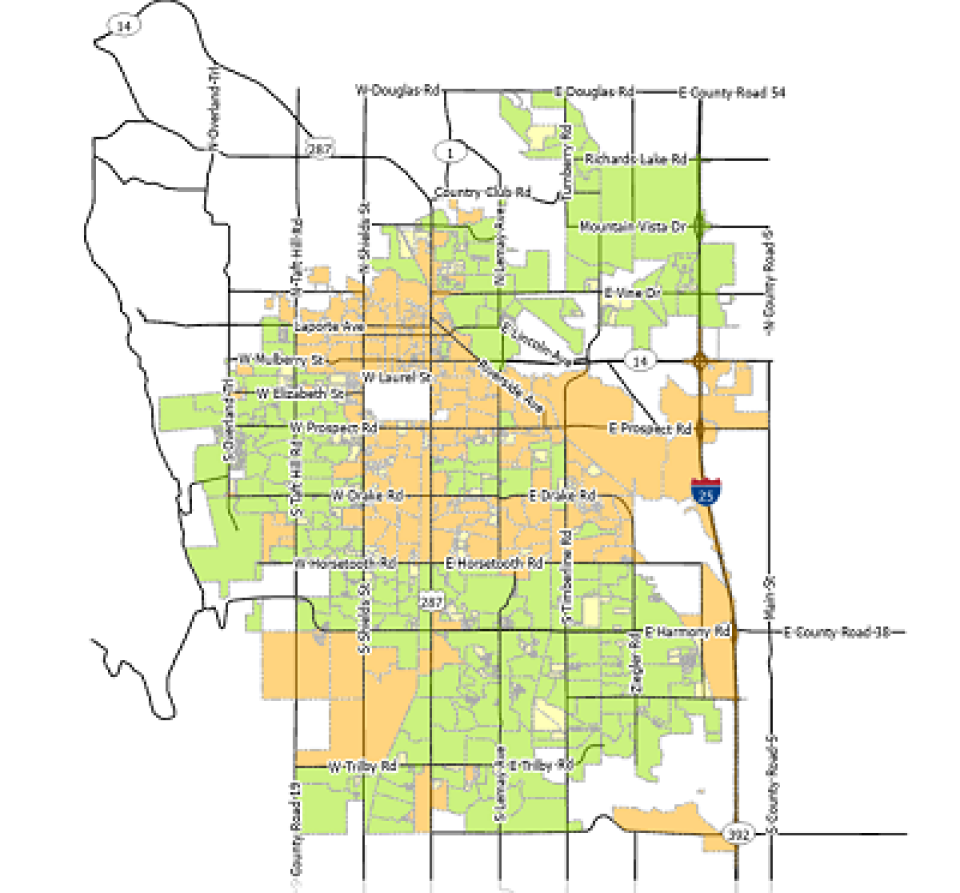
In addition, at the end of November of 2020 the network released a Network Status tracker so that users could see in each of the four quadrants of the city if connections were down.

Electric cooperatives illustrate the power that community-owned enterprises have to bring Internet access at scale to unconnected rural communities. Because of their work, states like Missouri (where 15 percent of all households only have access to broadband speeds slower than 100/20 Megabits per second, and only 38 percent have access to speeds of 100/100 Megabits per second or faster), will go from being among the least-connected states to one of those with the greatest connectivity in rural areas in coming years.
An infusion of federal funding shows how publicly owned infrastructure can go farther and move faster. Ralls County Electric Cooperative (RCEC) serves as example in Missouri, building on its existing broadband infrastructure to further increase connectivity in one of the most connected counties in the state.
Closing the Gap
Ralls County, located in the northeastern part of the state, is one of three statewide to provide fiber or wireless Internet access to over 90 percent of residents in its service territory. With $1.3 million in funding from the Rural Digital Opportunity Fund (RDOF) now in hand, RCEC is extending broadband access outside of its electric service area.
RCEC’s initial fiber buildout began in 2010. By 2014, it was the first electric distribution cooperative in Missouri to have built fiber out to all 6,300 of its members. 70 percent of RCEC’s members currently subscribe to its fiber services. Through its wholly owned subsidiary, the cooperative offers five speed tiers. Speeds range from 50/10 Megabits per second for $50/month to 1 Gbps/15 Mbps for $100/month in select locations.
Reaching Beyond its Electric Membership Footprint
Cedar Falls Utilities is bringing 10 Gigabit per second (Gbps) Internet access to the last 700 residents in its electric service area. With the help of a $2.3 million state grant, Cedar Falls Utilities fiber ISP - CFU FiberNet - will be connecting rural residents to the west and north of Cedar Falls city limits.
Up until this point, CFU FiberNet has offered rural residents in the utilities service area without a fiber connection a fixed wireless option called WaveNet Wireless with two speed options: 9/1 Megabits per second (Mbps) for $56/month and 18/2 Mbps for $75/month. We do not know if WaveNet Wireless will continue after the expansion into these rural areas is complete.
The funds were awarded through the Empower Rural Iowa Broadband Grant Program which had nearly 180 applicants hoping for a grant from the $97.5 million pot of money. Ultimately, 38 projects were chosen. Winning bids aimed were aimed at two groups of households, with the requirement to deliver at least 100 Mbps symmetrical service to what we usually call “underserved” areas (where service is greater than 25/3Mbps but less than 100/100 Mbps), or 100/20 Mbps service in areas where broadband access is currently less than 25/3 Mbps.
The challenge for these CFU electric subscribers to get onto the fiber network was the $7,500 cost of the drop; households in rural areas all around the country face a similar financial obstacle, even when excellent broadband service is nearby. With CFU contributing an additional $3 million to the effort (making the total project cost $5.3 million) these residents will no longer have the burden of making that hefty financial decision.
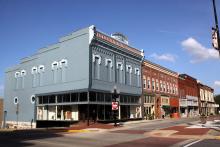
Once known as the center of bowling ball manufacturing, producing 60 percent of the world’s bowling balls, today Hopkinsville, KY (pop. 31,580) is on the verge of becoming a kingpin in a whole different lane: producing gig-speed broadband.
A municipal utility currently offering fiber Internet access to the residents of Hopkinsville, Hopkinsville Electric System (HES) is joining forces with Pennyrile Electric Cooperative to extend fiber-to-the-home Internet service to as many homes as possible in Pennyrile Electric’s service territory in southwestern Kentucky, starting with Christian, Trigg, and Todd Counties.
The three counties will contribute approximately $17 million of American Rescue Plan Act funds, while HES and Pennyrile will use a combination of state and federal grants and loans to contribute a 100 percent match for the $34 million project. When network construction is complete, it is expected to pass 28,000 households in the tri-county region.
Scoring Big in Public Partnership
While HES EnergyNet connected its first household in 2016, the utility has been utilizing the power of fiber-optic broadband for decades.
HES started as a municipal electric utility nearly 80 years ago, but in 1998, the board of directors decided to turn to fiber to connect its substations. By 1999, HES was offering fiber-fed broadband services to local businesses, industries, and city and county agencies through its ISP, EnergyNet.
In November 2018, HES EnergyNet announced it had plans to bring gigabit speeds to every address in Hopkinsville. Since then, the network has grown to serve more than 12,000 residents and businesses.
As HES was putting its fiber network to use, Pennyrile Electric reached out to its future partner and presented the idea to continue building fiber out into the surrounding rural areas. Pennyrile Electric has members across nine counties and had been getting numerous calls from co-op members asking whether or not the cooperative would get into the broadband business.
Vinton, Iowa’s municipal communications utility, iVinton, connected its 1,000th subscriber with high-speed fiber optic Internet service this week.
Demand for fiber-to-the-home (FTTH) connectivity across the 4.74-square-mile Iowa community (est. pop. 5,100) is so substantial that iVinton, governed by the Vinton Municipal Electric Utility (VMEU), is having to schedule installations a month out as requests for residential service have surpassed the manpower available to complete them as quickly as they had hoped.
As the telecommunications utility transitions out of its start-up phase – from working with external consultants to bringing all operations in house and limiting outside vendors – the biggest challenge iVinton has had to overcome is not having enough employees to take on the necessary roles, Matt Storm, iVinton’s Municipal Communications Manager, told ILSR in a recent interview.
Still, the utility is plugging away to keep up with requests for residential installations as iVinton is eager to meet the surge in demand. “We’re supplying a service that’s needed for the community, and the community has responded,” Storm told ILSR.

Just over a year into the municipal fiber network being operational, 1,000 of 2,450 residential and business premises, or 41 percent of the available premises in Vinton have made the switch. They've been lured by increased bandwidth, a higher quality of service, and the benefit of iVinton being a local provider with service technicians in town. Today, iVinton offers three symmetrical speed tiers to residents: 100 Megabit per second (Mbps), 250 Mbps, and 1000 Mbps connections for $70, $90, and $120 per month respectively.
A version of this story was originally published by the National League of Cities. Read the original here, with the full version below.
There’s an overwhelming tendency among regular Americans to conflate the basic infrastructure which surrounds us with permanence. Whether it’s the garbage truck predictably rumbling down the street at the same time every week, the water flowing from the tap, or our Internet connection, we assume that the physical ties which bind us together will always be there. And that’s because it mostly has, especially for community owned and operated infrastructure. When utility services are owned and operated by communities, they are by definition maintained by people who live locally for people who live locally. It’s hard to be taken by surprise and left without essential services.
But the odds tilt in the other direction when such services are delivered by outside firms. We’re seeing the consequences of this for electricity users in the wake of the Texas grid disaster last winter (as well as coming rumblings of heat-caused outages this June), but it’s a problem that’s been around longer than that for basic service providers of all types, where bankruptcies can leave whole communities high and dry.
The same consequences hold true when those firms are Internet Service Providers (ISPs), beholden to interests outside of the cities and towns they serve. Tens of thousands of American households learned this very lesson last fall when AT&T announced it was leaving the DSL business and no longer making new connections to its aging infrastructure, even though those wires will continue to sit in the ground for decades to come. Buy a new house in this area, and if AT&T DSL was the only provider in town, and you’ve got few or no options.

Last Tuesday, residents of three coastal Maine communities - Camden, Rockport, and Thomaston - voted to support Town Meeting articles authorizing each town's Select Boards to enter an interlocal agreement establishing the MidCoast Internet Development Corporation (MIDC), a nonprofit regional broadband utility in the Penobscot Bay Region of MidCoast Maine.
The type of regional utility the communities are seeking to establish is a broadband network utilizing an open-access model, in which the fiber infrastructure is municipally-owned, the maintenance of the network is managed by an outside firm, and private Internet Service Providers (ISPs) provide retail service to end-users. The ultimate goal of MIDC is to build an open-access, Fiber-to-the-Home (FTTH) network to provide universal Internet access across any towns which vote to sign onto MIDC’s interlocal agreement.
More than nine communities located in Knox and Waldo County formed the MidCoast Internet Coalition earlier this year, to indicate their support of establishing the MIDC regional utility district. Now, the towns which form the MidCoast Internet Coalition (Northport, Lincolnville, Hope, Camden, Rockport, Rockland, Thomaston, South Thomaston, Union, and Owls Head) are voting in phases to sign onto an interlocal agreement, legally recognizing the public utility under Maine law.

Since it was first introduced in Congress in March, the Community Broadband Act of 2021 has gained widespread support from over 45 organizations representing local governments, public utilities, racial equity groups, private industry, and citizen advocates.
The legislation -- introduced by U.S. Representatives Anna Eshoo, Jared Golden, and U.S. Senator Cory Booker -- would authorize local communities to build and maintain their own Internet infrastructure by prohibiting laws in 17 states that ban or limit the ability of state, regional, and local governments to build broadband networks and provide Internet services.
The Act also overturns state laws that restrict electric cooperatives' ability to provide Internet services, as well as laws that restrain public agencies from entering into public-private partnerships.
States have started to remove some long-standing barriers to public broadband on their own. In the last year, state lawmakers in both Arkansas and Washington removed significant barriers to municipal broadband networks, as high-quality Internet with upload speeds sufficient for remote work, distance learning, telehealth, and other online civic and cultural engagement has become essential.
Community broadband networks offer a path to connect the unconnected to next-generation networks. State barriers have contributed to the lack of competition in the broadband market and most communities will not soon gain access without public investments or, at the very least, the plausible threat of community broadband.
The Many Benefits of Publicly-Owned Networks

The Lafayette, Louisiana-based municipal network, LUS Fiber, is expanding into rural southwest Louisiana with the help of a $3.1 million grant from the U.S. Department of Commerce’s Economic Development Administration (EDA).
The federal grant, announced in February, will cover 80 percent of the cost. LUS Fiber will match up to $700,000 in additional grant funding for the project.
LUS Fiber, which offers speeds up to 10 Gigabit-per-second speeds, is partnering with Acadiana Planning Commission (APC) for the development and construction of the “certified all-fiber network.” Construction of the high-speed Internet backbone along the U.S. Highway 90 is set to begin this year and is expected to be completed within two years.
New Routes, New Subscribers
Forty-seven miles of fiber infrastructure will connect Lafayette Parish, St. Martin Parish, and Iberia Parish. The project “could add between 650 and 1,400 new Internet customers to the telecom’s roughly 21,000 current accounts,” according to the Daily Advertiser’s coverage of the announcement in February.
St. Martin Parish President Chest Cedars told the Daily Advertiser businesses that are central to the economic vitality of the region are just off Highway 90.
“When it was agreed that fiber would take a little left turn and hit our SMEDA Industrial Park it was even a greater win for St. Martin Parish because six of our top 10 taxpayers in our parish are housed in that particular industrial center,” Cedars said.
Image