Image

Fast, affordable Internet access for all.
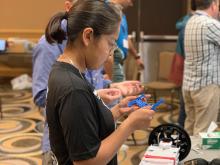
As a young woman of the Nuxalk Nation, Mallory Hans is “clearing a path for future generations.”
A 2022 graduate of the British Columbia Institute of Technology, she’s one of about 50 people hailing from various Tribes and First Nations across North America in attendance for the latest Tribal Broadband Bootcamp, a three-day intensive learning experience focused on building and running Tribal Internet networks.
Held in different tribal regions several times a year since the initiative began in 2021, this bootcamp (the eighth in an ongoing series of hands-on seminars) is being hosted at the Akwesasne Mohawk Casino Resort on the Saint Regis Mohawk reservation along the New York/Canada border.
“So far so good,” Mallory said on Day Two of the bootcamp just as the attendees broke into small groups to go through a variety of demonstration stations set up by bootcamp instructors and Tribal employees who run Mohawk Networks, which provides fiber-to-the-home (FTTH) Internet, video, and voice services across the reservation in northern New York.
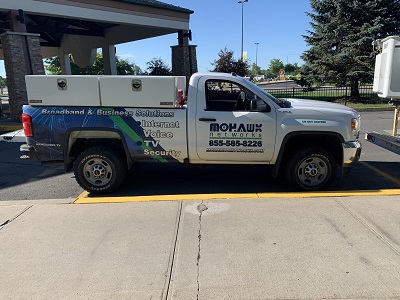
In continuing the driving impulse to demystify technologies and build capacity among cohorts in Tribal nations, Day Two was centered around fiber stations that included demonstrations of how network operation centers are run; one on fiber splicing; another showcasing equipment used to install fiber inside of households with representatives from Calix, and another station on the electronic equipment that measures the performance of fiber lines.
“I’m enjoying it, feeling more confident and finding out I’m capable,” said the 22 year-old, newly minted fiber technician.
Back in January, Colorado Springs Utilities (CSU) announced it was going to begin building a city-wide, open access fiber network owned, and that Ting would be its first anchor tenant. Construction of the network is expected to begin in the third quarter of this year, with a target completion date of 2028 (originally planned for fifteen years). The network will provide multi-gigabit service to roughly 200,000 homes as well as city businesses and anchor institutions. It’s still early in the process, but projections at the moment have the utility spending $45 million to $100 million a year for the next six years to complete the project. The first phase will see 225 new fiber route miles laid.
CSU Has Long Used Fiber
For thirty years CSU has built fiber across Colorado’s second-largest city. CSU’s dramatic expansion of this existing network directly benefits the utility by reducing overall costs, improving infrastructure monitoring, and boosting overall utility network resiliency. And it all will come with no rate increases to CSU electric customers.
But the company’s decision to lease access to this fiber expansion also directly aids the local community by lowering consumer utility costs, and delivering universal, affordable, high-speed Internet access. It’s a significant boon to Colorado’s second largest city that’s now an attractive, high-tech growth market.
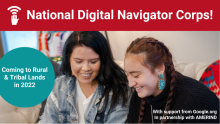
Two years after launching a community-based model to help residents overcome the digital skills challenges that keep so many offline, the National Digital Inclusion Alliance (NDIA) announced in February 2022 that it has received a $10 million grant from Alphabet subsidiary Google to dramatically expand the impact of its Digital Navigator Corps model across the country. The money will allow NDIA to take the Corps nationwide to 18 new rural communities (including Tribal sites), helping thousands of people overcome adoption barriers with the help of local experts.
Filling a Need at the Onset of the Covid-19 Pandemic
In August of 2020, NDIA first announced the launch of its new venture - the Digital Navigator initiative - to directly reach the many households across the United States that have access to wireline infrastructure but lack the knowledge, skills, trust, or comfort to turn that possibility into an affordable connection. The goal was to help people “get connected with affordable home Internet [access], find affordable computing devices, and learn basic digital skills,” and was borne directly out of the onset of the Covid-19 pandemic the previous spring.
The Salt Lake Public Library and Rural LISC were pilot partners, but NDIA has since worked with more than 20 organizations and communities over the last two years in addition to releasing a cornucopia of resources for cities and anchor institutions that to adapt and use as they see fit, in places as wide ranging as Austin, Cleveland, Denver, Nashville, Philadelphia, Portland, Providence, and Seattle. All of this work has led to refinement of the Digital Navigator model while also helping thousands get and stay online.
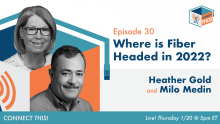
In this episode of the Connect This! Show, co-hosts Christopher and Travis Carter (USI Fiber) will be joined by Heather Gold (CEO, HBG Strategies LLC) and Milo Medin, an industry veteran who recently left Google as VP of wireless services.
The panel will tackle what we can expect to see in the broadband marketplace in 2022, with a special focus on fiber, including who is building it and why the capital markets are so hungry for it. What are we likely to see from builders big and small? What will competing against the national monopoly providers look like? Is fixed wireless a viable option ten years from now?
Subscribe to the show using this feed on YouTube Live or here on Facebook Live, or visit ConnectThisShow.com
Email us broadband@muninetworks.org with feedback and ideas for the show.
Watch here on YouTube Live, here on Facebook live, or below.
This week on the podcast Christopher talks with Stacy Cantrell, Vice President of Engineering at Huntsville Utilities in Alabama. Huntsville’s (pop. 197,000) municipal utility serves well beyond the city boundaries, and its electric department built a major network that gets close to every house within the city limits.
Stacy shares how the 1,100-mile fiber project unfolded, what it took to overcome challenges, and how things are going now that they’re nearly done. The utility uses its network for internal services to bring value to those living in the city, but providers, of which Google will be the first, can lease that network and attach homes to it.
This show is 29 minutes long and can be played on this page or via Apple Podcasts or the tool of your choice using this feed.
Transcript below.
We want your feedback and suggestions for the show-please e-mail us or leave a comment below.
Listen to other episodes here or view all episodes in our index. See other podcasts from the Institute for Local Self-Reliance here.
Thanks to Arne Huseby for the music. The song is Warm Duck Shuffle and is licensed under a Creative Commons Attribution (3.0) license.
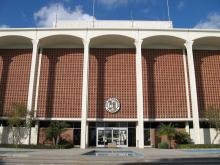
In the city of Fullerton, California (pop. 140,000), privately owned infrastructure builder and operator SiFi Networks has turned on the first section of what will be a city-wide, open access Fiber-to-the-Home network. The project makes Fullerton SiFi’s first FiberCity — a privately built, financed, and operated open access network it plans to duplicate in more cities across the country in the future. When complete next fall, the Fullerton FiberCity network will pass every home and business in the city, with the company's subsidiary, SiFi Networks Operations, selling wholesaling capacity to as many Internet Service Providers (ISPs) as want to enter the market.
A Different Approach
Image
SiFi’s FiberCity model remains somewhat unique in the United States, and is much more common in Europe and Asia. CEO Ben Bawtree-Johnson attributes their success to cracking the economic code for private investment in open access information infrastructure, which has seen more attention in recent years as investors and fund managers have seen opportunities. “[O]ur vision really is to create as many last-mile fiber optic networks as we can across the USA in a long term sustainable fashion,” Bawtree-Jobson remarked on an episode of the podcast last fall. “[W]e're all about long term, dry, low yielding, risk mitigated investments, so everything we do is based around 30-year plus type investments.”
In July we wrote about West Des Moines’ announcement that it would build an open access citywide conduit system to spur broadband infrastructure investment, and how Google Fiber became the Iowa city’s first partner.
In this episode of the Community Broadband Bits Podcast, Christopher is joined by Jamie Letzring, Deputy City Manager for West Des Moines, Iowa, and Dave Lyons, a consultant with the city, to discuss in more detail how things unfolded behind the scenes.
Together, the group digs into the how West Des Moines started with a long-term vision—called West Des Moines 2036—that, in part, brought local leaders together to discuss universal high-speed Internet access as a path to equity, economic vitality, and citizen engagement. Jamie and Dave share the challenges that came with a rapidly congesting right of way (ROW) landscape, and how that ultimately led to the decision to commit to a citywide conduit model that has attracted Google Fiber. Finally, Chris, Jamie, and Dave talk about what the citywide conduit system will do for business development and city residents once it’s complete.
We want your feedback and suggestions for the show; please e-mail us or leave a comment below.
This show is 40 minutes long and can be played on this page or via Apple Podcasts or the tool of your choice using this feed.
Transcript below.
We want your feedback and suggestions for the show-please e-mail us or leave a comment below.
Listen to other episodes here or view all episodes in our index. See other podcasts from the Institute for Local Self-Reliance here.
Thanks to Arne Huseby for the music. The song is Warm Duck Shuffle and is licensed under a Creative Commons Attribution (3.0) license.
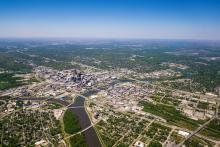
On July 6th, the City of West Des Moines, Iowa, announced an innovative public-private partnership with Google Fiber to bring gigabit Internet to all 67,000 of its citizens over the next two and a half years. The city will build conduit connecting every home and business and available for use by different providers. Google Fiber will be the first, coming in and laying and maintaining its own fiber once the city’s construction is complete. It’s the result of years of effort by the city council and serves as an example of other communities looking for solutions to improve options for all citizens.
Origins
The origin of the decision dates to 2016 and the city’s 2036 Vision [pdf]. In it, West Des Moines committed to “doubling down on technology,” creating five- and ten-year milestones that reached for specific markers of success by 2026, including: 80% of the population having access to gigabit Internet service, $2.5 million per year in new revenue generated by the city’s information infrastructure, and all citizens using the West Des Moines Integrated Network app for greater dissemination of information and citizen engagement.
In the city’s announcement, Mayor Steve Gaer said,
A key element of the City’s 20-year strategic plan calls for all residents, regardless of their means, to benefit from high-quality and high-speed connectivity.
Community leaders, stakeholders, and citizens all played a role during the planning phase, and project officials considered three criteria for guidance. The first was the expectation by its citizens had that the Internet was a utility; whether or not the city wanted to become an ISP, its efforts would have to work toward universal, affordable, reliable access. The second was a determination to regain and then maintain control of the municipality’s rights-of-way so as to preserve the infrastructure future of West Des Moines. And the third was that any future public network facilitated by the city should serve as a platform for serving residential and commercial users according to their diverse needs, from business to education to telemedicine.
This is the transcript for Episode 281 of the Community Broadband Bits podcast. Will Rinehart of the American Action Forum in Washington D.C. discusses telecommunications and economics with our host Christopher Mitchell. Listen to this episode here.
Will Rinehart: And I do think that obviously good policy is very very important and that's where you and I agree a lot. You know there's obviously some good policies that can be enacted. There's probably better conversations that could be had in this space and that's also something else that I really do really want to see. You're
Lisa Gonzalez: listening to episode 281 of the Community Broadband Bits podcast from the Institute for Local Self-Reliance. I'm Lisa Gonzales as a research organization. We here at the institute make it a habit to hear all sides of the debate along the way we make connections with people who offer perspectives on policy that differ from ours. We consider these conversations critical as we analyze factors that help us create policy recommendations and resources for local communities. This week Christopher talks with Will Rinehart from the American Action Forum. They got together at the recent broadband community's economic development conference in Atlanta. In this conversation you'll hear the two discuss a variety of topics they talk about the area of telecommunications and economics and the forum's approach. You'll also hear that these different perspectives aren't as black and white as they first appear. Now here's Christopher with Will Rinehart from the American Action Forum.
Christopher Mitchell: Welcome to another edition of the community broadband bits podcasts. I'm Chris Mitchell with the Institute for Local Self-Reliance. Coming to you from Atlanta sitting practically on a runway at the Atlanta airport with Will Rinehart the Director of Technology and Innovation Policy with the American Action Forum. Welcome to the show. Thanks Chris. Thanks for having me. We're at the broadband community's event here. We just had our second panel which is called a blue ribbon panel and general session kind of thing. And you and I are typically brought on as people who have very opposing points of view.
Christopher went to Atlanta for the Broadband Communities Economic Development Conference in early November, and while he was there, he touched base with this week’s guest Will Rinehart. Will is the Director of Technology and Innovation Policy at the American Action Forum, a DC nonprofit organization that’s been around since 2009.
Will and Christopher don’t always see eye to eye on issues that affect telecommunications and broadband policy, but both agree that it’s important to have spirited debate to share perspectives. Only by examining issues from different sides can we craft policy that creates lasting benefits.
In this interview, Will describes his organization and his work there. Chris and Will look at compelling issues such as ISP competition, government regulations, and how the FCC’s 2015 upgraded definition of broadband has reverberated in the market. The two get into franchising and ubiquitous broadband, local authority, and connectivity in rural America. It’s a spirited discussion chock-full of issues.
You can tweet to Will, he’s @WillRinehart on Twitter.
This show is 30 minutes long and can be played on this page or via Apple Podcasts or the tool of your choice using this feed.
Transcript below.
We want your feedback and suggestions for the show-please e-mail us or leave a comment below.
Listen to other episodes here or view all episodes in our index. See other podcasts from the Institute for Local Self-Reliance here.
Thanks to Arne Huseby for the music. The song is Warm Duck Shuffle and is licensed under a Creative Commons Attribution (3.0) license.