
mediacom

Tagged Stories

New Year, Same Lame Cable and DSL Monopolies

It's a new year, but most of us are still stuck with the same old DSL and cable monopolies. Though many communities have built their own networks to create competition and numerous other benefits, nearly half of the 50 states have enacted legislation to make it harder for communities to build their own networks.

Fortunately, this practice has increasingly come under scrutiny. Unfortunately, we expect to see massive cable and telephone corporations use their unrivaled lobbying power to pass more laws in 2012 like the North Carolina law pushed by Time Warner Cable to essentially stop new community broadband networks.

The FCC's National Broadband Plan calls for all local governments to be free of state barriers (created by big cable and phone companies trying to limit competition). Recommendation 8.19: Congress should make clear that Tribal, state, regional and local governments can build broadband networks.

But modern day railroad barons like Time Warner Cable, AT&T, etc., have a stranglehold on a Congress that depends on their campaign contributions and a national capital built on the lobbying largesse of dominant industries that want to throttle any threats to their businesses. (Hat tip to the Rootstrikers that are trying to fix that mess.)

We occasionally put together a list of notable achievements of these few companies that dominate access to the Internet across the United States. The last one is available here.

FCC Logo

As you read this, remember that the FCC's National Broadband Plan largely places the future of Internet access in the hands of these corporations. On the few occasions the FCC tries to defend the public from their schemes to rip-off broadband subscribers, Republicans (joined by a number of Democrats) threaten to overrule what is supposed to be an independent agency to defend the corporations that just happen to be donors to their campaigns.

Back when most assumed AT&T would be able to push its horribly anti-competitive takeover with T-Mobile through an impotent federal government, a few stories exposed the tip of the iceberg of AT&T's astroturf efforts, as with this report from the Center for Public Integrity:

“It is important that we, as Christians, never stop working on behalf of the underserved and forgotten,” the Rev. R. Henry Martin, director of the clinic, wrote to FCC Chairman Julius Genachowski in June. “It might seem like an out-of-place endorsement, but I am writing today in order to convey our support for the AT&T/T-Mobile merger.”

...

Not included in Martin’s letter to the FCC was the fact that his organization had received a $50,000 donation from AT&T just five months earlier. Indeed the Shreveport-Bossier Mission is one of at least two-dozen charities that were recipients of AT&T’s largesse and have written in support of the T-Mobile buyout, which will cut the number of national wireless companies from four to three.

When AT&T's wasn't able to buy enough influence with legitimate groups willing to sell out the interests of their members (who would pay more for their communications in a less competitive environment), it would simply create its own groups to push its interests:

AT&T Logo

Tallahassee Mayor John Marks brought an Atlanta nonprofit to the city as a partner in a $1.6-million federal-grant project, saying it would put high-speed Internet into the hands of poor people.

What he didn't say, and now says he didn't know, was that the Alliance for Digital Equality (ADE), in its first three years of existence, was nearly 100-percent funded by AT&T and spent most of its money — four of every five dollars — to pay board members, consultants, lawyers and media companies to push the global communication giant's positions on Internet and wireless regulation. Nor did Marks disclose, initially, that ADE had paid him $86,000 over several years as a member of its board of advisers.

We continue to see these massive companies abuse their market power to increase their prices, knowing that their lobbying arms will continue pushing legislation to stop communities from building their own networks.
Time Warner Cable hiked its rates in North Carolina immediately after passing its legislation to stop communities from building networks. Mediacom raised its prices while it attempts to sabotage efforts in rural Minnesota to build networks in unserved areas. And invented new fees to rip off its subscribers while trying to disrupt a rural fiber-to-the-farm initiative that slightly overlapped some territory in which they have long refused to invest.

Even as profits on cable broadband services approach Exxon proportions, Time Warner Cable has pushed for usage-based pricing to further overcharge subscribers, but mostly to strangle enormously popular competitors like Netflix. CenturyLink is not far behind, with usage caps prioritizing its own video content over competitors.

Verizon Wireless tried to sneak a new fee past subscribers by announcing it just before Christmas but backed down after outraged consumers reacted. One has to wonder whether it would have backed down in a world where AT&T took over T-Mobile, resulting in 3 out of 4 wireless customers being with Verizon Wireless and AT&T. Four competitors isn't the robust competition envisioned by Adam Smith, but it still beats the duopoly dynamic that results from even less competition.

Verizon Logo

Speaking of less competition, the recent deal between Verizon and cable companies is troubling. We already knew that FiOS was all but dead, but this deal truly puts a fork in it:

I'll assume that neither cable operators or Verizon are going to let us see the deal fine print to confirm the Times guess, but the logic fits Verizon's strategy. Verizon already cherry picked the most valuable FTTH upgrade markets, and has shown total disinterest in further upgrades. This deal allows them to save money on FTTH upgrade costs, instead soaking up remaining customers with LTE -- which we noted was the plan some time ago. This deal is very bad news to the rural telcos without the cash for large-scale upgrades (CenturyLink, Frontier, Fairpoint, two of which Verizon sold aging DSL networks to), and for satellite broadband providers.

The future of next-generation networks is now only community networks, cooperatives, and some small private networks.

We've long argued that phone and cable companies have systematically overstated their coverage in mapping efforts as part of their effort to blunt any sensible public policy that would result in all Americans having a choice between fast, affordable, and reliable connections to the Internet. The New England disaster called FairPoint is back in the news for overstating the number of subscribers that have access to DSL. The company has not met the requirements it agreed to when purchasing Verizon's lines a few years ago.

Comcast Logo

And in the continuing saga of Comcast's growing domination over the information people can access, Bloomberg TV is fighting Comcast's practice of discriminating against channels in which it has no ownership stake. Comcast has long strongly encouraged those who want to put television channels on its lineup to give Comcast a piece of the action, not unlike a mobster encouraging a small business to pay protection money. It wants to continue expanding its role as a gatekeeper to the Internet, particularly in the many areas where people have no real choice from other high speed providers.

And perhaps the best example of why we should not trust these massive corporations to run essential infrastructure is the revelation that AT&T defunded 9-11 call centers in Tennessee to gain a market advantage over competitors, a practice they were previously caught doing, leading to settlements out of court.

These corporations are not evil, they are following a sensible mandate to maximize their shareholder value. It is our government that is not sensible -- entrusting them with the future of Internet access without even bothering to enact the most basic regulations. Communities must continue to wise up and ensure they have the access they need to modern communications -- access that reponds to their needs, not those of distant shareholders.

PUC Gives Lake Communications Authority to Offer Broadband on Minnesota North Shore

When last we looked in on the Lake County FTTH project connecting rural areas north of Lake Superior, the County had just ditched its original management team and Mediacom started trying to derail the project.

The County went on to hire "Lake Communications," a two man firm created for this project, while Mediacom presumably returned to quietly scheming against the introduction of any competition on their turf. Lake Communications has received authority by the Minnesota Public Utilities Commission to provide broadband in their target territory.

Kevin O’Grady, a staffer for the Public Utilities Commission, called Thursday’s 5-0 vote “uneventful.” He said that aside from a protest from the Minnesota Cable Communications Association that was withdrawn just before the vote, the application was “nothing out of the ordinary.”

The cable association, which faces competition from the fiber project, had complained that the county, without a public vote, couldn’t be the legal authority to provide telecommunications services under Minnesota law. The commission, responding to the complaint, said the authority would be granted to Lake Communications, which it deemed had a proper relationship with the county in providing the service.

The county plans to build the network and lease the lines to Lake Communications for revenue. In its original response to the cable association’s complaint, the state commission said Lake Communications’ application “complies with the requirements typically applied by the commission to applications” across the state. It also stated that Lake Communications’ financial statements were “sufficient and consistent with the financial information filed by other applicants for authority.”

Remember that Minnesota law requires a supermajority vote of 65% before cities and counties provide telephone service. In this case, Lake Communications will be offering the services on infrastructure owned by the County. If there is any sliver of a doubt about the legality of this arrangement, we can expect Mediacom or the Minnesota Cable Communications Association to file suit.

But now is probably not a good time for them to sue. Most of the time, the point of lawsuits against community networks is not about winning the suit, but rather delaying and disrupting the project. So one would expect a lawsuit to occur much closer to the ground-breaking. Why risk suing now, when the lawsuit could be resolved over the winter, when little work is being done? Better to wait and hope the suit takes much of the construction season away from the potential competitors.

We hope this is too cynical a reaction, but watching some of these lawsuits play out leads one to such suspicions.

This is yet another reason the Minnesota Legislature should make it very clear that local governments have full authority to bond for, finance, build, operate, and own these networks -- preferably with no more barriers than are common for other significant public expenditures.

Without this project, much of Lake County and the nearby areas also served by this project will simply not have fast, affordable, or reliable access to the Internet. Let's hope the anti-competitive desires of a few companies in portions of the county do not derail it for everyone.

TonkaConnect Initiative Shelved, More Education Needed

The TonkaConnect project of the Lake Minnetonka Cable Commission, comprising many suburbs west of Minneapolis, is going to pause after some of the city councilmembers of communities within the project were unsupportive.

“I think [the LMCC executive committee] realized that if a municipal fiber network is ever going to be built, the cities need a considerable amount of time spent in educating and understanding the significance of building such a system,” said a memo from Sally Koenecke, LMCC executive director.

The $81 million proposal sought to provide 25,000 households in communities from the 17 member cities with Internet, phone and cable fiber optic services.

I have occasionally offered technical advice to this ambitious project and have watched as Mediacom and other incumbent providers spread rumors and lies to disrupt it. These companies will stop at nothing to preserve the limited competition they rely upon to maintain their market power.

“I’m personally against spending any money on the fiber optic project,” said Orono mayor Lili McMillan. “What I want to do is send a message. I don’t feel government should be in this.”

To be clear, if Lili McMillan doesn't want the government to build a next-generation network, they will have to continue relying on Mediacom cable and slow, unreliable DSL services. Their choice. Their incumbents do not have the capacity or interest to build a next-generation network themselves but they do have the capacity and interest to prevent any other party from doing so.

As Ann Treacy notes at Blandin on Broadband, this is not necessarily the end of the line and may actually serve to increase the desire of people in those communities to take action:

Unfortunately I think that having interest if the price is low enough might not be enough to motivate a community through the perils of community supported fiber. But I always remember the folks in Monticello saying that each set back in winning over the residents just made them stronger in the end. They were talking about the super majority referendum required for them to pursue their community network – but the same may apply here. You need full community support and interest to see a community network to fruition.

I am including a video they produced to explain the project below.

Video: 
See video

Minnesota Cable Companies Fight to Stop Rural Lake County From Getting Broadband

Lake County's County-wide FTTH network has encountered more than its fair share of troubles but residents are excited at the prospect of having broadband access to the Internet. While some of its troubles came from their own confusion and misunderstanding that led to the falling out with their consultants, National Public Broadband, they are now in the cross hairs of a powerful cable industry group - the Minnesota Cable Communications Association.

The Minnesota Cable Communications Association joined the fray at the end of February, sending a massive data request to Lake County and all the governments within the project area. County Attorney Laura Auron said she “objected to the characterization” the cable industry advocate group made about the project. The MCCA wrote that is was “deeply concerned about the shroud of secrecy” about the project, calling efforts to get the project in line with state and federal rules “opaque.”

The association demanded to see the county’s business plan and contracts for the project. It also asked all the cities and townships in the joint powers association, a requirement under the Rural Utilities Service rules for grants and loans, to provide all information regarding the fiber project discussed at council and board meetings.

MCCA exists to protect the interests of its members -- fair enough. Too bad for the folks in Lake County that have no access to the Internet. Because a portion of the project will give the resident of Silver Bay and Two Harbors an actual choice (disrupting the monopoly of Mediacom), MCCA is using a common tactic to delay and disrupt the project: massive public records requests. All the while, MCCA pretends its core mission is advocating on behalf of the beleaguered citizens of Lake County.

We commonly hear from publicly owned networks that they have to deal with constant data requests from competitors. This goes far beyond any reasonable amount as incumbent companies use the requests themselves as a time suck attack against publicly owned networks as well as mischaracterizing any detail they can in an attempt to smear the network.

Communities should be ready for this onslaught. From what we can tell, it never really stops. This is another reason community projects should live in public to the greatest extent possible. Secrecy is not really an option and can consume more energy than community networks can spare.

MCCA is correct that Lake County should act transparently, but its interest lies only in casting doubt and disrupting this potential network because it threatens the monopoly of an MCCA member.

A Few Loose Ends...

Too few posts on the blog this week - apologies.

But I want to make sure readers saw that the bill to strip North Carolina communities of the right to build broadband networks is no longer being fast tracked, an important victory that resulted from people making old-fashioned phone calls to voice their disapproval to elected reps. Thanks to all who called.

Keep calling. They need to know that this bill is totally unacceptable.

Craig Settles also discussed the victory.

I can't comment on it just now, but Stimulating Broadband broke a story about Mediacom continuing to harass Lake County. In order to protect their turf, they are willing to disrupt a project that will bring connections to thousands of people who have no other option.

Mediacom Falsely Accuses Lake County Communities of False Statements

In a situation similar to the Frontier letters to Sibley we published last week, the cable company Mediacom has sent letters to Silver Bay and Two Harbors in Lake County to scare them into abandoning the rural county-wide FTTH network that they are building with federal broadband stimulus aid.

Interestingly, rather than sticking to the normal fear, uncertainty, and doubt (FUD) campaign, Mediacom apparently based its threats on a draft previous version of the joint powers ordinance rather than the language actually passed by the resolutionsincluded in the current JPA. Whoops.  [See Update below]

Mediacom, perhaps you should focus on improving your networks rather than stifling potential competition.  Please send us copies of letters your community network has received from incumbent providers.

Without further ado, here is the letter [download pdf] sent to Silver Bay and Two Harbors on December 21, 2010 by Tom Larsen, VP of Legal and Public Affairs for Mediacom:


Re: Joint Powers Agreement with Lake

County Dear Mayor Johnson:

Mediacom prides itself in being one of America's leading providers of telecommunications services to small and medium sized communities. As you may be aware, Mediacom offers a highly competitive suite of high-speed Internet, cable television and phone services to homes and businesses throughout Silver Bay (the "City").

It has come to our attention that the City passed a resolution on November 15, 2010 approving a Joint Powers Agreement with Lake County (the "JPA"). Given the significant private capital that Mediacom has invested in order to make advanced telecommunications services available throughout the City, we were extremely surprised to learn that your resolution approving the the JPA includes the following finding in Section 4(e):

The Municipality hereby finds that the facilities composing the Project are necessary to make Internet and other communication services that are not and will not be available through other providers or the private market accessible and available on an equal basis to the residents of the municipality.

As Mediacom makes Internet and other communication services available on an equal basis to residents of the City, the finding contained in Section 4(e) is patently false. It appears that the JPA is an essential element in Lake County's ability to close on a $56 million loan and $10 million grant from the Rural Utility Service of the United States Department of Agriculture. Given that this outright false statement is being made by the City with the knowledge that it is both false and may be relied upon by the federal government when issuing $66 million to Lake County, the City may want to investigate whether it has incurred financial liability or criminal exposure by entering into the JPA. Mediacom plans to call this matter to the attention of the Office of Inspector General of the United States Department of Agriculture.

The JPA also appears to be an essential element in Lake County's ability to issue revenue bonds pursuant to Minnesota Statutes, Chapter 475. The JPA makes clear that it is your City's "need" for facilities that it supposedly does not "have" that is the justification for the revenue bonds. In fact, Section 6(a) of the JPA requires the City to make false representations that it will only be able to receive Internet and communications services if the revenue bonds are sold:

[A]dopt a resolution (i) evidencing its [the City's] intent to authorize the Issuer to undertake and operate the portion of the Project located within its jurisdictional boundaries, including a recital of the benefits to such Party [the City] from issuance of the Obligations to finance and operate the portion of the project located within its jurisdictional boundaries, (ii) making specific findings regarding the benefits of the Project, including the findings in Section 2 of this Agreement . . .

These false representations by the City may have also exposed it to significant legal liability from the purchasers of the County's revenue bonds on a theory of fraudulent inducement.

It is imperative that these material misstatements of fact be corrected. Accordingly, Mediacom requests that the City immediately take action to correct these false findings by rescinding or amending the JPA. We also request that the City immediately notify any and all affected municipalities (including Lake County), bond issuers, government agencies (including the Rural Utilities Service) or other persons or parties that the JPA contained material misstatements of fact and should not be relied upon.

Further, we request copies of all correspondence and/or information relating to the JPA possessed by the City, including a list of all municipalities, bond issuers, government agencies, or other persons or parties who may have been provided a copy of the JPA. Additionally, we request all materials, statements and/or other information which was provided to or considered by the City in connection with the JPA including the identity of any individuals making oral or written statements or representations to the City regarding the availability of Mediacom's Internet or other services offered in the City.

I appreciate your prompt attention to this matter. Please do not hesitate to contact me should you have any questions.

Sincerely,
Tom Larsen


Lake County responded thusly [download pdf]:

Dear Mr. Larsen:

We have been provided with copies of the letters dated December 21, 2010, which you sent to the Cities of Silver Bay and Two Harbors in Lake County, Minnesota. We are sending this letter as a response.

First, let me point out that the Joint Powers Agreement (JPA) was not a condition precedent to the loan and grant of funds by the United States of America acting through the Rural Utilities Service. The Rural Utilities Service made the decision to award the loan and grant to Lake County well before the Cities of Silver Bay and Two Harbors decided to participate in the network through the JPA.

Second, it is regrettable that you did not have a current copy of the JPA to review. The current version of the JPA provides as follows:

The findings in section 2 are:

  1. It is in the best interests of the Municipalities to consent to the issuance of the Obligations by the Lake County HRA and the operation of the Project by Lake County.
  2. Each of the Municipalities will receive substantial benefit from the Project which will provide advanced voice, video and data services, accessible and available on an equal basis to residents of each of the Municipalities.

Section (6)(a) of the current version of the JPA states:

Each of the Municipalities will consider, if necessary and requested by Lake County, adopting an ordinance, or modify an existing ordinance to allow such Municipalities to issue an extension permit to Lake County pursuant to Chapter 238 of the Minnesota Statutes and all other applicable laws, rules, regulations and ordinances now or hereafter in effect. Each of the Municipalities further agrees to consider issuing an extension permit to Lake County if necessary and requested by Lake County in accordance with all applicable laws, rules, regulations and ordinances now or hereafter in effect.

As you know, Mediacom is a valued service provider in the Cities of Silver Bay and Two Harbors. Lake County’s network will be an open-access system, allowing Mediacom to reach additional consumers outside of the Cities of Silver Bay and Two Harbors without the risk and expense of expanding its cable system. It is a pity that you feel you have to resort to such heavy handed tactics, rather than choosing to continue to work in partnership with the Cities and join with Lake County to provide services on this new infrastructure.

If you have any further questions, please feel free to contact me.

Sincerely,
[no-glossary]Russ Conrow[/no-glossary]
Special Assistant Lake County Attorney

Update: After I published this story, VP Tom Larsen contacted me to correct my claim that Mediacom based its objection on a draft:

Given that these are real documents (not “draft” as you described) that were signed by Silver Bay’s City Administrator and Mayor and approved by the City Council, I hardly think my letter can be characterized as false accusations.

Mr. Larsen is correct, the language was not a draft.  However, it was updated in a later version of the Joint Powers Agreement.  I have attached both version of the Joint Powers Agreement here for readers to view (Nov 15 and Nov 25).  Apologies for mischaracterizing Mediacom's actions.  However, we will continue to maintain that a cable network is no more a substitute for a FTTH network than an ultra-light airplane is a substitute for a Boeing 777.  

Update from Lake County Fiber Project (Minnesota)

New Update: Mediacom has invented language in the Joint Power Agreement and threatened the Mayors of Silver Bay and Two Harbors. Let's see how dirty Mediacom will get to prevent competition.

Lake County, recipient of a broadband stimulus award to build a rural county-wide (larger, actually) fiber-to-the-home network, has been wrestling with questions they have related to the problems at Burlington Telecom. After some lazy reporting in the Star Tribune and Duluth News Tribune exaggerated Tim Nulty's role in the problems Burlington Telecom now faces, some on the County Board began asking more questions of National Public Broadband (of which Tim is CEO).

I attended a meeting after Christmas to observe the discussion, share our understanding of the situation, and discuss the experiences of other community networks. Next week, the County Board plans to decide whether they will alter the arrangement with National Public Broadband or possibly seek another partner in the project -- a development that may have implications for changes or revocation of the stimulus funding.

It is important to note that due to structural differences, the problems in Burlington (which, at the least, were hidden from the public allowing them to snowball) are extremely unlikely to repeat in Lake County.

The Lake County Chronicle has published a lengthy editorial responding to concerns and noting the ramifications of any changes to the partnership with National Public Broadband. As of this writing, it is not yet behind a pay wall.

It offers some wise thoughts:

Like the debate over whether the meetings being held to draw up the rollout plans for the county should be public or private, NPB needs to better apply the rules of working within the expectations of open government. We demand transparency and a full accounting of tax dollars.

It’s fair to wonder, as some board members did last week, just what NPB would withhold from the board if things don’t go swimmingly with the Lake County plan. All adjustments, all bumps along the road, need to be publicly and fully discussed.

The county can use NPB’s disclosure mistake to its advantage, by holding NPB’s feet to the fire on all elements of the fiber rollout plan. If NPB can convince the board that this early communication snafu is the last, members would be right to keep moving forward with the project by permanently partnering with NPB.

The real lesson to learn from Burlington is the importance of proper oversight and communication. Lake County Commissioners and the public need to be apprised how the network is doing, including what problems arise and how they are resolved (there are always problems!). This does not mean National Public Broadband should have to publicly disclose what it pays for channel contracts - but it will likely have to disclose more than competitors Mediacom, Qwest, or other private sector companies publicly disclose. Such is the nature of accountability.

Any risk with the current plan is outweighed by the risk of continuing to rely on the private sector for this essential infrastructure:

You can’t begrudge the services already in place. But we can do better and Lake County is taking a lead on getting up-to-date, enviable technology to the region. Those who depend on higher-speed, dependable Internet have been looking for someone to step up.

Last year’s line break that put cell phone, landline phone, and Internet service out for much of the North Shore was just one of the inadequacies put in the spotlight. The question to ask is this: How long are we supposed to wait for private companies to bring proper service to the area and what do those hoping to boost the economic footprint of the area tell companies who are demanding better service?

The editorial goes on to discuss a local business operating out of Duluth rather than Two Harbors (County seat) because Two Harbors does not have the reliable (and presumably affordable) connection he needs.

Sibley County Discusses Rural Fiber-to-the-Farm

Last night, I drove down to Winthrop (Sibley County) and then Fairfax (Renville County) to get a better sense of their discussions around next-generation broadband networks (originally covered here).

Throughout this week, they are having public meetings to discuss the potential project though the feasibility study is not yet completed. Doug Dawson of CCG Consulting, author of the feasibility study, is in town talking with folks about potential approaches. However, he made it clear that there is no guarantee they will find a business plan that can work to cover all of Sibley County and the area around Fairfax. Stay current on their project from the Sibley & Renville County Fiber site.

Winthrop's City Administrator, Mark Erickson, is committed to serving the farms though. There is little doubt that the project could succeed financially by serving only the towns, which harbor some 80% of the population. But Erickson recognizes that the towns depend on the farmers and that everyone will benefit more from the network if it is universally available.

Many of the people in towns already have access to some basic broadband - either a slow DSL (in some cases so slow even the old super slow FCC broadband definition does not cover it) or a last-generation cable network from Mediacom. The cable television comes out of Dubuque though, so it isn't exactly local.

The project was originally conceived to cover Sibley County. However, a high school in nearby Fairfax has decided to use iPads [pdf] to revamp its curriculum and it would be a travesty to have such great broadband available across the county border when so many students at GFW have iPads but little access to true broadband.

Most of the area schools have continued to do what they can with basic T.1 lines - too little broadband (at too high a cost!) to really use any modern educational applications. And the mandated state-wide testing is a nightmare across these connections. The new network will bring proper broadband connections at affordable rates.

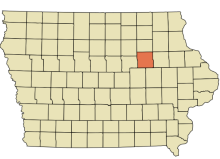
Map of Sibley County

At the meeting in Fairfax, there was definitely concern that it would simply be uneconomical to include all the farms. Though the costs are high, sometimes I think everyone has bought too deep into the idea that we cannot run fiber to everyone in this country. We have forgotten the successes of rural electrification, that we can solve these infrastructure problems to the benefit of everyone.

A common theme across all these networks is that the cities really do not want to get involved but are compelled to take responsibility because they have no future without broadband. Economic development and quality of life are very much linked to broadband access.

Ironically, Mark Erickson moved to Winthrop to get away from the hassles of telecom -- he used to work for Hiawatha Broadband (HBC), one of the few private companies that partners with cities to operate on city-owned infrastructure (as they do in Monticello). He had washed his hands of telecom and broadband until his City Council told him they needed to do something to improve broadband access for the citizens.

In six weeks they should get some numbers from the feasibility study to get a sense of how a project could work. In the meantime, the results of the telephone survey found a lot of support for local government getting involved in building a network (though the final network may be a coop model rather than being municipally-owned).

In the meantime, we'll see if Mediacom and phone companies start trying to erode that base of support with the standard campaign of Fear, Uncertainty, and Doubt (FUD) that they are famous for.

Dubuque Considers Its Telecom Options

I caught an interesting article asking whether Dubuque, Iowa, should build a publicly owned broadband network. Iowa already has a number of publicly owned networks, mostly cable HFC networks, that serve communities.

The article starts with some history, noting that the small community of Hawarden, Iowa, was the first to build a public cable system in the state and had to defend its rights to do so in court.

The northwest Iowa community of about 2,500 people more than a decade ago built a $4 million cable system, only to be temporarily shut down by an Iowa Supreme Court injunction. Hawarden survived the court's order prohibiting municipalities from being in the telecommunications business, and in many respects blazed the trail for publicly run cable, Internet and phone service in Iowa.

More communities may be considering building their own networks (though they will build now with fiber rather than HFC) following Iowa's statewide franchising rules that preempt local authority, giving greater power to private cable companies.

The way it was written, existing franchise agreements may be nullified if a competitor announces plans to serve the community. Fortunately, many Iowa communities voted to formed telecommunications utilities back in 2005, though few have yet exercised that authority.

Unfortunately, the article's author was clearly misled by either Qwest or Mediacom's public relations flacks because he wrote about UTOPIA, as though the problems of a purely open access model under a different regulatory environment poses important lessons for communities in Iowa that may build their own networks. The successes and failures of UTOPIA teach us very little about how Iowa communities should move forward.

Smaller Iowa communities do have a serious disadvantage - building modern networks is very difficult the smaller they get. Below 5,000 subscribers, it can be difficult to make the network pay for itself (though exceptions exist) - suggesting to me that joint efforts combining communities could be a good option. Unfortunately, though the technology has no problems crossing political boundaries, the politics are much more difficult.