Image


Fast, affordable Internet access for all.
This week on the first podcast of the year, Christopher speaks with Scott Menhart, the Chief Technology and Information Officer of Traverse City Light and Power. TCLP, a utility company, serves the 13,000 dedicated residents in Northwest Lower Michigan.
Chris and Scott discuss the history of the TCLP and the benefits of building a municipal fiber network for Traverse City, Michigan. They also discuss the role of fiber and how TCLP's use of it with supporting the electric grid led to them expanding its services over the years to include broadband internet access.
Despite the challenges they face from major companies, Chris and Scott conclude the conversation by emphasizing the importance of staying the course with proper planning with building small, successful broadband networks for their communities.
This show is 34 minutes long and can be played on this page or via Apple Podcasts or the tool of your choice using this feed.
Transcript below.
We want your feedback and suggestions for the show-please e-mail us or leave a comment below.
Listen to other episodes or view all episodes in our index. See other podcasts from the Institute for Local Self-Reliance.
Thanks to Arne Huseby for the music. The song is Warm Duck Shuffle and is licensed under a Creative Commons Attribution (3.0) license.
On this episode of the Community Broadband Bits Podcast, host Christopher Mitchell talks fiber with Gary Bolton, CEO and President of the Fiber Broadband Association (FBA) at the Broadband Communities Summit in Houston, TX.
The two discuss a recent fiber optic technician training program that FBA is rolling out, not only to fill expertise gaps and the labor shortage, but also to provide individuals with an opportunity to start a career in broadband deployment. The association will be working with state broadband offices and workforce development to recruit people and shape the program to local needs. The curriculum has been approved by the Department of Labor.
Mitchell and Bolton talk about FBA’s motto: “If it’s not fiber, it’s not broadband.” They debate whether future-proofing broadband infrastructure by installing fiber is a worthwhile investment, and compare the deployment of fast, reliable Internet access to U.S. electrification.
This show is 29 minutes long and can be played on this page or via Apple Podcasts or the tool of your choice using this feed.
Transcript below.
We want your feedback and suggestions for the show-please e-mail us or leave a comment below.
Listen to other episodes here or view all episodes in our index. See other podcasts from the Institute for Local Self-Reliance here.
Thanks to Arne Huseby for the music. The song is Warm Duck Shuffle and is licensed under a Creative Commons Attribution (3.0) license.

Since the passing of the Tennessee Broadband Accessibility Act (TBAA) in 2017, the state has poured more than $100 million into connecting its most rural communities, and more than 20 electric cooperatives throughout the state have spent the last four years making their way into the broadband business.
Back in 2016 and 2017, Sequachee Valley Electric Cooperative (SVEC), along with many other electric cooperatives, advocated for the right to build fiber-to-the-home (FTTH) networks out to their memberships in the most rural parts of the state. When TBAA passed through the state legislature, removing major barriers for cooperatives to build out their own networks, SVEC got to work.
Today, 23 electric cooperatives in Tennessee have launched their own broadband projects, including SVEConnect, a broadband subsidiary of SVEC offering FTTH that has connected more than 4,400 members across Marion County.
From Electrification to Connectivity
SVEC was formed in 1939 to address the broad gaps in access to electricity throughout the rural areas surrounding Chattanooga, Tennessee in Bledsoe, Grundy, Marion and Sequatchie counties. When the cooperative was first established, the nonprofit’s leaders would frequent community events at churches and neighborhood gatherings, keeping their fingers on the pulse of community needs. The cooperative began offering an essential service: electricity.
Image

With the Tennessee Valley Authority (TVA) and the state’s Comptroller’s office recent approval of the Knoxville Utilities Board (KUB) business plan, the city-owned utility proposal to build a Fiber-to-the-Home (FTTH) network in the Volunteer State’s third-largest city is set to take the next step.
Tonight, KUB will hold a hearing to get public input on KUB’s plan to bring high-speed Internet service to its 210,000 customers spread out across Knoxville, Knox County, and small parts of seven neighboring counties.
If the KUB Board of Commissioners approves the final plan, along with a needed two-thirds majority support from the Knoxville City Council, network construction could start sometime next year and would take about seven years to build out.
But it won’t come cheap. “We project that the cost to build out the network and ultimately staff and operate that network, estimated cost is about $500 million over the first ten years of operation of the business line,” KUB Vice President Jamie Davis told WATE 6 News.
Funds to construct the network would come in part from a 3 percent annual rate increase on KUB electric customers from 2022-2025. After 2025, KUB electric customers would see an estimated increase of $10.50 in their monthly electric bill, according to Knox News.
And the Survey Says…

Welcome to In Our View, the first installment of a new series here. From time to time, we'll use this space to explore new ideas and share our thoughts on recent events playing out across the digital landscape, as well as take the opportunity to draw attention to important but neglected broadband-related issues.
The disaster in Texas resulting from an electric grid that was deliberately left exposed and likely to fail in rare cold weather events has received a lot of dramatic coverage, as well it should given the loss of life and damage to so many homes and businesses. It also raised some questions in my mind regarding competition and designing markets that will be discussed below. Texas was a leader in allowing different electricity firms to compete in selling electricity over the same electric grid, an arrangement that has some similarities to open access broadband approaches.
In digging into that recent electricity history, I made another interesting and relevant finding that I discuss first as part of the background to understand the lessons from Texas. In 20 years of competing models between, on the one hand, municipal and cooperative structures to deliver electricity and, on the other hand, a largely deregulated and competitive market, the munis and co-ops delivered lower prices to ratepayers.
Many of the sources used in this article are behind paywalls. We wish that weren't the case but we support both paying for news and the libraries that have databases that may allow you to track this down if you have the inclination.
Electricity Deregulation, Texas Style
More than 20 years ago, Texas largely deregulated electricity markets. Residents still have a monopoly in charge of the physical wire delivering electricity to the home, but they could choose among various electricity providers that would effectively use the wire and charge different amounts, differentiating themselves via a variety of factors, including how the electricty was produced.

The streaks of paint and tiny white flags popping up across Block Island are not signs of surrender. They are signs of progress. The popular summer tourist destination, nine miles off the coast of Rhode Island, is on the verge of building a Fiber-to-the-Home (FTTH) network, bringing gig-speed Internet connectivity to the more than 1,000 residents who call the community home.
The markers on residents’ property are plot points along the construction route as network planners prepare to start building the last-mile portion at the end of March.
On Feb. 4, BroadbandBI launched its website, announcing that the construction materials had finally arrived on the Island and signaling the start of construction would soon be underway.
Sertex, the company partnering with the town to build the network, is anticipating deploying more than 60 miles of fiber to deliver high-speed Internet service directly to homes and businesses in New Shoreham, the only town on Block Island.
Pop the Champagne
Residents there unanimously voted in July 2020 to pay for the construction of the island-wide network with $8 million in bonds. Approval for the project was so overwhelming that when the vote took place the Block Island School gymnasium erupted with cheers and applause.
Currently, there are still only three options for Internet service on the Island: Verizon DSL, satellite, and mobile services with the fastest speed advertised at 35 Megabits per second (Mbps). And for a period of time, it seemed as if residents were doomed to those tortoise-like speeds forever.
In 2014, the Block Island Times captured experiences from its readers after an especially frustrating summer of spotty service. One reader, Jessica Fischburg wrote, “We have Verizon and live down in Franklin Swamp. No cell service. Our Internet is painfully slow unless you wake up super early. We have no choice but to disconnect when we come out to the island!”
The Answer Was Blowing in the Wind

When Craig Eccher, CEO Tri-County Rural Electric Cooperative, joined Christopher on the podcast last fall, he had an exciting project to talk about: the electric cooperative, after strong calls from its membership asking their utility to deliver broadband, stepped up and committed to an $80 million, 3,250-mile fiber build across the rugged terrain of rural Pennsylvania, the first leg propelled by $52.6 million in federal and state grants. Tri-Co Connections, the subsidiary building the network and serving as provider, has begun connecting residents in an aggressive plan to serve 10,000 users in the next three years. The move makes Tri-County the first electric co-op in Pennsylvania to enter the fiber space, and it's doing so in dramatic fashion.
More Humble Beginnings
John Lester, General Manager of Clarksville Connected Utilities (CCU) in Clarksville, Arkansas, knows a thing or two about the value of a municipal broadband network.
“Just keeping the dollars in Clarksville is gonna have a big impact. Do you have a calculator handy?” Lester asked me, when I called him earlier this month to learn more about the city’s planned foray into residential broadband services.
“Let me talk you through something,” he replied, after I said I did. “Let’s say we’ve got 4,500 potential customers and 75 percent of them get high-speed Internet, in some fashion. What’s that number?”
From there, he ran through a handful of calculations to illustrate the economic benefit of Clarksville’s new Fiber-to-the-Home network. Assuming residents save about $20 per month and the savings continue to circulate locally, the network could grow the city’s economy by $4 million every year.
“That stays in our consumers’ pockets right here in Clarksville, Arkansas,” Lester explained. “There is an economic impact today and every year going forward.”
Residential broadband service is only the most recent evolution for Clarksville’s municipal fiber network, which already connects utility infrastructure as well as area businesses and community anchor institutions in the city of nearly 10,000. Home installations are due to start soon, depending on delays caused by the global Covid-19 outbreak.
Starting With a Plan
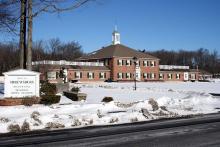
Shrewsbury, Massachusetts, provides traditional cable TV service, Internet access, and phone service to the community through its utility, Shrewsbury Electric & Cable Operations (SELCO). As the utilities board consults with their subscribers and looks forward, they've come to the conclusion that it's time to invest in fiber optic upgrades to improve operations and remain competitive.
From 1907 to 1983
The community launched SELCO in 1907 as a "Street Lighting Committee" which, after negotiations with a local electric company, led to a local election. The local company had offered to supply power to the community if they would build their own "plant" — poles, wires, and lines. Both first and second town votes in support of the measure and the authorization to borrow $16,000 for construction of the plant led to what would become SELCO.
While community leaders first considered the possibility of developing a publicly owned cable television network in the mid 1960s, significant steps toward implementing the plan didn't happen until 1982. By then, the town had already been operating an electric utility for 75 years, had conducted a feasibility study, and knew they wanted to pursue the cable TV project. According to SELCO History: The First Hundred Years [PDF], "confusion and disarm of the cable industry at the time" made community leaders delay their decision to move forward in 1970. The project was shelved until 1982 when the Board of Selectmen created Shrewsbury Community Cablevision (SCC) with strong support from people in the community.
The community faced interference from incumbent cable providers, which required a court challenge. Eventually, the town received a CATV license and activated their first subscriber on September 9, 1983. They served 5,600 households by the end of 1984.
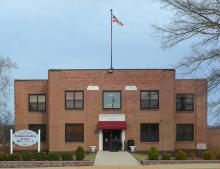
In the spring of 2019, Houston, Missouri, sent out a call to citizens to share their thoughts on whether or not they'd like to subscribe to Internet access from a municipal network. Less than a year later, the city of around 2,000 people has forged ahead and has hired an engineering firm to begin work on their multi-phase fiber optic project.
Phase One is a Go
Economic Development Director in Houston Rob Harrington says that the city hopes to have the first phase — an eighteen-mile fiber ring that connects city facilities — completed and functional by the end of the summer.
Houston owns and operates a municipal electric utility, which is a big plus for communities interested in better connectivity through publicly owned fiber optic network infrastructure. The Houston Herald reports that the city’s electric utility has brought in additional revenue that, over the last fifty years, has contributed to public improvements in Houston. Houston is the seat of mostly rural Texas County, located in south-central Missouri; the community is about 3.7 square miles.
Another factor in Houston's favor: the city owns the utility poles, which will reduce make-ready time and reduce final cost. A feasibility study, which reported a favorable situation in Houston for a publicly owned Fiber-to-the-Home (FTTH) system, suggested all but about three miles of the first phase of the infrastructure could be deployed on poles. Sewer lift stations, water towers, and other city facilities will connect, which will allow Houston to reduce telecommunications costs. The city will use reserves to fund the first phase of the project.