Image


Fast, affordable Internet access for all.
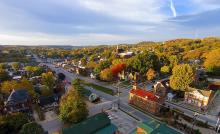
People and businesses in the small town of Hermann, Missouri, primarily rely on slow DSL for Internet access. There are also a few areas with cable connections available, and even a few parts of town where no ISPs offer service. This month, community leaders took decisive action to bring another option to town — they adopted a resolution to pursue federal funding for a publicly owned fiber optic network.
Let the People Decide
Late last year, Mayor Robert Koerber proposed a spring non-binding referendum to determine how strongly Hermann voters wanted to invest in the project. At the time, the Board of Alderman were considering a bond issue to cover the cost of deployment, which they estimated at $2.6 million.
Koerber thought that a strong outcome in support of the project would help attract financing when it was time to begin the project. He also considered the issue something voters should weigh in on, due to the bonding question.
The Board of Alderman supported the idea, but other town matters, including finding a new tourism and economic development director, required immediate attention. Town leaders also decided to look for some one who could help educate the community about the pros and cons of the fiber optic project. Rather than move forward with the referendum town leaders decided in January to put off any vote for the time being.
Pursuing Funding
Prior to their mid-August Board meeting, Alderman in Hermann had the opportunity to meet with representatives from the USDA to discuss other funding possibilities. They determined during those conversations that they could apply for funding from the Rural Utilities Service, which us under the purview of the USDA, for loans to deploy the network. Deadline for their loan application is September 30th.
With only about 757,000 residents and more than 710,000 square miles North Dakota is ranked 53rd in population density among U.S. states, territories, and Washington DC. There may not be many people there, but North Dakota has some of the best connectivity in the United States. Why? Rural cooperatives and independent companies have made continued investments.
In episode 288, Christopher interviews Robin Anderson, Sales Manager for National Information Solutions Cooperative. Robin’s been working in the industry for years and has been involved in bringing better Internet access to rural areas in North Dakota. She has firsthand experience with the issues that arise during deployments and describes the camaraderie that grew naturally out of necessity when small, independent providers worked to achieve their goals to improve connectivity for cooperative members and rural subscribers.
Robin also touches on how federal loan funding helped so many of the cooperatives get started with fiber and how they took the next steps to self-fund as the demand grew. Christopher and Robin talk about the economics of fiber optic networks for cooperatives and the reasoning behind fiber investment in rural areas. They discuss some specific examples of the way collaboration in North Dakota has resulted in better networks.
This show is 28 minutes long and can be played on this page or via Apple Podcasts or the tool of your choice using this feed.
Transcript below.
We want your feedback and suggestions for the show-please e-mail us or leave a comment below.
Listen to other episodes here or view all episodes in our index. See other podcasts from the Institute for Local Self-Reliance here.
Thanks to Arne Huseby for the music. The song is Warm Duck Shuffle and is licensed under a Creative Commons Attribution (3.0) license.

Get your applications ready! The United States Department of Agriculture Rural Utilities Service (USDA RUS) is accepting applications for another round of loans for the Rural Broadband Access Loan and Loan Guarantee Program. This program provides loans of up to $20 million for rural connectivity. The window to apply opened September 1st, and the deadline is September 30, 2017.
Thousands To Millions Of Dollars For Rural Areas
The USDA RUS has at least $60 million available this funding cycle for this program. All loans will be between $100,000 and $20 million. The program will only consider funding projects that offer speeds of at least 25 Megabits per second (Mbps) download and 3 Mbps upload.
For this program, the USDA RUS focuses on completely rural communities where at least 15 percent of households do not have high-speed Internet access. To be eligible, these rural areas cannot have more than two incumbent providers or have previously received USDA RUS funding.
Although the program is specific to rural communities, most organizations are eligible to apply, including tribal governments, local governments, cooperatives, and corporations. No partnerships and no individuals may apply for funding, however, as the loans must go only to organizations.
This is only one of the Broadband programs that the USDA RUS manages. The agency also handles the Community Connect Grants and the Distance Learning & Telemedicine Program. The report “Broadband Loan and Grant Programs in USDA’s Rural Utilities Service” from the Congressional Research Services describes these programs in more detail.
Online Submission Only
The USDA RUS officially began accepting submissions September 1st and organizations have until September 30, 2017, to apply. If you are working in an area with poor Internet service, it’s important to note that this program only accepts applications through an online system.

On the border of Tennessee and Kentucky, an electric cooperative looks to a more connected future. The Tri-County Electric Cooperative that operates across state lines is preparing to build a state-of-the-art network for high-speed Internet service throughout Trousdale County, Tennessee. This will be the first year of construction for the cooperative after several years of planning.
Tri-County Electric plans to soon begin services to Trousdale County, the smallest county in Tennessee. Many of the county's 8,000 residents' choice is limited to Comcast and AT&T, and Tri-County Electric's Vice-President and General Manager Paul Thompson noted that people in the county often only subscribe to about 6 Mbps download and 1 Mbps upload. With a steady membership base of 50,000 spread across two states and a close relationship with the county, the electric co-op is in a good position to move forward with the Fiber-to-the-Home (FTTH) project. The cooperative intends to offer an affordable base package that provides faster, more reliable connectivity than what the incumbents are willing to offer the rural communities.
Funding From The Feds
Since 2014, Tri-County Electric Cooperative has actively pursued financing for a FTTH network in the county. The co-op applied for a grant through the Rural Broadband Experiments program managed by the Federal Communications Commission. They did not receive any funding, but the process resulted in a tangible plan.
The process of applying for the grant built up community support for the project and enabled the co-op to identify key assets. As part of the grant application, they noted which census blocks they expected to connect and what community anchor institutions, such as schools, libraries, and government buildings, could be included. The Trousdale County government even passed a resolution giving explicit permission for Tri-County Electric to build and operate a FTTH network.

You might not have made it to Mesa for the Digital Southwest Regional Broadband Summit, but you can now watch some of the speakers and panel conversations. Next Century Cities has posted video from panel conversations and the keynote address from Commissioner Mignon Clyburn.
In her address, Commissioner Clyburn said:
“Access to high-speed broadband is a necessity in today’s 21st century economy, providing a gateway to jobs, education, and healthcare. I am honored to join state and local leaders who are on the front lines of closing the digital and opportunities divide. Working together, we can achieve our shared goal of affordable broadband for all Americans.”
The Commissioner’s full remarks were about 18 minutes long:
Sharing Knowledge on Infrastructure
Christopher moderated Panel Two, focused on infrastructure needs, which included CISSP President and CTO of CityLink Telecommunications John Brown, Partner at Conexon Jonathan Chambers, Director of Technology at the Southern California Tribal Chairmen’s Association Matt Rantanen, Manager of Tribal Critical Infrastructure at Amerind Riskand Kimball Sekaquaptewa, and Vice President of Digital Innovation at Magellan Advisors Jory Wolf. If you listen to the Community Broadband Bits podcast, you’ll probably recognize most of these voices.
The video lasts one hour thirteen minutes:
The other videos are available on the Next Century Cities YouTube channel page, or watch them here.
Welcome and Introduction: Deb Socia, Executive Director of Next Century Cities and Eric Farkas, Fujitsu Network Communications, 7:32

Out in Big Sky Country, some rural communities look forward to high-speed Internet service from their local telephone co-op. 3 Rivers Communications in Montana has spent the last few years steadily building out their Fiber-to-the-Home (FTTH) network to rural residents.
This spring, 3 Rivers Communications is set to start on two new areas: an $8 million project near Choteau (pop: 1,700) and a $1.5 million project near Fairfield (pop: 700).
Focus on Rural Residents
The local newspaper Choteau Acantha reported on 3 River Communications’ latest plans. About 500 folks will be able to get high-quality phone, video, and Internet service at home when the co-op finishes both projects in late 2017 or early 2018.
The current plans focus on rural residents on the outskirts of both towns. Folks in Fairfield already have access to fiber service, but people within the city of Choteau have DSL. Businesses in Choteau can request fiber connections, but the co-op is not currently planning to offer fiber connectivity to residents inside town limits.
These fiber projects are all part of a larger program to upgrade in the cooperative's service area of 17,000 square miles. The co-op is taking out the old copper telephone lines and replacing them with brand new fiber-optic cables. It’s a large undertaking and will serve approximately 20,000 members.
Federal Funding for Rural Areas
To upgrade to fiber in its large service area, 3 Rivers Communications obtained funding from several federal programs, including the Rural Utilities Services (RUS) and the Universal Service Fund. The co-op received a $70 million loan in 2011 and another $30 million loan in 2016 to improve the network.
Currently, the lowest tier bundle of phone and 10 Mbps Internet service is $85 per month, but co-op members get back excess revenue in capital credits each year. 3 Rivers General Manager Dave Gibson described the balance of costs and prices to the Choteau Acantha:
The most rural area of Missouri is getting a Fiber-to-the-Home network from the United Electric Cooperative, which has created United Fiber and is expanding across its footprint and to adjacent areas that want better Internet access. Chief Development Officer Darren Farnan joins us to explain why his co-op has taken these steps.
We discuss how they are rolling it out - focusing on areas that need the service while respecting the telephone cooperatives that are within their electric footprint. The project has benefited from a broadband stimulus award and also incorporates fixed wireless technology in some areas.
We discuss some of the economics behind the project and are sure to clarify that though the utility has needed some capital subisides to build the network, it does not need any operating subsidies to continue - it runs under its own revenue. And we talk about the demand for better, faster connections - it is much higher than most realize.
This show is 30 minutes long and can be played on this page or via Apple Podcasts or the tool of your choice using this feed.
Transcript below.
We want your feedback and suggestions for the show-please e-mail us or leave a comment below.
Listen to other episodes here or view all episodes in our index. See other podcasts from the Institute for Local Self-Reliance here.
Thanks to Admiral Bob for the music. The song is Turbo Tornado (c) copyright 2016 Licensed under a Creative Commons Attribution (3.0) license. Ft: Blue Wave Theory.
Few communities in Tennessee have next-generation, high-speed connectivity, but the city of Erwin built its own network despite Tennessee’s restrictions. Now through a collaboration of federal and regional agencies, this “Little Gig City” will get assistance showing off their fiber network.
The planning assistance program, called Cool & Connected, will provide direct assistance to Erwin to develop a marketing plan for the fiber network. Cool & Connected looks to promote the Appalachian communities by using connectivity to revitalize small-town neighborhoods and encourage vibrant main streets with economic development.
Federal and Regional Collaboration
U.S. Environmental Protection Agency Administrator Gina McCarthy explained the program in The Chattanoogan:
“Cool & Connected will help create vibrant, thriving places to live, work, and play. We’re excited to be working with these local leaders and use broadband service as a creative strategy to improve the environment and public health in Appalachian communities.”
Three governmental agencies have brought together the Cool & Connected program to provide planning assistance to ten chosen communities in six states near the Appalachian Mountains. Agencies partnering on the initiative are the U.S. Environmental Protection Agency’s Office of Sustainable Communities, the U.S. Department of Agriculture’s Rural Utilities Services, and the Appalachian Regional Commission through the Partnership for Opportunity and Workforce and Economic Revitalization (POWER) initiative.
The “Little Gig City” That Could
Welcome to high-speed Internet on the Iron Range! This past fall, the Northeast Service Cooperative (NESC) completed a multi-year project, a fiber optic network spanning nearly 1,000 miles, on Minnesota’s north shore.
The project, the Northeast Fiber Network, connects public buildings, such as health care facilities, community libraries, colleges and universities, tribal facilities, and government offices. The fiber provides the opportunity for next-generation connectivity in many unserved and underserved areas of eight counties: St. Louis, Cook, Lake, Pine, Itasca, Koochiching, Carlton, and Aitkin. It’s exciting to see this rural project finally come to fruition.
Institutional Network: Now to Go the Last Mile
It’s an institutional network, which means it brings high-speed Internet to community anchor institutions throughout the region. So far, about 320 public entities, including 31 school districts, have connected to the network. The network is designed to provide middle mile connectivity for community anchor institutions, not to bring connectivity to residents and businesses of the region. As with most federally funded projects, the plan is to provide middle mile infrastructure with the hope that the private sector will be more able or willing to invest in last mile connectivity.
That last mile, to homes and businesses, presents a challenge. NESC is leasing fiber to public and private providers and working to ensure that the network can serve as a backbone to greater connectivity. Actively working with private providers, NESC offers a bright future for unserved and underserved communities on the Iron Range.
Collaboration & Funding

At a September conference in Lexington, Kentucky, Next Century Cities (NCC) hosted an influential and diverse group of leaders from the municipal broadband arena to share their experiences as leaders in community broadband. Four audio recordings, which you can find on NCC’s website, include panel discussions on a variety of issues surrounding the topic of financing for next generation broadband.
Recording #1: “Lexington Mayor Jim Gray and the Kentucky Wired Story” and Panel Discussion “Federal Support for Broadband Projects”
The first recording begins with Lexington Mayor Gray and the city’s Chief Information Officer as they discuss their ongoing efforts to make Lexington a gigabit city. These efforts are part of a broader initiative also discussed on building a statewide 3,000 mile fiber optic ring. Several Kentucky government leaders make remarks about the project, called Kentucky Wired, including their thoughts about the public-private partnership model that is helping make the project possible.
In the second part of the recording, former Rural Utilities Service Administrator and current Vice Chair of Broadband Communities Hilda Legg, leads a panel of several experts examining funding supports and offering recommendations and next steps for communities.
Recording #2: “Achieving the Last Mile”
Our own Christopher Mitchell, the Director of the Community Broadband Networks Initiative at ILSR and the Policy Director for Next Century Cities, moderates this panel that includes officials who have led municipal broadband initiatives in their communities. These officials share some of the challenges they have faced and solutions they discovered in their efforts to finance last mile infrastructure.
Recording #3: “Exploring Options and Approaches for Broadband Financing”