Image

Fast, affordable Internet access for all.
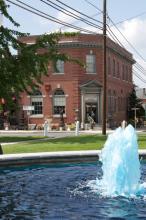
In the heart of Adams County, Pennsylvania, not far from the site of the pivotal Battle of Gettysburg and where President Abraham Lincoln later delivered his famous 1863 Gettysburg address declaring “a new birth of freedom,” plans are being drawn up in the battle for better broadband.
In the borough of New Oxford, ten miles east of the county seat (Gettysburg), the non-profit media group Community Media of South Central Pennsylvania is leading the charge to bring Fiber-to-the-Home (FTTH) victory for the approximately 102,000 residents spread out across the rural county’s 520 square miles.
But with restrictive state laws that protect incumbent providers from competition by not allowing municipalities to provide broadband service, and scarce funding for non-governmental entities to build broadband infrastructure, victory is far from certain.
Small Steps, Big Broadband Problem
The goal right now, Community Media’s Director of Operations Mark Wherley told us this week, is to secure $3 million to bring fiber access to 1,200 homes in New Oxford and Abbottstown, two of the 34 municipalities that make up Adams County, encircling Gettysburg.
Image
Working in conjunction with the Adams County Economic Alliance, Community Media is looking to tap the state’s Redevelopment Assistance Capital Program (RACP) for funds to start building the network. Through RACP, Community Media would be eligible to receive between $1 million and $5 million, provided they are able to raise a 50 percent matching contribution.
When the Eastern Shore of Virginia needed better Internet access, in part to ensure NASA could achieve its mission, Accomack and Northampton counties created the Eastern Shore of Virginia Broadband Authority. Its Executive Director, Robert Bridgham joins us for episode 294 of the Community Broadband Bits podcast.
We talk about why they used an Authority and how it was initially funded with grants that were later repayed because the network was so successful. They also used some community development block grants though the network has since expanded with its own revenues.
The network both leases lines to independent ISPs and provides services directly. And it is expanding its Fiber-to-the-Home network to more neighborhoods each year in an incremental fashion. Read more about Eastern Shore of Virginia Broadband Authority here.
This show is 22 minutes long and can be played on this page or via Apple Podcasts or the tool of your choice using this feed.
Transcript below.
We want your feedback and suggestions for the show-please e-mail us or leave a comment below.
Listen to other episodes here or view all episodes in our index. See other podcasts from the Institute for Local Self-Reliance here.
Thanks to Arne Huseby for the music. The song is Warm Duck Shuffle and is licensed under a Creative Commons Attribution (3.0) license.
In Virginia, Arlington has found new ways to use its municipal network to reduce the digital divide. Katie Cristol, Chair of the Arlington County Board, and Jack Belcher, County Chief Information Officer, join us for episode 293 of the Community Broadband Bits podcast to explain what they are doing.
We discuss how a new residential development, Arlington Mill, will feature affordable Internet access delivered via Wi-Fi for low-income families. It was financed in part with Tax Increment Financing and required a collaboration between multiple departments to create.
We discuss the challenge of creating such collaborations as well as some of the other benefits the ConnectArlington project has delivered.
Remember to check out our interview with Belcher from 2014 for episode 97 of the podcast, when we discussed the decision to begin offering connectivity to local businesses.
This show is 27 minutes long and can be played on this page or via Apple Podcasts or the tool of your choice using this feed.
Transcript below.
We want your feedback and suggestions for the show-please e-mail us or leave a comment below.
Listen to other episodes here or view all episodes in our index. See other podcasts from the Institute for Local Self-Reliance here.
Thanks to Arne Huseby for the music. The song is Warm Duck Shuffle and is licensed under a Creative Commons Attribution (3.0) license.
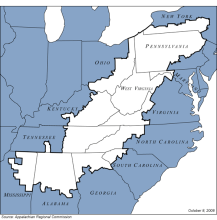
Update: Please note, this information is now out of date. It was developed in 2017.
This is the central hub for ILSR’s research on Internet access around the Appalachian United States. We have compiled federal statistics on broadband availability and federal subsidies for large Internet Service Providers. We've created detailed maps of 150 counties in Kentucky, Southeast Ohio, and northern West Virginia.
We've also created Rural Toolkits for Kentucky, Southeast Ohio, and northern West Virginia. These toolkits offer a big picture look at connectivity on a regional and statewide level. They also provide action steps for folks to learn more and get involved.
Remember these three key details when reading through this information:
Internet access: if you can get online, check email, and browse the web.
Broadband: the Federal Communications Commission (FCC) currently defines this as speed of 25 Mbps download and 3 Mbps upload.
Fiber-to-the-Home (FTTH): a high-speed fiber-optic connection directly to the home. This type of technology can support speeds of more than 1,000 Megabit-per-second (Mbps).
Appalachia can get better Internet service, but the big companies aren’t going to do it. Cooperatives and small towns are stepping up and delivering world-class Internet service.
This information covers the entirety of the state – all 120 counties.
Rural Toolkit: This toolkit provides the basics of how to get started. From what is broadband to the details of federal funding, this toolkit has got you covered. At the back, it includes a statewide fact sheet, which is also available separately.
Having few options for high-quality telecommunications service, Virginia's Roanoke Valley formed a broadband authority and is building an open access fiber-optic network with different options for ISPs to plug-in. In addition to being our guest on Community Broadband Bits episode 221, Frank Smith is the Roanoke Valley Broadband Authority CEO and President. We discuss their various options for ISPs to use their infrastructure and the various services their network is providing, including access to conduit and dark fiber leases. We also discuss why they formed a state authority to build their carrier-grade network. Though they have had some pushback from incumbents - something Frank seems unphased by in calling the Authority "the new kid on the block" - they have built local support by building relationships with local organizations like Blue Ridge PBS. Read all of our Roanoke Valley Broadband Authority coverage here.
This show is 29 minutes long and can be played on this page or via Apple Podcasts or the tool of your choice using this feed.
Transcript below.
We want your feedback and suggestions for the show-please e-mail us or leave a comment below.
Listen to other episodes here or view all episodes in our index. See other podcasts from the Institute for Local Self-Reliance here.
Thanks to mojo monkeys for the music, licensed using Creative Commons. The song is "Bodacious."
Medina County has built a fiber network to connect its core facilities and leases its fiber to multiple ISPs to improve connectivity in its communities. David Corrado, CEO of the Medina County Fiber Network, joins us to discuss their approach on Community Broadband Bits episode 220. We discuss how the Port Authority became the lead agency in building the network and the challenges of educating potential subscribers on the benefits of using a full fiber network rather than the slower, less reliable connections they were used to. Medina's approach allows carriers to buy lit services or dark fiber from the county network. And as we have seen elsewhere, the biggest challenge can be getting the first and second carriers on the network. After that, it can really pick up steam as other carriers realize they are missing out if not using it. At the end of our interview, we added a bonus from Lisa - she just produced a short audio segment about Pinetops losing its Internet access from the city of Wilson in North Carolina.
This show is 27 minutes long and can be played on this page or via Apple Podcasts or the tool of your choice using this feed.
Transcript below.
We want your feedback and suggestions for the show-please e-mail us or leave a comment below.
Listen to other episodes here or view all episodes in our index. See other podcasts from the Institute for Local Self-Reliance here.
Thanks to mojo monkeys for the music, licensed using Creative Commons. The song is "Bodacious."
For more than 100 years, Nevada's Churchill County has been operating its own telecommunications system, Churchill Communications. In recent years, they upgraded the vast majority of the county from copper to fiber offering a gigabit connection to the Internet. Churchill Communications General Manager Mark Feest joins us this week for Community Broadband Bits Episode 204. We discuss the fascinating history behind their network and how they have built it without using any local taxpayer dollars. Mark also explains two recent announcements that involve Churchill Communications offering its services in nearby areas where it already has some fiber. Finally, we discuss how some of the people that were originally skeptical of municipal networks have come around and are even asking Churchill Communications to expand.
This show is 18 minutes long and can be played on this page or via Apple Podcasts or the tool of your choice using this feed.
Transcript below.
We want your feedback and suggestions for the show-please e-mail us or leave a comment below.
Listen to other episodes here or view all episodes in our index. See other podcasts from the Institute for Local Self-Reliance here.
Thanks to Forget the Whale for the music, licensed using Creative Commons. The song is "I Know Where You've Been."
When we launched this podcast in 2012, we kicked it off with an interview from Minnesota's farm country, Sibley County. We were excited at their passion for making sure every farm was connected with high quality Internet access. After the project took a turn and became a brand new cooperative, we interviewed them again in 2014 for episode 99, but they hadn't finished financing. They broke ground 2015 and today we discuss the model and the new Institute for Local Self-Reliance (ILSR) case study that details how they built it. City of Winthrop Economic Development Authority Director Mark Erickson and Renville-area farmer Jake Rieke are both on the board of RS Fiber Cooperative and they join us to explain how their model works.
We at ILSR believe this model could work in much of rural America, in any community that can summon a fraction of the passion of the citizens from Sibley and Renville counties. Having watched this project for all the years it was being developed, I cannot express how impressed I am with their dedication. And because they own it, I'm thrilled to know that no one can take it away from them.
This show is 35 minutes long and can be played on this page or via Apple Podcasts or the tool of your choice using this feed.
Transcript below.
We want your feedback and suggestions for the show-please e-mail us or leave a comment below.
Listen to other episodes here or view all episodes in our index. See other podcasts from the Institute for Local Self-Reliance here.
Thanks to Kathleen Martin for the music, licensed using Creative Commons. The song is "Player vs. Player."

The publicly owned fiber optic network of Dakota County, Minnesota, and of cities within its borders may soon come under the oversight of a local joint powers board.
David Asp, County Collaboration Engineer, said the County started putting the network together in May of 1998. It has grown from 20 miles in 2005 to 112 miles in 2015, and then to 270 miles in 2016. The network provides speeds of up to 10 Gigabits per second (Gbps) download. This news marks a coming of age for the County’s 10-year-old Internet network which, together with the cities' related infrastructure, now spans 270 miles. The County network serves hundreds of public facilities and operations including county buildings, city halls, libraries, schools and more than 350 traffic control signals.
The County and 11 cities within its jurisdiction are now reviewing whether to approve a limited joint powers agreement that would have them inventory their fiber optic infrastructure to find out "what do we have and what are gaps in the system," said Matt Smith, Dakota County deputy manager. Their second objective is to develop a detailed financing system to operate an integrated Internet network, he said.
Asp said he expects the County and the cities will decide by April whether to take this first step in forming the joint powers alliance.
After these studies, the County and cities are then expected to decide if they want to participate in a broader joint powers agreement that would establish the Dakota Broadband Board. If the answer is "Yes," the joint powers board could begin operations in early 2017, Asp said.
Duties of the Board could include establishing policies, procedures, and pricing on leasing the network’s dark fiber, Asp said. Dark fiber is fiber-optic cable that is laid underground but currently not in use, and thus is dormant, or “dark.”
Dakota County, Dakota County Development Agency, Apple Valley, Burnsville, Eagan, Farmington, Hastings, Inver Grove Heights, Lakeville, Mendota Heights, Rosemount, South St. Paul and West St. Paul are reviewing the initial JPA.
Promoting Economic Development
For years, many rural communities suffered from a broadband donut hole problem - the investment in better-than-dial-up was in the population center, leaving a donut of poor access around it. Now policy to reverse that in places like Minnesota is perversely creating the opposite problem, to the detriment of the entire community.
This week on the Community Broadband Bits podcast we welcome back Dan Dorman, Executive Director of the Greater Minnesota Partnership. He is also a former legislator and current small business owner in Greater Minnesota. We discuss how this problem developed and where we see it happening before our very eyes. Though we focus on Minnesota, this issue is broadly applicable to all states.
We also talk about how Comcast lobbyists have cynically manipulated the program to prevent economic development or possible competition, despite the fact that Comcast serves practically no one outside of the metro region. Lisa Gonzalez and I predicted this problem in our paper from 2014, All Hands On Deck: Minnesota Local Government Models for Expanding Fiber Internet Access. Listen to Dan Dorman's last appearance, episode 136.
This show is 25 minutes long and can be played on this page or via Apple Podcasts or the tool of your choice using this feed.
Transcript below.
We want your feedback and suggestions for the show-please e-mail us or leave a comment below.
Listen to other episodes here or view all episodes in our index. See other podcasts from the Institute for Local Self-Reliance here.
Thanks to Kathleen Martin for the music, licensed using Creative Commons. The song is "Player vs. Player."