Image


Fast, affordable Internet access for all.

Snapshot
Michigan broadband package repeals law prohibiting state grants from going to government entities
Montana Legislature duplicates federal limitations against schools and library self-constructing networks
U.S. House Republicans bill would give USDA authority over rural broadband, in place of FCC
The State Scene
Michigan
Michigan Gov. Gretchen Whitmer issued an executive directive on Wednesday establishing the Michigan High-Speed Internet (MIHI) Office, a new state office tasked with developing a strategy to make high-speed Internet more accessible to Michiganders.
Gov. Whitmer has argued that more than $2.5 billion in potential economic benefit is left unrealized each year due to a lack of Internet access across the state. MIHI will be housed inside the state’s Department of Labor and Economic Opportunity (LEO). Speaking of the new office, LEO Acting Director Susan Corbin said, “We need to make major investments to support digital inclusion and this office will be focused on leveraging every dollar available through the American Recovery Plan and other federal programs,” reports WILX.
Michigan lawmakers are moving to answer Corbin’s call and recently proposed a $400 million one-time allocation of incoming federal relief funds to the newly created MIHI to work toward expanding access to broadband. With the funds, LEO would be tasked with maintaining a statewide broadband grant program, the Connecting Michigan Communities Broadband Grant.

Since it was first introduced in Congress in March, the Community Broadband Act of 2021 has gained widespread support from over 45 organizations representing local governments, public utilities, racial equity groups, private industry, and citizen advocates.
The legislation -- introduced by U.S. Representatives Anna Eshoo, Jared Golden, and U.S. Senator Cory Booker -- would authorize local communities to build and maintain their own Internet infrastructure by prohibiting laws in 17 states that ban or limit the ability of state, regional, and local governments to build broadband networks and provide Internet services.
The Act also overturns state laws that restrict electric cooperatives' ability to provide Internet services, as well as laws that restrain public agencies from entering into public-private partnerships.
States have started to remove some long-standing barriers to public broadband on their own. In the last year, state lawmakers in both Arkansas and Washington removed significant barriers to municipal broadband networks, as high-quality Internet with upload speeds sufficient for remote work, distance learning, telehealth, and other online civic and cultural engagement has become essential.
Community broadband networks offer a path to connect the unconnected to next-generation networks. State barriers have contributed to the lack of competition in the broadband market and most communities will not soon gain access without public investments or, at the very least, the plausible threat of community broadband.
The Many Benefits of Publicly-Owned Networks
Less than six months after its creation and a year after the city of Waukegan, Illinois (pop. 89,000) began exploring options to improve connectivity in response to the Covid-19 pandemic, a Request for Proposals (RFP) has been issued by the Waukegan Broadband Task Force in search of qualified applicants to assist in the creation of a broadband master plan. Applications are due June 30th, 2021.
Waukegan is situated about halfway between Chicago and Milwaukee, along the west coast of Lake Michigan. A 2020 initial broadband assessment showed challenges related to price, devices, digital skills for remote learning, and a lack of coordination to get income-qualified residents onto incumbent ISP's low-income plans. The city is served by a patchwork of ISPs, including cable from Comcast, DSL from AT&T and TDS, and fixed wireless from Rise Broadband with starting prices on plans ranging from $30/month to $60/month.
The Task Force website outlines the group's goals and stakes for the community:
There are few cities with the opportunities that exist within Waukegan. However, to truly become a ‘City of Progress’ , Waukegan must take the critical steps necessary to achieve its great potential. While 2020 brought challenges to communities around the globe, it also presented opportunities for innovation, collaboration, change and growth. The Waukegan Community Broadband Taskforce is an open, collective impact inititative of committed community stakeholders for all residents, businesses, institutions interested in working together to create a path to the future.
The RFP calls for solutions addressing access, adoption and utilization, sustainable funding, and communication and community engagement with a particular focus on remote learning, telehealth, and economic development.
The steering committee for the task force is made up of a collection of local nonprofits, the public library, the community center, city officials, and the school district. Funding for the master plan will come from private contributions.
Applicants can direct questions to wbctaskforce@gmail.com by 5pm on June 6th, with full RFPs due by June 30th.

Baratunde Thurston hosted Bruce Patterson on the most recent episode of his podcast How To Citizen. The episode is a deep dive into the consequences of a lack of competition in Internet access, and how the city of Ammon on stepped up to meet the challenge. Baratunde talks with Technology Director Bruce Patterson about how he got into this space, how the project got started, and the wealth of positive outcomes it has help drive for the community.
Listen here, then watch the video below on how the network is saving money, creating competition for broadband services, and creating powerful new public safety applications.

Last week we wrote about the partnership between Long Prairie, Minnesota and the forward-thinking and locally minded local telephone cooperative CTC to build a citywide fiber network and bring affordable, high-speed Internet to everyone in town.
Long Prairie isn’t alone, however, among north-central Minnesota communities needing better options, and for at least two others CTC has become a natural partner. This is both because of its location - offering service across the region in Sullivan Lake, Randall, Pillager, Outing, Nokay Lake, Nisswa, Motley, Mission, Lincoln, Leader, Freedhem, Ely, Brainerd, Baxter, and Crosby - and because it has become one of the most aggressive fiber builders in the state.
Two other cities, specifically, Ely and Little Falls, have also partnered with CTC to bring fiber loops to their business districts. Both communities have faced challenges when it came to building and connecting their residents and businesses to a fiber network.
Dealt a Poor Hand, Ely Forged Ahead
The City of Ely sits on the Southern side of Shagawa Lake with a population of 3,500. While iron used to be what drove the economy, today Ely is a tourist destination and is known as the entry point for the Boundary Waters.
Image


The Lafayette, Louisiana-based municipal network, LUS Fiber, is expanding into rural southwest Louisiana with the help of a $3.1 million grant from the U.S. Department of Commerce’s Economic Development Administration (EDA).
The federal grant, announced in February, will cover 80 percent of the cost. LUS Fiber will match up to $700,000 in additional grant funding for the project.
LUS Fiber, which offers speeds up to 10 Gigabit-per-second speeds, is partnering with Acadiana Planning Commission (APC) for the development and construction of the “certified all-fiber network.” Construction of the high-speed Internet backbone along the U.S. Highway 90 is set to begin this year and is expected to be completed within two years.
New Routes, New Subscribers
Forty-seven miles of fiber infrastructure will connect Lafayette Parish, St. Martin Parish, and Iberia Parish. The project “could add between 650 and 1,400 new Internet customers to the telecom’s roughly 21,000 current accounts,” according to the Daily Advertiser’s coverage of the announcement in February.
St. Martin Parish President Chest Cedars told the Daily Advertiser businesses that are central to the economic vitality of the region are just off Highway 90.
“When it was agreed that fiber would take a little left turn and hit our SMEDA Industrial Park it was even a greater win for St. Martin Parish because six of our top 10 taxpayers in our parish are housed in that particular industrial center,” Cedars said.
Image
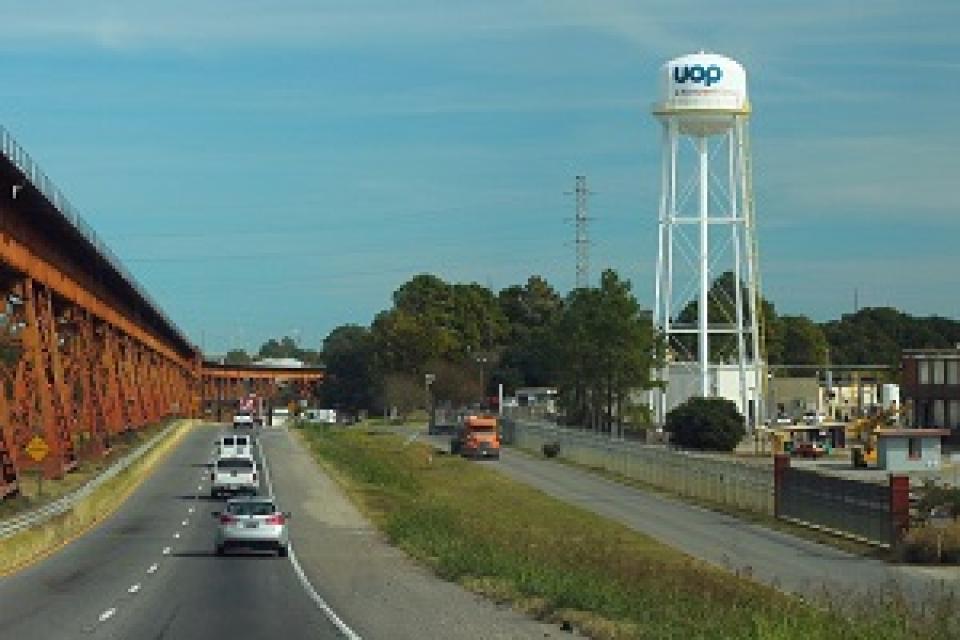

Cortez is the latest community in the state of Colorado to decide whether to opt out of SB 152, which has since passage in 2005 has preempted local authority and prevented communities from building publicly owned telecommunications infrastructure and offering retail service.
The community (pop. 8,500) is located in Montezuma County in the southwest part of the state, just north of Mesa Verde National Park. As first reported in The Journal at the end of January and subsequently approved unanimously by the City Council in the middle of February, a ballot measure later this spring will give city residents the option to restore the municipality’s ability to offer retail Internet service to business and households themselves.
From the ballot flyer provided to residents by the city:
A voter-approved exemption from SB 152 would restore local independence and ability to evaluate all possibilities for next generation broadband services in the City of Cortez and our communities. An exemption supports local choice and options, allowing citizens to make the best decisions based on the needs of our own individual communities, without raising taxes.
It further explains the realities of the limitations imposed by SB 152:
Without such approval, the law limits the ability of Colorado local governments to provide a wide spectrum of services, including: free Internet service in city libraries, parks and community centers; leveraging government infrastructure and partnering with private businesses to provide affordable and high-speed Internet service throughout the entire community; [and] direct provision of broadband services by municipal governments where needed.
A Chance to Build on Past Success

In the American Rescue Plan Act, Congress and the Biden Administration included a multi-billion dollar appropriation to help expand high-speed Internet access. This guide offers an overview of the different funding opportunities for communities interested in expanding broadband services. As application deadlines vary in some cases and other money must be spent within certain time frames, it is critical for states, municipalities, community organizations, and Tribal governments to start planning initiatives now.
It’s also worth emphasizing that 18 states still put localities at a disadvantage when it comes to spending anticipated funding effectively by preserving laws that interfere with community investment in broadband infrastructure. Much of this money could also be funneled for other purposes due to a lack of good plans and community engagement.
The amount of funding flowing into communities is unprecedented. Localities should prepare to spend funds on needed, futureproof infrastructure. This is an historic, once-in-a-lifetime investment in Internet infrastructure and communities who develop a clear, actionable plan and are as ready as possible once the money starts flowing will prosper.
Directory
If you’re a homeowner looking for assistance paying your Internet bill…look to the Emergency Broadband Benefit Program or Homeowner’s Assistance Fund.
If you’re an HBCU or Minority-serving institution looking to expand Internet access to your students, or if you’re a minority business enterprise or nonprofit organization in the surrounding community...look to the Connecting Minority Communities Pilot Program.
if you’re a Tribal government, Tribal organization, or Tribal college or university, including native Hawaiian organizations, education programs and native corporations…look to the Tribal Broadband Connectivity Program.
If you’re a city interested in partaking in a public-private partnership…look to the Promote Broadband Expansion Grant Program.
If you’re a school or library whose main concern is obtaining remote Internet access devices...look to the Emergency Connectivity Fund.
Federal Aid Directly To States, Counties, Localities and Territories

Although Tennessee is one of 19 states in the nation with laws that limit municipal broadband networks, it is also home to several of the nation’s premier municipal Fiber-to-the-Home (FTTH) networks, including EPB Fiber, a division of Chattanooga’s city-owned electric and telecommunications utility.
In the Volunteer State, municipal electric providers are restricted from offering Internet service on fiber networks beyond their service areas. But now, Knoxville, a city of approximately 187,000 residents and the home of the University of Tennessee, is aiming to get on the community fiber track and become the state’s next gig city.
Earlier this month, the Knoxville Utilities Board (KUB) Board of Commissioners approved a business plan that, if approved, will set the utility on a path to bring high-speed Internet connectivity to its more than 468,000 customers spread out across Knoxville, Knox County, and small parts of seven neighboring counties.
The plan has been sent off to the Tennessee State Comptroller office for review, one of the initial steps in the process to bring triple-play services (Internet, phone and TV) to its broadband-hungry customers.
Image

A Need for Speed
This week on the podcast, Christopher speaks with Julie Bushell, President of Paige Wireless and Co-chair of Federal Communication Commission’s (FCC) Precision Ag Connectivity Task Force.
Christopher and Julie talk about the importance of reliable, symmetrical wireless data connections so farmers can deploy devices on farms which communicate across Long Range Wide Area Network (LoRaWAN) protocols to bring soil probes, combines, grain bins, wastewater management sensors, and other devices online to report conditions across far-flung fields. They also discuss how a robust rural network can support GPS for planting, irrigation, and harvest, as well as allow for data aggregation to increase efficiencies and allow mapping and maintenance via real-time drone operations.
Finally, Christopher and Julie dig into how more robust connectivity will help make sure high-quality jobs stay in the region, giving subsequent generations more incentive to stick around and help America's farms prosper.
This show is 31 minutes long and can be played on this page or via Apple Podcasts or the tool of your choice using this feed.
Transcript below.
We want your feedback and suggestions for the show-please e-mail us or leave a comment below.
Listen to other episodes here or view all episodes in our index. See other podcasts from the Institute for Local Self-Reliance here.
Thanks to Arne Huseby for the music. The song is Warm Duck Shuffle and is licensed under a Creative Commons Attribution (3.0) license.