Image


Fast, affordable Internet access for all.

Construction on a new city-owned fiber network in Cabot, Arkansas will soon bring affordable broadband access to every city resident and business in the state’s “Strawberry Capital.”
The network comes courtesy of a partnership with Connect2First, the broadband subsidiary of local power company First Electric Cooperative Corporation, which continues to build on its significant presence across Arkansas.

According to a city announcement, the $20 million network will deliver fiber access at symmetrical speeds of up to 10 gigabit per second (Gbps) via an XGS-PON network passing all 26,000 residents and businesses of Cabot using 220 miles of fiber.
The network, which is expected to take several years to complete, will be built on the back of resident-approved bonds, and won’t utilize state or federal funding.
Construction has already begun in this suburb of Little Rock where city officials say hundreds of residents have already been connected.
In announcing the beginning of construction, Cabot Mayor Ken Kincade said:
“This unique project is the first of its kind in the state of Arkansas where a municipality has built its own fiber network and partnered with a local ISP to provide high speed fiber optic internet services to its constituents. The City of Cabot is thrilled to be able to leverage the proven expertise of Connect2First, who already had a presence in the city and was currently serving surrounding areas.”

West Springfield residents recently gathered to break ground on a plan to deliver affordable fiber access to all 28,000 city residents. The effort, first conceived in 2021 during the height of the pandemic, involves working with Westfield Gas and Electric's broadband subsidiary Whip City Fiber to deliver symmetrical gigabit fiber.
Whip City only currently offers residential customers one tier of service: symmetrical gigabit fiber for $75 a month. A recent OpenVault report found that the percentage of subscribers on gigabit speed tiers grew 29 percent last year, with one-third of subscribers now provisioned for gigabit speeds. Whip City users can also access phone service for an additional $20 a month.
The first subscribers should be lit up for service by the end of this year, officials say. It’s the culmination of a project that began in 2019 when city officials first considered the construction of a city-owned broadband network; emboldened in 2020 after city leaders and locals alike became frustrated by Comcast’s implementation of technically unnecessary and punitive usage caps.
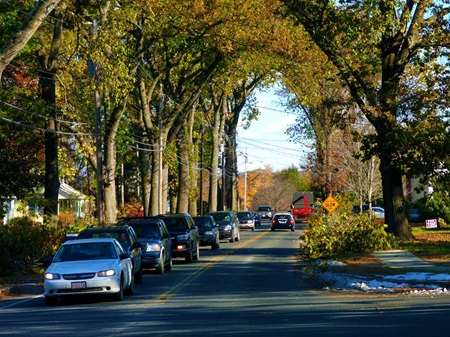
In 2021 West Springfield voted to establish a public utility department tasked with creating a town-owned fiber-optic cable network. They urged locals to sign up for a $1.5 million pilot program in four local neighborhoods, and submitted applications to Verizon and Eversource to ensure access to utility poles to begin “make ready” fiber attachment preparations.
One year after launching a municipal fiber network, Dryden, NY officials say they’re making steady progress in their quest to expand affordable fiber broadband to the entire town of 14,500.
While the effort hasn’t been without obstacles, town leaders say the public response to their foray into broadband has been overwhelmingly positive.
“While there are challenges, we are continuing to make great progress in the buildout,” Dryden Town Supervisor Jason Leifer tells ILSR. “We have support from our residents, who continue to show interest in this project. We also have financial support from Tompkins County in the form of grants–and from neighboring municipalities who are interested in replicating our model.”
The city’s network began with a 50-home trial pilot trial in the southwest part of town. The broader $15 million network will be funded by a combination of bonds, $2 million in federal COVID-19 disaster relief funding, an Appalachian Regional Commission grant, and eventually, subscriber revenues.
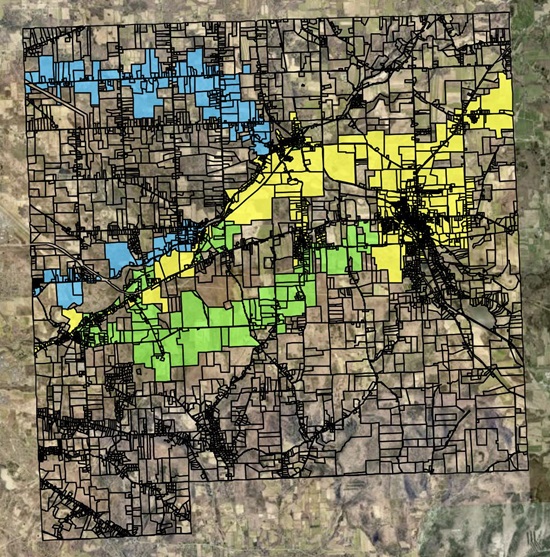
The town took a phased approach to deployment, first by connecting the backbone of the network in the southeast of the city, followed by a focus on the western and eastern halves of the municipality, respectively. The Dryden fiber website features a build map that helps locals track network progress.
“We have currently passed over 420 addresses with our buildout,” freshly-appointed Dryden Fiber Executive Director David Makar tells ISLR. “This includes over 150 rental properties – mostly single family homes and apartments – as well as many owner occupied homes and businesses. We are still in phase one, and as we move into the village of Dryden and the hamlets of Varna, Ellis Hollow, and Etna, we will be in phase two.”

Municipal finance is not for the weary.
But for the wise – at least according to the number-crunchers enmeshed in that world – one particular sliver of municipal finance (issuing bonds) has long been a viable way for local communities to finance the construction of municipal broadband networks. And as one Communication Union District in Vermont has discovered, bonding is better – when it’s rated.
Shining a light on bond-backed municipal broadband projects is the recent announcement that ECFiber, Vermont's first Communications Union District (CUD), obtained a BB rating from Standard & Poor Global, the nation’s preeminent credit rating agency. The rating will allow ECFiber to pay lower borrowing costs to complete a network expansion project.

“This is a historic moment,” Stan Williams, ECFiber’s municipal finance advisor said in a prepared statement. “For the first time, a CUD will be issuing a rated bond, which means that many more investors will be competing to buy those bonds, lowering the interest rate. ECFiber has been managed for its entire existence to reach this goal. It’s hard to overstate the importance of this achievement.”
East Central Vermont Telecommunications District governing board chairman F. X. Flinn added that the new bond rating "was made possible by over 16 years of grass-roots persistence, driven by a conviction that working together, our region could overcome the failure of the marketplace to offer decent broadband to all our homes and businesses."
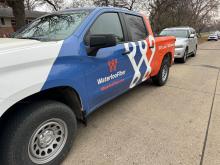
Waterloo, Iowa’s municipal broadband project has taken a major step forward after nearly two decades of planning.
Waterloo Fiber officials just launched their first limited fiber trial, will connect their first commercial customers in February, and are on target to deploy affordable fiber at speeds up to 10 gigabit per second (Gbps) to every last city resident by 2026.
When we last checked in with Waterloo in February of last year, the city was putting the finishing touches on a plan to spend $115 million to build a fiber backbone accessible to all 67,695 Waterloo residents, after locals approved the city issuing general obligation bonds to fund the start of the three-phase construction project.
Construction of the network began last summer at a groundbreaking ceremony hosted by Waterloo Mayor Quentin Hart.
“It will be the lifeline that connects our entire community, enabling businesses to thrive, students to excel and families to stay connected," Hart told attendees. "This fiber system will lay the foundation for a smart city innovation, economic growth and an enhanced quality of life for all our residents."
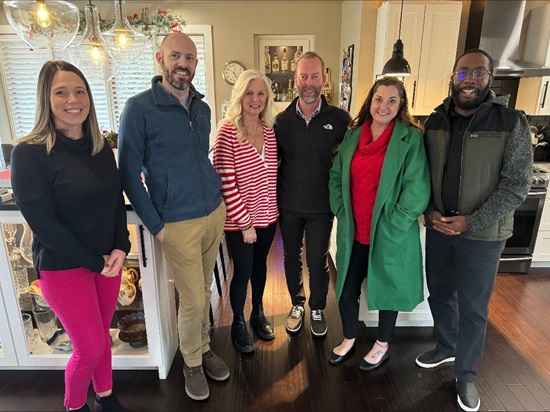
Last month the city connected the first of four participants in a limited pilot project.
This week on the podcast, Christopher is joined by Associate Director for Communications Sean Gonsalves to check in on the move towards a citywide open access fiber-to-the-home (ftth) network in Bountiful, Utah, an expanding institutional network in Fairhaven, Massachusetts, and widespread support among small Maine towns that public dollars should go to publicly owned networks.
Along the way, they chat about the astroturf misinformation campaign being run by the Utah Taxpayer's Association, how a city negotiated a capital fee it's using to build its own network and get out from under Comcast's thumb, and the growing momentum behind Maine's Broadband Utility Districts (BUD) and their quest to improve competition and Internet access for residents.
This show is 38 minutes long and can be played on this page or via Apple Podcasts or the tool of your choice using this feed.
Transcript below.
We want your feedback and suggestions for the show-please e-mail us or leave a comment below.
Listen to other episodes here or view all episodes in our index. See other podcasts from the Institute for Local Self-Reliance here.
Thanks to Arne Huseby for the music. The song is Warm Duck Shuffle and is licensed under a Creative Commons Attribution (3.0) license.

Quincy, Massachusetts is moving full speed ahead on a long-percolating plan to bring faster and more reliable broadband to a community long neglected by regional telecom monopolies.
If successful, the resulting open access fiber network should dramatically boost competitive options in the city, driving down costs for what many view as an essential utility.
After five years of debate and planning, Quincy officials say they’re getting closer to launching a city owned open access fiber network that will provide a backbone for city services, as well as a major infusion of long overdue broadband competition citywide.
Quincy Ward 3 Councilor Ian Cain told ISLR that the city is planning to launch trial deployments in Merrymount and Quincy Point during the next few months. The city has long worked with Entrypoint networks as a technical consultant and project financial planner, and city officials are expecting an engineering and feasibility study from Tilson within a matter of weeks.
RFP Coming Soon
“We're intending to bring the request for financing before the council before the end of session, which is at the end of June,” Cain said.
"We'll be putting out an RFP for the open access component of the project soon as well. We hope to fund the project through the city council before the summer, and then ideally we would start construction in the fall."
The initial pilot project will be funded by a general obligation bond. City leaders stated Merrymount and Quincy Point were selected both with an eye on socioeconomic diversity, and because the city was certain they’d see a relatively high adoption rate.
"Quincy Point in particular has a lot of economic and cultural diversity, and I think that's really important to emphasize as we move forward," Ward 2 City Councilor Anthony Andronico said of the city’s effort. "Quincy Point and Merrymount will have an opportunity to see what works with this program, what we can improve upon and help expand it to the whole city.”
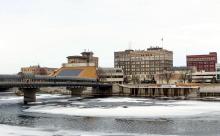
After years of consideration and planning, Waterloo, Iowa is finally moving quickly forward with its plan to build a citywide municipal fiber network. Once complete, the network aims to provide the city’s 67,695 residents with an affordable, fiber-based alternative to local monopolized broadband options that have long left regional locals frustrated and disappointed.
Waterloo expects that it will cost somewhere around $115 million to build the necessary fiber backbone and connect all Waterloo residents and businesses to the fledgling network. City officials expect the first customers to go live sometime later this year at up to gigabit speeds, though it will take roughly three years for the entire network to be built.
Much like the rest of the country, Waterloo leaders and residents received a crash course in the importance of affordable broadband during the Covid crisis, when the country’s spotty, sluggish, and expensive broadband networks were on full display due to a massive rise in telecommuting and home education.
Voters Declare GO Time on Muni Broadband
Fueled by frustration, Waterloo voters in September overwhelmingly approved the city issuing general obligation bonds to fund the start of construction for a city-wide municipal fiber network.

The City of Waterloo, Iowa has been flirting with the idea of building a municipal fiber network since 2005 when voters approved the creation of a municipal utility service. Voters said yes to the concept then but were not asked to put any money behind it.
"We were so excited we passed it, and then nothing happened. (The plan had) been gathering dust for 16 years," at-large Councilor Sharon Juon, a member of the city’s broadband committee in 2005, told the Waterloo-Cedar Falls Courier when the city council unanimously approved a $2.5 million contract with Magellan Advisors to design and engineer a fiber network last fall.
This is something our city needs so desperately. We've lost businesses because we don't have the broadband needed.
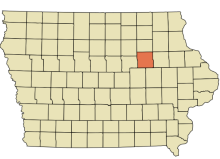
Now, officials in this northeast Iowa city of 68,000 residents (the eighth-largest city in the state) are ready to take the next step, going back to voters with a ballot question that seeks approval for the city to borrow $20 million to build the network backbone.
Voters will head to the polls to decide the question on September 13. It will need 60 percent approval at the ballot box for the measure to pass.
The ‘Time is Here’
Characterizing the effort to build future-proof fiber infrastructure as “good for the long-range interest of this community,” Waterloo Mayor Quentin Hart told The Courier:
For the past 15 to 20 years, the city has done a lot of talking of needing to do this and to work for our own fiber network, and the time is here.
Should the ballot measure pass, the funds would be used to build a 100-mile fiber backbone to support the city’s sewer, storm water, traffic, and water systems. Consultants to the city have said that general obligation bonds are not required, but would be used to lower the cost of financing the overall project.
The Searsport Broadband Committee is pushing forward with a plan to bring a Fiber-to-the-Home (FTTH) network to town residents. The committee hopes to hold a special town meeting soon, where residents will be asked to vote on a bond to pay for it.
Searsport, Maine (pop. 2,600), known for being “the home of famous sea captains” and the “Antique Capital of Maine,” is certainly not an antique when it comes to the town's perspective on the necessity of broadband and the long-term benefits that come from investing in fiber.
“There’s a saying, ‘it’s future-proof,’” Searsport Town Manager James Gillway told the Bangor Daily News. “It’s so far ahead of what copper wire does. It’ll give us better connectivity, and we would run it, own it, like any other utility. That way, we can control the cost. We can be super competitive.”
The town recently put out an informational booklet to educate residents on what this network would look like.
The network is estimated to cost between $2.5 million and $3 million, with the town seeking state grants to help cover some of the costs. Residents will have the option to subscribe for $60 to $70/month with speeds going up to 1 Gigabit per second (Gbps). Early news coverage suggests the town would contract with Axiom Technologies of Machias to be the Internet Service Provider (ISP).
Like many communities we’ve been covering over the course of the pandemic, working from home and distance learning has really put a spotlight on the need for fast, reliable Internet access in Searsport.
The town received a $13,000 grant that it applied for back in July 2020 to help boost it’s free public downtown Wi-Fi, which the town believes will “set [them] apart and make [them] more of a destination then a rest stop or pass through town.”