Image

Fast, affordable Internet access for all.
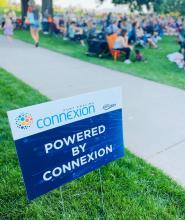
From Colorado to Texas, municipal broadband providers continue to rack up industry accolades, not just for delivering fiber service–the gold standard of Internet connectivity–but for these networks’ ability to provide ubiquitous access across an entire community at affordable rates.
The National Association of Telecommunications Officers and Advisors (NATOA) recently announced that its Community Broadband Projects of the Year Awards for 2023 will go to the Connexion network in Fort Collins, Colorado and TeamPharr.net in Pharr, Texas.
Awarding Community-Wide Access and Affordability
The Fort Collins award is in recognition for the city having established “a municipal broadband utility created by and for the community to improve the life of all 80,000 residential and commercial properties of Fort Collins through better, more affordable Internet,” NATOA said in announcing the award.
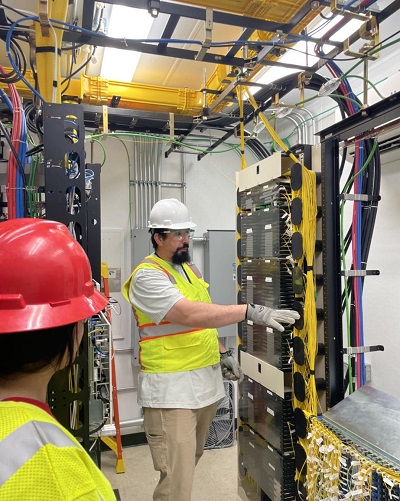
But it wasn’t just because Fort Collins’ network provides city-wide access to fiber. The award also recognizes that “Connexion offers the fastest Internet speeds available at affordable prices (emphasis added) as well as competitive phone and TV services.”
With an unprecedented opportunity for local communities to build their own ubiquitous high-speed Internet infrastructure, a new national organization has been formed to advocate on behalf of municipal broadband initiatives and to give local governments a seat at the table as federal and state officials craft legislation and grant programs to close the digital divide.
Today, at the Broadband Communities Summit 2022 in Houston, the group’s founding members held a press conference to announce the birth of the American Association of Public Broadband (AAPB).
“We were formed by a group of municipal officials in order to advance advocacy efforts for public broadband and to make sure they have a voice in Washington and in all 50 states,” said AAPB board member Bob Knight.
Knight went on to explain that while AAPB will be advocating for municipal solutions to local connectivity challenges, “we are model agnostic, whether you want to partner with a large ISP (Internet Service Provider), build your own network, or form a public-private partnership.”
A ‘Voice in the Conversation’
Noting that AAPB will work closely with ally organizations and industry groups, AAPB was founded primarily “because municipal networks didn’t have much of a voice in the conversation around broadband funding in the American Rescue Plan Act or the Infrastructure Investment and Jobs Act,” even as there was significant lobbying efforts on behalf of the big telecom companies.
AAPB Secretary Kimberly McKinley added that lawmakers are often assailed with stories about municipal broadband failures but that it was important for lawmakers to hear the whole story.

This week’s episode of our Community Broadband Bits podcast is particularly insightful for communities considering how to leverage the broadband expansion funds embedded in the Infrastructure Investment and Jobs Act (IIJA) passed in November 2021.
Although the funds will likely not be allocated to state grant programs until the end of 2022/early 2023, the time is now for state and local leaders interested in building community-owned networks to best position themselves to take advantage of this once-in-a-generation investment.
Christopher is joined by Nancy Werner, General Counsel of the National Association of Telecommunications Officers and Advisors (NATOA), an under-the-radar organization that advises local government officials on telecommunication issues.
During the conversation, the two talk about NATOA and its role in supporting community broadband projects with a particular focus on how the Broadband Equity, Access and Deployment (BEAD) program contained in the infrastructure bill is structured. Christopher and Nancy zero in on exactly how BEAD grant money can be used. Although the bill was written to first focus on mostly rural communities who do not have access to minimum broadband connections of 25/3 Megabits per second, they delve into the nitty gritty of how the funds can be used to prioritize bringing high-speed Internet access to multi-dwelling units even in densely-populated urban centers.
As Christopher notes:
This is important because this is a question of whether we are going to spend the vast majority of this money in areas that are more rural … or if we are going to spend any money in urban areas ... It is incontrovertible that we have neglected the many more millions of people in urban areas. This is a time to make sure that we are not just picking one or the other.
The show ends with an exploration of the promise and shortcomings of taking a simplified approach to setting Right-of-Way and franchise fees, which are areas that are notoriously difficult waters to navigate as new networks are being built.
This week on the podcast, Christopher is joined by Nancy Werner, General Counsel of the National Association of Telecommunications Officers and Advisors (NATOA). During the conversation, the two talk about NATOA and its role in supporting community broadband projects, how the Broadband Equity, Access and Deployment (BEAD) Act is structured, and how exactly BEAD grant money can be used. They also get into the nitty gritty of funding MDU deployment projects with BEAD money, and what priorities need to be considered to access those funds. The show ends with a discussion about the promise and shortcomings of taking a simplified approach to setting right of way and franchise fees.
This show is 30 minutes long and can be played on this page or via Apple Podcasts or the tool of your choice using this feed.
Transcript below.
We want your feedback and suggestions for the show-please e-mail us or leave a comment below.
Listen to other episodes here or view all episodes in our index. See other podcasts from the Institute for Local Self-Reliance here.
Thanks to Arne Huseby for the music. The song is Warm Duck Shuffle and is licensed under a Creative Commons Attribution (3.0) license.
The City of Ammon, Idaho, in partnership with Next Century Cities will host an event titled “The Launch of the Ammon Fiber Utility” to bring together representatives from Ammon and the region, policy and broadband experts, and key stakeholders to show off Ammon’s open access fiber network.
The City’s open access fiber network, named 2016 Community Broadband Project of the Year by the National Association of Telecommunications Officers and Advisors (NATOA), is delivering gigabit connectivity to a community of 14,500 people.
The Launch of the Ammon Fiber Utility
The event will offer attendees the opportunity to hear more about the Ammon Model, learn how a conservative, rural town secured a high take rate, its software defined networking technologies (SDN), as well as a tour of its cutting edge facilities.
The full day event will take place Thursday, October 5, 2017, at the Ammon Operations Center and will include presenters from local government, nonprofit, and the private sector. In addition to Christopher, you can expect to see:
A Learning Experience
If you attend the conference, the morning program will start with keynote speakers and a series of panels:
Smart Cities Panel; researchers, developers, legal and policy experts will discuss current and future challenges.
Policy Discussion with Christopher Mitchell; on the role of government to solve the broadband challenges faced by communities utilizing historical experience inform future policy.
This is the transcript for Episode 271 of the Community Broadband Bits Podcast. Research Associate Hannah Trostle takes over as host in order to quiz Christopher Mitchell on the latest developments in community networks. Listen to this episode here.
Christopher Mitchell: I can't believe we're freek'n talking about satellite again!
Lisa Gonzalez:This is Episode 271 of the community broadband bits podcast from the Institute for Local Self-Reliance. I'm Lisa Gonzalez. What do the FCC satellite internet access mobile broadband. Madison, Wisconsin, and utility poles in Louisville, Kentucky, have in common. They're all in the recent community broadband news and they're all in this week's podcast. In this episode, Research Associate Hannah Trostle boots Christopher from the host chair to interview him about some significant recent developments. For more details on these and other topics check out the appropriate tags at MuniNetworks.org. Now, here's Hannah and Christopher.
Hannah Trostle: Welcome to the Community Broadband Bits podcast. This is your host this week Hannah Trostle. Joining me is the normal host Christopher Mitchell.
Christopher Mitchell: I don't know how normal I am but thank you for having me on my show.
Hannah Trostle: Now we're going to kick you off, and I'm only going to do the podcast from now on.
Christopher Mitchell: I can't say I don't deserve it.
Hannah Trostle: Well you've been gone quite a bit. Where have you been?
After a friendly coup in the offices of the Institute for Local Self-Reliance, Hannah has taken the podcast host chair from Christopher for episode 271 of the Community Broadband Bits. Hannah grills Christopher on where he has recently traveled, interesting lessons, and recent news around community broadband. (Christopher mentions a great event in Pittsfield - video available here.)
The conversation starts with a discussion of why recent travels strengthened our belief that full fiber-optic networks are the best approach for the vast majority of America in the long term. Christopher and Hannah discuss the future of low-latency networks and what is more cost-effective over decades rather than just over the first few years.
They go on to discuss their fears of the FCC legitimizing satellite and mobile wireless connectivity as good enough for carrier of last resort in rural regions. The show wraps up with a discussion about One Touch Make Ready in Louisville and Madison's RFP for a fiber network partner.
This show is 26 minutes long and can be played on this page or via Apple Podcasts or the tool of your choice using this feed.
Transcript below.
We want your feedback and suggestions for the show-please e-mail us or leave a comment below.
Listen to other episodes here or view all episodes in our index. See other podcasts from the Institute for Local Self-Reliance here.
Thanks to Arne Huseby for the music. The song is Warm Duck Shuffle and is licensed under a Creative Commons Attribution (3.0) license.
Longmont, Colorado, shows off its award-winning fiber network through a series of short videos. On July 18th, Longmont’s NextLight network took home an award from the National Association of Telecommunications Officers and Advisors (NATOA). The network won 2017 Community Networks Project of the Year.
A Network For the Whole City
The city of Longmont started actively building this Fiber-to-the-Home (FTTH) network back in 2014. Now, nearly all of the 90,000 residents of Longmont can get gigabit (1,000 Mbps) service. These videos walk residents through construction, from putting fiber and conduit in the ground to installing it in the home.
These short (2- to 3-minute) videos encourage folks to learn about the process so that they know exactly what to expect. Residents might not realize that some equipment has to be installed in the house or that the process involves putting fiber underground through the streets. Watch the playlist below:
Private sector companies, trade organizations, and local authority advocacy groups went on record last week in opposition to HB 2108, a Virginia bill that would severely restrict local communities’ options to improve connectivity. They joined together in a letter to the Chairman of the Virginia House Commerce and Labor Committee, there the bill is now waiting for hearing, Republican Terry J. Kilgore.
Joining Local Communities To Oppose
A number of local governments have already passed resolutions condemning the legislative attack on their right to make local telecommunications decisions and we expect to see more. Del. Kathy Byron, a legislative darling of big cable and DSL providers in Virginia, introduce the bill earlier this month. Local and national media outlets immediately caught the story, and constituents have contacted Byron's office to express their concern.
This letter from leaders in the industry underscored their concern that potential partners feel the bill is a death knell for public-private partnerships:
It would interfere with the ability of private companies to make timely sales of equipment and services to public broadband providers. It would deny private companies timely access to advanced networks over which they could offer business and residential customers an endless array of modern products and services. It would also impair economic and educational opportunities that contribute to a skilled workforce from which businesses across the state will benefit.
The authors of the letter find the slow speeds required in the bill especially troubling for rural communities. The bill sets the standards at 10 Megabits per second (Mbps) download and 1 Mbps upload - speeds reminiscent of antiquated DSL:
The city of Ammon, Idaho, continues to garner more recognition and opportunities from its unfolding municipal fiber network.
In a recent news release, Ammon officials announced the city received approximately $600,000 from the National Science Foundation (NSF) to partner with the University of Utah. They will research and develop a series of next-generation networking technologies supporting public safety.
Pursuing SafeEdge
Called SafeEdge, the nearly initiative will give Ammon residents connected to the city's network the opportunity to participate in the initiative to develop applications such as broadband public emergency alerts.
Ammon officials said a major focus of the research will be to evaluate the “feasibility of mixing public safety applications with other applications and services,” such as consumer streaming and data sharing, remote classroom access, and dynamic access to judicial functions, including remote arraignments and access to legal representation.
The city added “It is expected that this open access/multiservice approach will improve the economic feasibility of deploying broadband services in small and rural communities by allowing a variety of services to be deployed across the same infrastructure, while at the same time ensuring that public safety applications can function in this environment.”
Three-year Project
The National Science Foundation and US Ignite, an initiative promoting U.S. leadership in developing and implementing next-generation gigabit applications that can be used for social good, are providing nearly $600,000 in funding over a three-year period for the Ammon project. About $235,000 of that funding will go to Ammon as sub awardee, the city said. The project period runs from Oct. 1, 2016 to September 30, 2019.
Other Honors