Image
Fast, affordable Internet access for all.
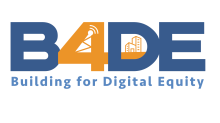
Next week an array of public interest groups, federal lawmakers, FCC officials, and digital equity advocates will converge on the Shaw/Watha T. Daniel Library in the nation’s capital for an Affordable Connectivity Program Rally.
Organized by Public Knowledge, Civic Nation, National Hispanic Media Coalition, National Digital Inclusion Alliance (NDIA), Digital Progress Institute, and Broadband Breakfast, the event will be held on April 30 beginning at 11:30 AM ET and will highlight the importance of the ACP and what happens if Congress allows the popular subsidy program to expire.
They will be joined by U.S. Rep. Yvette Clarke, U.S. Sen. Peter Welch, FCC Commissioner Anna Gomez, and FCC Commissioner Geoffrey Starks as the rally aims to bolster the chances of a discharge petition making its way to a House floor vote to extend the ACP in the face of reluctant GOP leadership.
The rally will be livestreamed by Broadband Breakfast here.
With the end of the Affordable Connectivity Program (ACP) upon us, digital inclusion practitioners are encouraged to save the date for the second Building for Digital Equity (#B4DE) event of the year.
The popular (and free) virtual gathering – co-hosted by Institute for Local Self Reliance (ILSR) Community Broadband Networks Initiative and the National Digital Inclusion Alliance (NDIA) – will be held on June 10, 2024 from 3 to 4:15 PM ET.
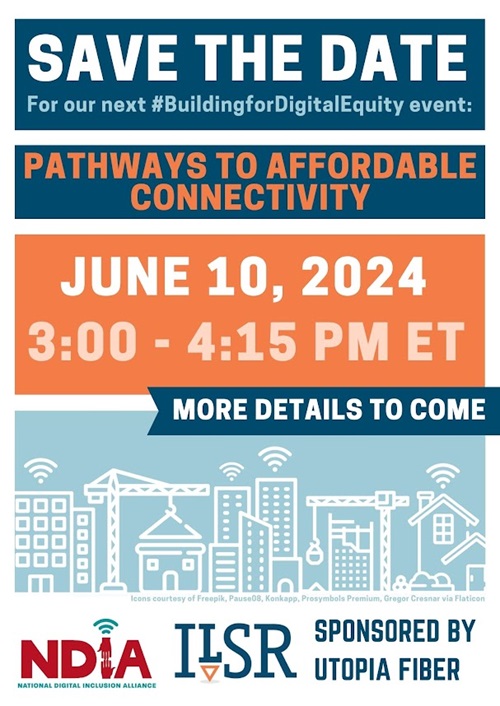
Coming on the heels of our last B4DE event in March, the theme for this installment will be “Pathways to Affordable Connectivity.”
It will feature an informative agenda that focuses on what digital equity advocates across the nation are doing to address broadband affordability and the pressing need for creating sustainable solutions for communities.
You can register for the event here.
As with the previous #B4DE events, the June live stream will once again be sponsored by UTOPIA Fiber and co-hosted by NDIA’s Pamela Rosales and ILSR’s Community Broadband Networks Initiative Director Christopher Mitchell.
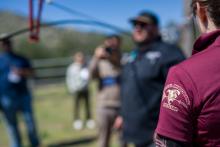
TBB11 marked an exciting development for the Tribal Broadband Bootcamps.
For this latest and newest iteration, TBB co-founder Matt Rantanen graciously permitted TBB to make a permanent fiber ring installation on his property, RantanenTown Ranch, last month. While TBB will continue to host bootcamps in partnership with Tribes in different regions of North America, the launch of this permanent broadband practice arena allows TBB to chart a new path towards even more in-depth and hands-on training.
Here is a photo-filled look at the many days of prep and three days of immersive programming that went into making it happen.
“Just the fact that we saw the fiber model in its open aspect with all the drama and issues right in front of us; my friends is the best learning methodology!” – TBB 11 Attendee
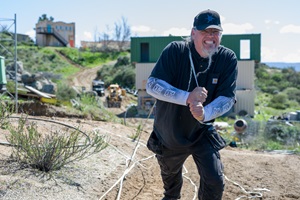
Ready or Not
Of course, building an entire, operating fiber network across RantanenTown Ranch was a massive undertaking that involved a lot of prep work.
Today, the first Building for Digital Equity livestream of the year will begin at 3 PM ET. The entire event will zoom in on the imminent end of the Affordable Connectivity Program (ACP) with the lineup of speakers sharing on-the-ground perspectives and approaches being adopted at the community level as they work to keep financially-strapped households connected beyond ACP.
Last minute registration are still being accepted to fill up the last few seats for the virtual gathering here.
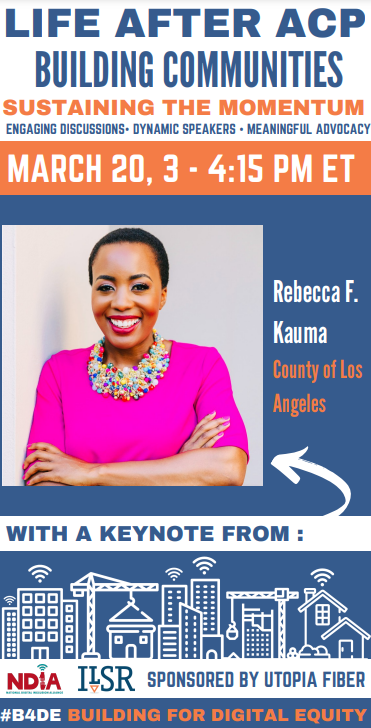
Here’s the run-of-show:
NDIA’s Amy Huffman will set the table on where things stand with the ACP wind down process before two lightning rounds take center screen.
For the first lightning round Margaret Käufer, President of The STEM Alliance, will give an overview on the short and long-term community work her organization is doing in upstate New York in the face of ACP’s demise. That will be followed by Jason Inofuentes, Program Manager for the Broadband Accessibility and Affordability Office in Albemarle County, VA, who will spotlight an ACP supplement program his office is pursuing and how they see things moving forward.
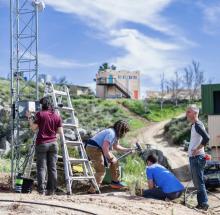
The Tribal Broadband Bootcamps (TBB) – a three-day intensive learning experience focused on building and running Tribal Internet networks – are becoming even more immersive as the 11th TBB is now underway at the homestead of TBB co-founder Matthew Rantanen.
As more Tribal nations build out their own broadband networks to deliver service to Indigenous communities in the most disconnected areas of North America, broadband-minded Tribal leaders and instructors continue to gather in different Tribal regions across the country several times a year for the ultimate Indian Country networking experience.
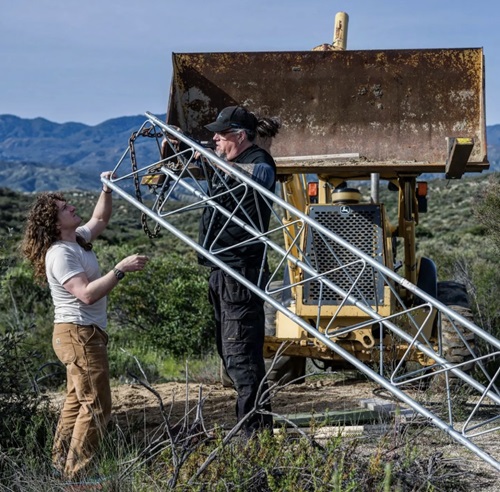
This time participants descended on “RantanenTown Ranch” in Aguanga, California – part of southern California’s Inland Empire region near Temecula.
With help from ILSR’s Community Broadband Networks Initiative Director and TBB co-founder Christopher Mitchell, and a handful of other instructors, the ranch has been transformed into a working demonstration site so participants could better learn the technologies involved in constructing broadband networks, while taking a deep-dive into what it takes to operate a network.
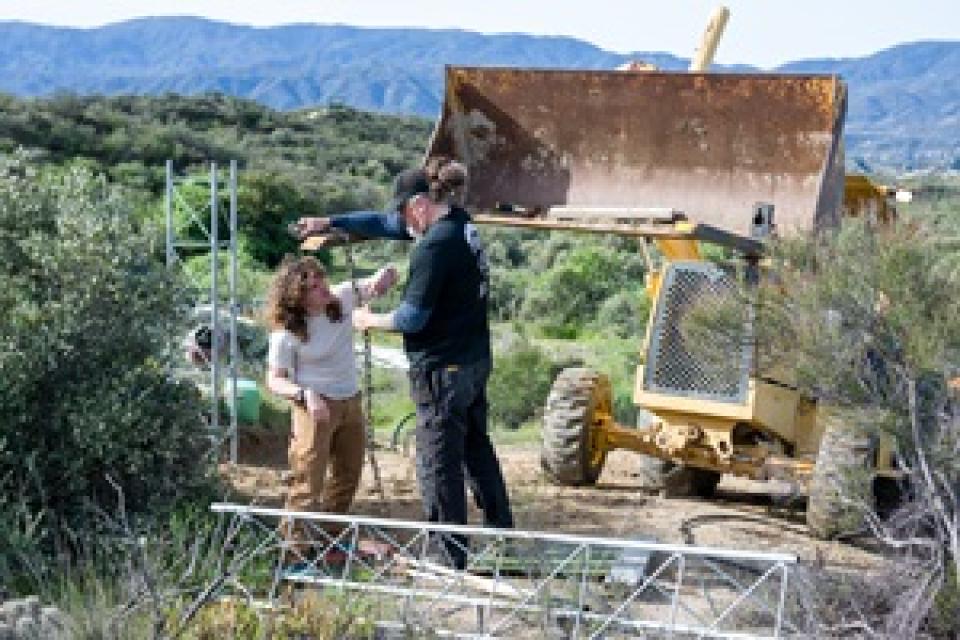
All of the previous bootcamps offered hands-on training. But, this particular bootcamp took it up a notch as TBB instructors set up a full deployment demonstration, illustrating how fiber is buried and/or deployed aerially.
Digging In

For decades, ILSR has recognized that communities need to be engaged on Internet access issues to make sure that everyone – from low-income, historically marginalized residents to small businesses and even municipal departments – have the Internet access they need to thrive in the digital age.
Digital equity is essential to help resolve other challenges and the current chasm between the haves and have-nots makes solving many other challenges – like education – more difficult.
To further the quest for greater digital inclusivity, recently ILSR’s Community Broadband Networks Initiative Director Christopher Mitchell put together a panel for Net Inclusion 2024, a conference convened by the National Digital Inclusion Alliance (NDIA) that drew 1300 attendees and was by far the largest digital inclusion conference held in many years of doing this work.
Entitled “Without Political Power, There is No Path to Digital Equity,” the panel was originally going to focus on the importance of structural change – and how we cannot ensure everyone is connected by relying solely on the networks already present in neighborhoods that see quite low broadband penetration. Instead, the panel discussion went a bit deeper than that and landed on an observation often made by Joshua Edmonds from Digital C in Cleveland. To paraphrase Joshua, we cannot coupon our way to digital equity.
With the nation's premier digital inclusion conference in full swing right now in Philadelphia – and with yet another banner year in broadband in the making – the first Building For Digital Equity (B4DE) livestream event of the year is now set for March 20.
As you read this, the National Digital Inclusion Alliance (NDIA), organizers of Net Inclusion 2024, are engaging with hundreds of digital inclusion practitioners, advocates, academics, Internet service providers, and policymakers from across the nation at the conference. Joining them there in the City of Brotherly Love is a full complement of the Institute for Local Self Reliance (ILSR) Community Broadband Networks team. The energy and ideas from the event will inform the upcoming B4DE that will feature the theme: Life After ACP.
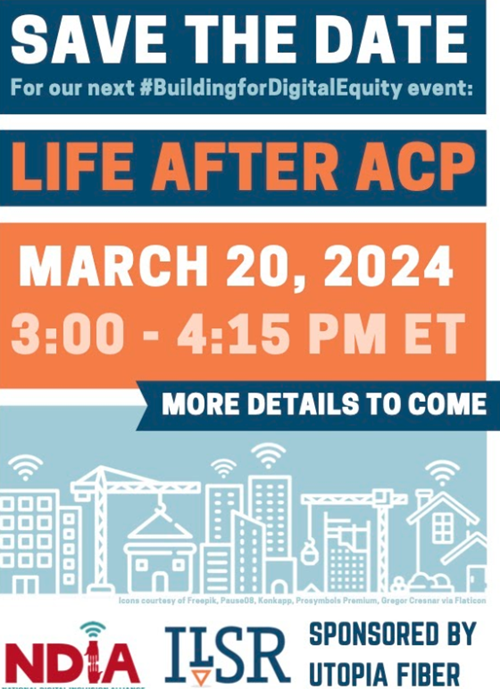
We encourage you to save the date and register here for the popular (and free) virtual gathering to be held March 20, 2024 from 3 to 4:15 PM ET.
Coming on the heels of our last B4DE event in December, digital inclusion advocates are strategizing around how to tackle the broadband affordability challenge as the FCC winds down the Affordable Connectivity Program (ACP).
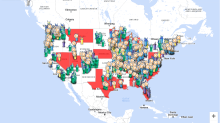
As the new year begins, the Institute for Local Self-Reliance (ILSR) announced today its latest tally of municipal broadband networks which shows a dramatic surge in the number of communities building publicly-owned, locally controlled high-speed Internet infrastructure over the last three years.
Since January 1, 2021, at least 47 new municipal networks have come online with dozens of other projects still in the planning or pre-construction phase, which includes the possibility of building 40 new municipal networks in California alone.
Capping off a banner year in broadband, ILSR and NDIA’s final Building for Digital Equity livestream of 2023 this week had its largest audience to date since the online quarterly series started in 2022.
Digital Equity Unwrapped: End of Year Reflections/The New Year Ahead, sponsored by UTOPIA Fiber, featured timely topics and practical insights from an array of frontline digital inclusion practitioners, teeing up Net Inclusion 2024 – the biggest in-person gathering of digital equity advocates in the nation.
That event will be hosted by the National Digital Inclusion Alliance (NDIA) in Philadelphia, February 13-15, 2024.
If you missed the #B4DE 2023 finale or would like to see it again, you can watch it in its entirety below.
It includes lightning round presentations from the Administrator for Chicanos Por La Causa (CPLC) Nubia Estrada and OCA Asian Pacific American Advocates Policy & Organizing Manager Eric Kim; a preview of this year’s Trailblazer Awards with a special guest appearance by Rebecca Kauma, LA County’s Director of Digital Equity; and an update on the work being done by Shaping Our Appalachian Region (SOAR) Digital Navigator Ashley Smith.
Putting a bow on the holiday season event was keynote speaker Patrick Messac, Director of the Bay Area-based digital equity nonprofit #OaklandUndivided. Messac connected the dots on the importance of equitable infrastructure investments, mapping, and ways local communities might leverage the FCC’s new rules to address digital discrimination.
Digital Equity Unwrapped: End of Year Reflections/The New Year Ahead is just a week away, as seats are filling up fast for next Tuesday’s Building for Digital Equity (#B4DE) event.
The popular (and free) virtual gathering – slated for December 12, 2023 from 3 to 4:15 pm ET – will highlight important milestones in broadband over the past year and take a look ahead for what promises to be another busy year for digital inclusion practitioners across the country.
There’s still time to register for the event here.
Co-hosted by the Institute for Local Self Reliance (ILSR) Community Broadband Networks Initiative and the National Digital Inclusion Alliance (NDIA), the final #B4DE of the year will serve up practical insights on everything from Digital Equity Act planning to how communities are confronting digital discrimination.
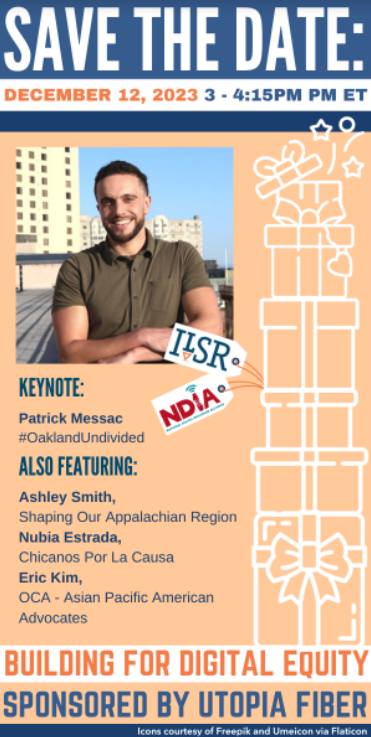
The event will be sparked by lightning round presentations featuring Affordable Connectivity Program (ACP) Administrator for Chicanos Por La Causa (CPLC) Nubia Estrada and OCA Asian Pacific American Advocates Policy & Organizing Manager Eric Kim. Each will give a concise overview of their outreach work with “covered populations.”