Image


Fast, affordable Internet access for all.
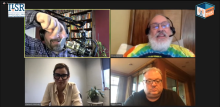
On Episode 12 of Connect This!, hosts Christopher Mitchell and Travis Carter (USI Fiber) are joined by returning guests Doug Dawson (CCG Consulting) and Kimberly McKinley (UTOPIA Fiber) to talk about the recently released Treasury rules outlining the upcoming infrastructure funds going to states and local governments for critical infrastructure.
After talking for a few minutes about labor and materials shortages, the group dives into the language of the Treasury rules and to what extent they restrict the upcoming funds for cities and towns. They talk about the minimum speed requirements listed and what they mean for the underlying technologies the rules encourage, to what extent the rules represent the enaction of a bold vision for universal high-speed Internet access in the United States, and what kinds of outcomes we might see in the near and medium future.
Subscribe to the show using this feed, or visit ConnectThisShow.com
Email us broadband@muninetworks.org with feedback and ideas for the show.
Watch here, or below.
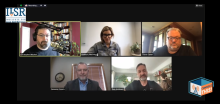
In Episode 11 of the Connect This! Show, hosts Christopher Mitchell and Travis Carter (USI Fiber) are joined by Kim McKinley (Chief Marketing Officer, UTOPIA Fiber), Pete Ashdown (Founder and CEO, XMission) and Cameron Francis (CEO, Beehive Broadband) to share their perspectives on open access networks.
The panel explore what open access is like for ISPs that use it and offer thoughts for those who are considering it. What's in it for the ISPs?
Along the way they cover a lot of ground: the lower startup costs and fewer barriers to entry for new ISPs; how banks understand providers operating on those infrastructure models; the role, interests, and benefits of publicly owned open access networks; and the future of software-defined networks both on and as differentiated from open access systems.
Subscribe to the show using this feed, or visit ConnectThisShow.com
Email us broadband@muninetworks.org with feedback and ideas for the show.
Watch below, or on YouTube here.

In Episode 11 of the Connect This! Show, hosts Christopher Mitchell and Travis Carter (USI Fiber) are joined by Kim McKinley (Chief Marketing Officer, UTOPIA Fiber), Pete Ashdown (Founder and CEO, XMission) and Cameron Francis (CEO, Beehive Broadband) to share their perspectives on open access networks.
The panel will explore what open access is like for ISPs that use it, and offer thoughts for those who are considering it. What is in it for the ISPs?
The show will begin on Thursday, May 6th at 5:30pm ET/4:30pm CT.
Subscribe to the show using this feed, or visit ConnectThisShow.com
Email us broadband@muninetworks.org with feedback and ideas for the show.
Watch below, or on YouTube here.

Traverse City has officially launched its new municipal Fiber-to-the-Home network in the northern Michigan town of 15,000. The city's municipal electric utility, Traverse City Light & Power (TCL&P), owns the network and operates it in a partnership with Fujitsu, with the latter building and initially helping operate it, but turning management over to TCLP as the city utility feels comfortable with each aspect of the operation.
TCL&P Fiber is being built incrementally, starting in the downtown area where the economic heart of the community lies. The first phase is estimated to cost $3.5 million and will offer 2,200 locations service. The rest of the community will be connected in coming years and perhaps ultimately areas outside the current electric footprint.
Image

Getting up to Speed
Traverse City has been working in the communications space for more than 10 years with dark fiber leases to major anchor institutions and key economic entities. In more recent years they were providing free Wi-Fi downtown while considering how to improve Internet access to smaller businesses and residents. For years, they examined various options, with serious consideration of an open access network where the city would build the infrastructure but other ISPs would use it to connect customers.
In an interview today, TCL&P Executive Director Tim Arends told us that they moved on this project after sensing a lot of pent up demand for better service — with speed, reliability, and especially customer service as common complaints with existing service. Though TCL&P did not name check the existing providers, AT&T DSL and Charter Spectrum cable are the main incumbent providers.
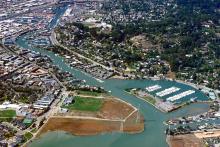
Marin County and the city of San Rafael, California, are demonstrating what happens when local government, a community nonprofit, and generous stakeholders come together to do something right. Over the summer they’ve built a Wi-Fi mesh network in the city’s Canal neighborhood to connect over 2,000 students and their families in anticipation of the upcoming school year. How the project unfolded shows what a thoughtful, committed group of people can do to respond to a public health crisis, close the digital divide, and make a long-term commitment to the vulnerable communities around them.
A Neighborhood in Need
The Canal neighborhood (pop. 12,000) was founded in the 1950s and sits in the southeast corner of Marin County, bounded by the San Francisco Bay to the east, the city of San Quentin to the south, China Camp State Park to the north, and the Mount Tamalpais Watershed to the west. It’s split down the middle by Highway 101 and Interstate 580.
Canal is populated by predominantly low-income workers, and remains one of the most densely settled areas in Marin County — one of the wealthiest counties in the nation. Its residents serve, according to San Rafael Director of Digital Services and Open Government Rebecca Woodbury, as the backbone of the area’s service economy. Those who live there are mostly Latinx residents, with a small but significant segment who identify as Vietnamese. A 2015 study highlighted the challenges the community faces. Its population grew by half between 1990 and 2013, while available housing units grew by just 15%. During the same period, median household income shrunk by nearly a third, and unemployment remains twice as high in Canal than in the rest of Marin. It suffers from the largest education disparity in the entire state. It’s also among the hardest hit in the community by the coronavirus pandemic: the Latinx population in Canal accounts for just 16% of Marin County but 71% of cases so far.
One of the very many treats at Mountain Connect this year was a keynote from Chattanooga EPB's Director of Fiber Technology, Colman Keane. (Watch it here.) After discussing their remarkable successes, we snagged an interview with him (he was last on the show for episode 175).
We discuss whether or not Chattanooga is an appropriate role model for other cities considering a municipal fiber investment and the general viability of citywide approaches in the current market.
We also get an update on Chattanooga's financials, their enthusiasm on connecting well over 90,000 subscribers, and how the smart grid deployment is creating tremendous value for both the utility and the wider community.
For more about Chattanooga, take a look at our ongoing coverage. We've been following the network and the community since 2009.
This show is 23 minutes long and can be played on this page or via Apple Podcasts or the tool of your choice using this feed.
Transcript below.
We want your feedback and suggestions for the show-please e-mail us or leave a comment below.
Listen to other episodes here or view all episodes in our index. See other podcasts from the Institute for Local Self-Reliance here.
Thanks to Arne Huseby for the music. The song is Warm Duck Shuffle and is licensed under a Creative Commons Attribution (3.0) license.
Located in southeast Pennsylvania, Lancaster will soon have some of the fastest Internet access in the entire state due to its partnership with a local telecommunications firm, MAW Communications. We reported on many details about this approach here, but Community Broadband Bits podcast episode 248 offers an in-depth look.
Lancaster Business Administrator Patrick Hopkins and MAW Communications Operations Director Brian Kelly joined me to talk about the history of their partnership and the next big step: a citywide gigabit fiber-optic network.
We also talk about the risks to the public sector from trusting a private company with essential infrastructure and the potential challenges for a private sector company to work with a local government. Both sides are going into this arrangement with their eyes wide open and offer tips for what others should consider before they try to replicate the model.
If you missed it, last year we released a major paper about considerations in public-private partnerships. We did not discuss LanCity Connect, but many of themes apply.
This show is 29 minutes long and can be played on this page or via Apple Podcasts or the tool of your choice using this feed.
Transcript below.
We want your feedback and suggestions for the show-please e-mail us or leave a comment below.
Listen to other episodes here or view all episodes in our index. See other podcasts from the Institute for Local Self-Reliance here.
Thanks to Break the Bans for the music. The song is Escape and is licensed under a Creative Commons Attribution (3.0) license.
Having few options for high-quality telecommunications service, Virginia's Roanoke Valley formed a broadband authority and is building an open access fiber-optic network with different options for ISPs to plug-in. In addition to being our guest on Community Broadband Bits episode 221, Frank Smith is the Roanoke Valley Broadband Authority CEO and President. We discuss their various options for ISPs to use their infrastructure and the various services their network is providing, including access to conduit and dark fiber leases. We also discuss why they formed a state authority to build their carrier-grade network. Though they have had some pushback from incumbents - something Frank seems unphased by in calling the Authority "the new kid on the block" - they have built local support by building relationships with local organizations like Blue Ridge PBS. Read all of our Roanoke Valley Broadband Authority coverage here.
This show is 29 minutes long and can be played on this page or via Apple Podcasts or the tool of your choice using this feed.
Transcript below.
We want your feedback and suggestions for the show-please e-mail us or leave a comment below.
Listen to other episodes here or view all episodes in our index. See other podcasts from the Institute for Local Self-Reliance here.
Thanks to mojo monkeys for the music, licensed using Creative Commons. The song is "Bodacious."
Last month we wrote wrote about the Whip City Fiber Pilot project in Westfield, Massachusetts expanding and this week we interview two people from Westfield Gas & Electric about the effort. Aaron Bean is the Operations Manager and Sean Fitzgerald is the Key Accounts and Customer Service Manager. We discuss their pilot project, how they structured the services and pricing, and integrated the new telecommunications services into the municipal utility. We also discuss whether the lack of a television option is limiting interest from potential subscribers and how they are picking the next locations to expand the network. The sound effect we use in the intro is licensed using creative commons. We found it here.
This show is 18 minutes long and can be played on this page or via Apple Podcasts or the tool of your choice using this feed.
Transcript below.
We want your feedback and suggestions for the show-please e-mail us or leave a comment below.
Listen to other episodes here or view all episodes in our index. See other podcasts from the Institute for Local Self-Reliance here.
Thanks to Forget the Whale for the music, licensed using Creative Commons. The song is "I Know Where You've Been."

Tullahoma Utilities Board LightTUBe customers are once again receiving a special holiday gift via the municipal fiber network. As of December 5th, subscribers got a boost in speeds with no boost in price.
From the LightTUBe Facebook page:
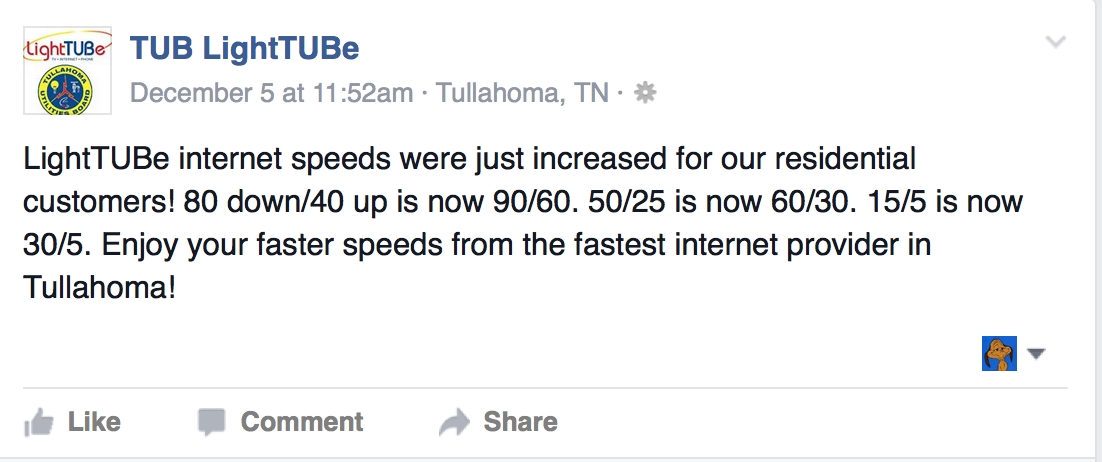
More good news is on the way after the first of the year. According to General Manager Brian Skelton, rates for the two highest tiers will decrease. Symmetrical gigabit Internet service will drop from $99.95 per month to $89.95 per month and 200 Megabits per second (Mbps) symmetrical Internet service will decrease from $79.95 per month to $74.95 per month.
Unlike the big corporate providers that increase rates whenever the opportunity arises, Tullahoma prefers to increase speeds for free and sometimes even lower rates. Publicly owned networks focus on serving the community rather than maximizing profits; the decision to increase speeds and lower prices comports with their mission.
Happy Holidays, LightTUBe subscribers!