Image


Fast, affordable Internet access for all.
UTOPIA Fiber continues to grow and is now exporting its expertise into Bozeman, Montana – one of the fastest-growing cities of its size and often listed among the best places to live in the country.
Referred to by some as “Boz Angeles” because of the influx of Californians to the area, this Rocky Mountain city of 53,000, nestled in Gallatin Valley, is about to become even more attractive as a rising tech hub for millennials. At the Broadband Communities 2021 Summit last month, it was announced that Bozeman Fiber, a non-profit organization created by the city to expand high-speed Internet connectivity across the region, has partnered with Utah-based UTOPIA Fiber to build an open access fiber-to-the-home (FTTH) network.
Bozeman Fiber has already built an open access fiber ring, serving city, county, and school facilities. It has also connected 200 commercial customers. The partnership with UTOPIA will allow Bozeman Fiber to extend the network across the city, passing 22,000 homes and businesses, with plans to extend further out into the more rural parts of Gallatin County down the road.
Network construction, which is estimated to cost $65 million, is slated to begin in the spring of 2022 and is expected to take three years to be completed.
“This is the first phase of a project that will cover the city and some areas of the county, and the intention is we’ll have future phases that reach further out into the county to hit more rural areas,” UTOPIA Fiber executive director Roger Timmerman said during the press conference announcing the partnership.
Bozeman Fiber CEO Greg Metzger added: “with this project, we’ll be able to attract and retain more businesses, and create jobs.”
County Provides Access to Bond Market
As Mayors must concern themselves with everything from public safety and health to the development of the local economy and the provision of essential municipal services, they tend to have a particular focus on the infrastructure necessary to support it all, amid a cacophony of competing interests.
Over the summer, having reached consensus on the fundamental importance of “the digital infrastructure of tomorrow,” a particular focus of the United States Conference of Mayors 88th National Annual Meeting was to issue a resolution declaring the necessity of “Preserving Local Public Rights-of-Way and Regulatory Authority to Most Effectively Deploy 5G Broadband Access and Bridge the Digital Divide during the COVID-19 Pandemic.”
Image

The Mayors’ resolution comes in response to the Federal Communications Commission’s (FCC's) 2018 preemption of local governments’ authority to regulate 5G infrastructure in their cities.
At the heart of the regulatory debate: local governments’ ability to determine the amount of fees to charge mobile carriers that want to place 5G equipment in Rights-of-Way. In addition to putting limits on those fees, the FCC Order also sets strict timelines by which cities and towns must respond to carrier applications. The FCC decision, issued over the objections of industry observers and policy experts, essentially eliminates local communities’ ability to negotiate in order to protect their own Rights-of-Way and the poles, traffic lights, and other potential structures within those Rights-of-Way.
Preempting Local Authority
In this episode of the podcast Christopher talks with Jeff O'Neill, City Administrator of Monticello, MN, about FiberNet, which is owned by the city but today operates in a public-private partnership with local telecommunications provider Arvig.
Christopher and Jeff delve into the history and development of the network over the last fifteen years. They discuss how business leaders began calling for the city to look for a solution to poor Internet speeds all the way back in 2005, why the city ultimately decided to build its own network, and how FiberNet persevered in the face of an early lawsuit so that incumbent provider TDS could slow competition as it began its own fiber buildout. Jeff and Chris then talk about the network subsequently weathering a vicious price war with Charter Spectrum which contributed to the fracturing of its relationship with early partner Hiawatha Broadband, but which also brought significant savings and better customer service from incumbent providers to everyone in town.
They end by discussing the multitude of community benefits realized today by having three competing providers in Monticello — two offering Fiber-to-the-Home (FTTH) in the city of 14,000 — and what it means for community savings and economic development for the city moving forward. Jeff ends by sharing some of the work he’s most proud of being involved in and what he sees as important for FiberNet in the years ahead.
We want your feedback and suggestions for the show; please e-mail us or leave a comment below.
This show is 35 minutes long and can be played on this page or via Apple Podcasts or the tool of your choice using this feed.
Transcript below.
We want your feedback and suggestions for the show-please e-mail us or leave a comment below.
Listen to other episodes here or view all episodes in our index. See other podcasts from the Institute for Local Self-Reliance here.
Thanks to Arne Huseby for the music. The song is Warm Duck Shuffle and is licensed under a Creative Commons Attribution (3.0) license.

Local governments have been creative in finding ways to conduct work remotely during the ongoing coronavirus pandemic, conducting city council meetings via Zoom or congregating in football stadiums to vote on referendums. Soon, Summit County, Ohio and the city of Akron will be better equipped to do similar work. Both have passed council measures approving an agreement with the neighboring city of Fairlawn to expand the latter’s municipal network southeast, and create a fiber ring connecting county- and city-level criminal justice and public safety buildings. The Summit County Criminal Justice Technology Project, which will be complete by the end of the year, is designed to facilitate court proceedings and public safety work remotely in response to the coronavirus pandemic.
A Burnin' Ring of Fiber
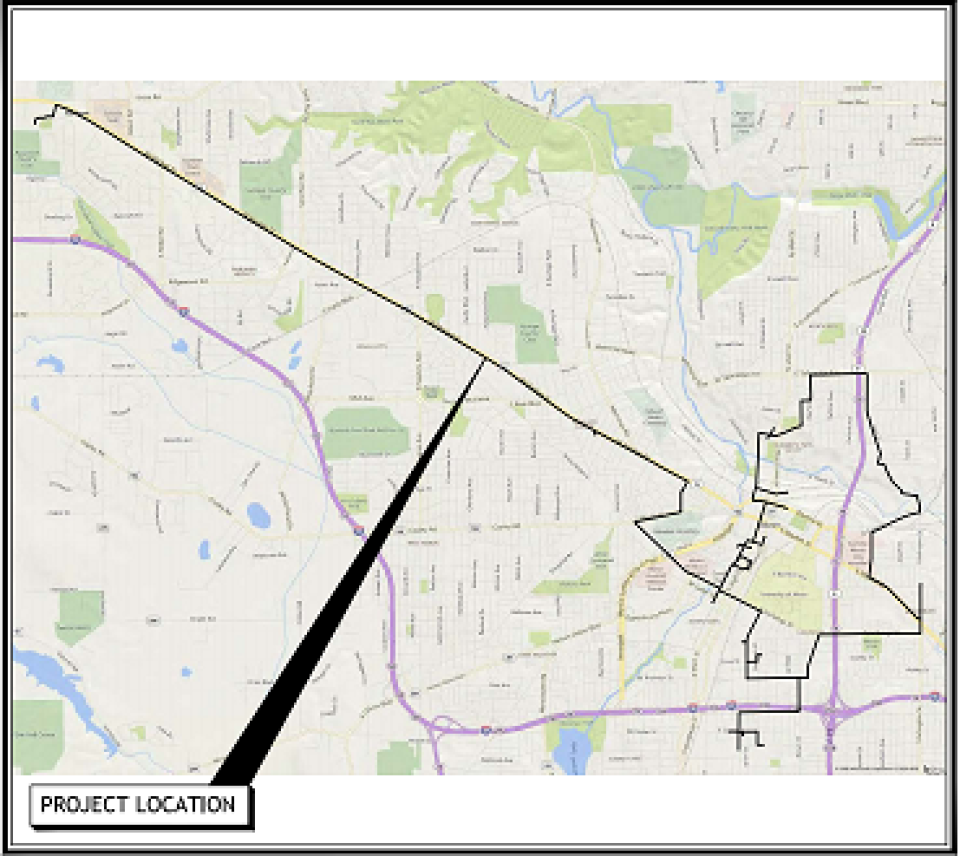
FairlawnGig, the municipal network run by the city of the same name, has issued a Request for Qualifications to design and build the network extension it will then manage. The ring will consist of 20 miles of mostly 864-strand fiber (with some places getting 24-strand additions or upgrades) and the $6.5 million cost will be paid for by Summit County (the money is coming from CARES Act funds).
Summit County Executive Ilene said of the investment:
COVID-19 has forced us to rethink how government operates and delivers services. As we begin to adjust to life with the virus, we have to consider how to safely and efficiently meet the needs of our community. This project prioritizes both safety and efficiency.
Image

Milwaukee County, Wisconsin, is currently experiencing firsthand the consequences of the Federal Communications Commission’s (FCC's) 2018 preemption of local governments’ authority to regulate 5G infrastructure in their cities. With its initial handful of applications for new small cell transmitters just submitted to the county board by Verizon under the new rules, local officials are grappling with a host of limitations — including fee caps, shorter timing windows, and right of way exemptions — which outline clearly a problem more and more communities will face in the coming months and years.
Less Say, Less Money
We pointed out when the FCC handed down the order in the fall of 2018 that it represented a significant giveaway to wireless carriers while placing additional restrictions and financial burdens on local regulators, most of which are county boards and city departments. Among the most troublesome of the order’s provisions are new 60- and 90-day approval windows for the installation of infrastructure on existing and new wireless facilities, a limitation to annual fee scales for small cell sites set between $100-250, a right now enjoyed by wireless providers to place infrastructure on municipally owned poles and traffic lights, and a rule that says if regulating authorities don’t get to an application within 60 days it automatically becomes approved. The 9th U.S. Circuit Court of Appeals upheld the fee cap in a ruling last Wednesday.
Image

The merger between T-Mobile and Sprint is moving forward, notwithstanding legal opposition from multiple state attorneys general. In a recent article, Christopher Mitchell Director of the Institute for Local Self-Reliance's Community Broadband Networks Initiative, and Paul Goodman, Technology Equity Director from The Greenlining Institute, explained the tenuous reasoning behind the recent court decision and why they expect nothing good for subscribers and the state of competition as this deal comes to fruition.
We've shared the article in full here; you can also read it at The Greenlining Institute website.
EXPECT BROKEN PROMISES FROM T-MOBILE/SPRINT MERGER
By Christopher Mitchell and Paul Goodman
Earlier this week, a federal judge dismissed a lawsuit to stop the proposed merger between T-Mobile and Sprint. As a result, it’s highly likely that by the end of the year, Sprint will no longer exist, and that AT&T, Verizon, and T-Mobile will be the only major wireless providers in the United States. The judge’s decision is 170 pages long but boils down to this: The judge believes that even though T-Mobile will have the ability to increase prices, it won’t, because T-Mobile promised not to.
What, Exactly, has T-Mobile Promised?
The same things that communications providers have promised us for decades when drumming up support for a merger—lower prices, the creation of thousands of jobs, and new and exciting service offerings. As a result, the company argues, T-Mobile will have the size and resources to transform itself into a company like AT&T.
It’s that last sentence that’s particularly troubling. In 2018, AT&T purchased Time Warner Media, arguing that doing so would result in lower prices, the creation of thousands of jobs, and new and exciting product offerings. Which sounds fantastic, except for the fact that AT&T failed to deliver on those promises:
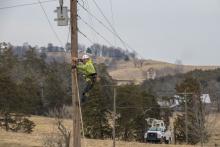
In the past few years, states around the U.S. have made incremental changes in their laws to ease restrictions on municipalities and cooperatives interested in developing high-quality Internet network infrastructure. When communities in Connecticut wanted to exercise their right to space on utility poles at no cost, however, pole owners objected. After a drawn out review of the state's "Municipal Gain" law, local communities have finally obtained the decision they've pursued to develop cost-effective publicly owned fiber optic municipal networks.
Process, Procedure, and PURA
In 2016, the state's Office of Consumer Counsel (OCC) turned to Connecticut's Public Utility Regulatory Agency (PURA) and asked the agency to clarify a 110-year-old state law regarding utility poles in municipal rights-of-way (ROW). In Connecticut, about 900,000 of the poles are scattered throughout the state and are prime locations for fiber optic cables for improved connectivity. Most of the poles belong to Verizon, Frontier, one of the state's electric providers, or are jointly owned by two or more of them.
The Municipal Gain Law was created in the early 1900s to give local communities reserved space with no attachment fee on the poles in order to hang telegraph wires. As telephone and other technologies evolved that required wiring, municipalities wanted to take advantage of the space. There were several lawsuits between pole owners and municipalities over the years with pole owner interests usually losing out to the needs of the public. By 2013, it became clear that amending the law to allow communities to access the municipal gain space "for any use" made sense and the state legislature made the statutory language change. Local communities saw the change as an opportunity to string fiber in the space, establishing publicly owned infrastructure on which they could partner with private sector providers for improved local connectivity.
Plans for Holston Electric Cooperative to offer television service as part of its Fiber-to-the-Home (FTTH) network deployment are on pause following allegations from the east Tennessee co-op that broadcasting company Nexstar Media Group refused to engage in “good faith” negotiations over retransmission consent agreements.
Holston Electric Cooperative established its broadband subsidiary, HolstonConnect, in late 2017 after a state law change removed restrictions on rural electric co-ops. Currently, HolstonConnect is in phase one of its FTTH project, which will bring high-quality Internet access to underserved communities in Rogersville, Surgoinsville, and nearby areas. Subsequent deployments will connect the remainder of the cooperative’s service territory, partially aided by federal funding from last year’s Connect America Fund phase II reverse auction.
From the start, the co-op planned to offer a “triple play” of broadband, voice, and video services. However, failure to come to an agreement with Nexstar, one of the nation’s largest station operators, over access to essential local channels has delayed the delivery of television services to HolstonConnect subscribers. In early March, Holston filed a complaint against Nexstar with the Federal Communications Commission (FCC), arguing that the broadcasting company demanded exorbitant fees and unfair station tying arrangements during negotiations with the co-op.
“Failure to Negotiate in Good Faith”
To carry popular television programming, networks must sign cable retransmission consent agreements with regional station operators. The FCC requires that these companies behave in “good faith” and make tangible efforts to engage in negotiations.

Located only 30 miles east of Houston, it’s hard to believe that Mont Belvieu, Texas, ever had poor Internet access. Faced with complaints from residents and businesses, city officials decided to deploy fiber and bring fast, affordable, reliable gigabit connectivity directly to the community via MB Link.
How to Fix the Problem
While it’s not far from the center of a large metro area, Mont Belvieu still maintains a rural character. The town’s history is based in the oil and natural gas industry, which began in the early 1900s. As City Manager Nathan Watkins told Christopher Mitchell in episode 326 of our podcast, approximately 85 percent of natural gas liquids in the U.S. travel to Mont Belvieu for processing. With more than 10,000 miles of pipeline within their salt domes, the town of 8,000 has become a centerpiece of oil and natural gas processing.
Before MB Link, the community dealt with a patchwork of services offered by several different providers. Even though more than one provider operated in town, they didn’t compete with each other. Without competition, ISPs had no impetus to improve services. Residents complained about DSL download speeds of 1.5 Megabits per second (Mbps) and cable Internet access download speeds topping out at 5 Mbps. There were even premises that could not obtain Internet access because ISPs reported saturated networks and were not willing to make investments to serve more subscribers.
In 2016, a feasibility study in Mont Belvieu revealed that 60 percent of residents and 79 percent of businesses felt that local Internet access wasn’t adequate for their needs. In the same survey, 90 percent of residents and 100 percent of business respondents opined that high-speed Internet access is an essential service in the same manner as electricity and water.
We don’t often get the opportunity to interview people from Texas, so when we heard about Mont Belvieu’s gigabit fiber optic network we knew we had to have them on the show. When we learned that four officials from the east Texas town would join us we said, “Even better!” City Manager Nathan Watkins, Director of Broadband and IT Dwight Thomas, Assistant City Manager Scott Swigert, and Communications and Marketing Director Brian Ligon are on the show this week to talk about their publicly owned network, MB Link.
Before they were able to provide the fast, affordable, reliable service to residents all over town, Mont Belvieu had to assert themselves in a legal proceeding against the State of Texas. In this conversation, the guys discuss their elegant argument that won over the court. You’ll also hear why community leaders decided that, even though Mont Belvieu had a thriving oil and gas industry, they felt that investing in high-quality Internet access for residents was a goal they aimed to achieve for the public good. The residents in Mont Belvieu drove this project.
People in Mont Belvieu have clambered to sign up for the network. Our guests discuss how they’ve used their town’s strengths to market the services they offer and how they continue to use communications to help subscribers get the most from MB Link. The guys also talk about how the city plans to add businesses to the network and the reactions from incumbents.
Read more about the network and the court action in our coverage about Mont Belvieu.
This show is 27 minutes long and can be played on this page or via Apple Podcasts or the tool of your choice using this feed.
Transcript below.
We want your feedback and suggestions for the show-please e-mail us or leave a comment below.
Listen to other episodes here or view all episodes in our index. See other podcasts from the Institute for Local Self-Reliance here.
Thanks to Arne Huseby for the music. The song is Warm Duck Shuffle and is licensed under a Creative Commons Attribution (3.0) license.