Image


Fast, affordable Internet access for all.
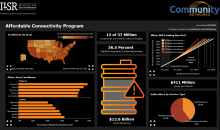
On January 1st, 2022, the Federal Communications Commission launched the Affordable Connectivity Program (ACP) with $14.2 billion in funding designed to help American households pay for the monthly cost of their Internet subscription.
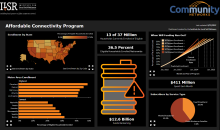
In May, we published a story about the fate of the Affordable Connectivity Program (ACP), based on a prediction model we built that was intended to visualize how long we might expect the $14.2 billion fund to last before needing new Congressional appropriations to sustain it. We’re back today not only with a new and improved model (based both on more granular geographic data and fed by an additional 16 weeks of enrollment data), but a new dashboard that pulls together a host of information from the Universal Service Administrative Corporation on where and how the Affordable Connectivity Program money is being spent.

There's no argument that the ACP offers relief to households that need it most. But is it a long-term solution? Our analysis shows that even if only a third of eligible households ultimately enroll, absent additional allocation the fund will be exhausted by November 2024. But even under the best-case scenario, with the benefit reaching as many people as possible, current enrollment rates show that only 68 percent of eligible households would be able to sign up before the funds run out. In this model, the money will be exhausted just 18 months from now, in January 2024.

Without good information from Internet Service Providers (ISPs), the federal government is essentially shooting in the dark when it comes to determining how to best target the allocation of resources for underserved and unserved communities. Even private sector investments are less efficient because of the lack of good data about broadband availability and pricing.

Communities across the United States got an unexpected gift from the Biden Administration last week in the form of additional flexibility to use Rescue Plan funds for needed broadband investments, particularly those focused on low-income neighborhoods in urban areas.

This past Friday Congress finally passed the bipartisan Infrastructure Investment and Jobs Act.