
The vote was a major victory for municipal broadband, even if it sounds like a slightly ridiculous one. Longmont didn’t vote to build a broadband network, or to raise taxes to one day build a broadband network, or even to undertake a study group to start thinking about building a broadband network. It simply voted that the city should have the right to decide what to do with largely unused infrastructure it built 15 years ago.
Tim Pozar on Community Broadband
Sat, April 30, 2011 | Posted by christopher
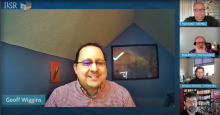
Tim Pozar talks with Leo Laporte and Tom Merritt about community broadband, particularly in San Francisco where Tim lives.

Video:
Search
Random Quote
Featured Reports
Tags in Tags
at&t
audio
cable
chattanooga
christopher mitchell
colorado
comcast
competition
county
economic development
economics
fcc
fiber-to-the-business
FTTH
hb129
incumbent
jobs
lafayette
legislation
level playing field
lobbying
louisiana
minnesota
misinformation
muni
network neutrality
north carolina
open access
policy
preemption
public v private
qwest
referendum
regulation
rural
salisbury
school
services
state laws
stimulus
tennessee
time warner cable
utility
verizon
Vermont
video
washington
Wi-Fi
Wireless
wisconsin
Links
- App-Rising
- Baller Herbst Law Group
- Blandin on Broadband
- Broadband Properties
- Camino Fiber Network Cooperative
- Center for Media Justice
- Communities United for Broadband
- Cook's Collaborative Edge
- Cortez Colorado Fiber Network
- Design Nine Blog
- Digital Redwoods
- Fast Roads - New Hampshire
- Fibernet Monticello
- Fighting the Next Good Fight
- Free Press
- Free UTOPIA
- Illinois Muni Broadband Communications Association
- Iowa Municipals
- Isen.blog
- Keep Us Connected - Illinois
- Lafayette Pro Fiber
- Lake County Fiber Optic Project
- Media Action Grassroots
- Mountain Area Information Network
- NC Broadband 4 Everyone
- New Rules Project
- North East Los Angeles Internet Service Cooperative
- OneCommunity
- Public Knowledge
- Reclaim the Media
- Rural Broadband Policy Group
- San Francisco Fiber
- SandyNet - Oregon
- Save NC Broadband
- Save the Internet
- Seattle FTTH
- Sibley and Renville County Fiber
- Southern Berkshire Technology Committee
- Southwest Minnesota Broadband Group
- Stop the Cap
- Susan Crawford
- Syracuse Municipal Broadband Initiative
- Tales of the Sausage Factory
- TeleTruth
- Tennessee Fiber Optics Communities
- The Red, Blue, and Green
- Tonka Connect - Minnesota
- West Central New Hampshire
- Wired West Massachusetts
- Wireless Future Blog
- iPaloAlto
- nDanville Blog

Comments
Just shy of 30 Synchronous FTTH communities in the USA today
I put together a Google map showing the cities in the USA that have Synchronous Fiber To The Home (FTTH).
http://is.gd/HCi80q
All of the cities that you talked about on the podcast are listed. I put an "i" informational marker on Kansas City when Google announced the first of their 5 Go Big With a Gig communities. When they start providing service I will add in their prices and tiers of service as well. In this day and age, it makes absolutely no sense to limit, throttle, restrict or reduce the upstream bandwidth as almost all Internet providers do today.
It is my hypothesis that with synchronous FTTH, the same bandwidth upstream as downstream, there is no need for bandwidth caps. If you purchase a a 10Mb/10Mb plan for $34.95 as you can in Wilson, NC via Greenlight and you need more than 10Mb upstream, you can buy the next "tier" of service. Thus the customer's upstream bandwidth becomes their De facto bandwidth cap. Who would not want 10Mbps X 24 hours a day X 365 days a year?
My guess is that net neutrality would be a thing of the past with synchronous broadband as well.
Do 100% of Cable providers know that they are throttled? I pay for 16MB/2Mb but am throttled to less than 100kbps/30Kbps the majority of the time. I can force the downstream pipe to reach 300Kpbs if I download two items and watch a third streaming content. But most of the time I get 7 X less than the FCC definition for broadband (768Kbps).. I marked the FCC on the map and put 768Kbps in their information box along with contact information.
Should a provider be allowed to call their service "Broadband" if the quantity falls below the FCC definition for Broadband? I think not.
Most consumers do not run DD-WRT, OpenWRT or tomato firmware on a supported device (firewall/router) and are oblivious that the reason their streaming content sputters and stops is because their provider, whom they are paying for service, is restricting their bandwidth. I check every time content sputters and its always because I am throttled, when I preform a trace route, its always my provider's links holding me back. The only time we see the marketed 16Mb/2Mb are the seconds during the speed test. Immediately following, when the speed test finishes, thanks to the DD-WRT firmware I see my bandwidth throttled back to next to nothing.
The arguments for throttling a customers bandwidth are equally lame as the throttling itself. Like any sane person would believe that there is a bit-torrent raging, DMCA violating person soaking up all the bandwidth on every cable trunk, in every neighborhood, in every city, in every county, in every state of the country. You gotta be kidding me. And when you consider that they are supposedly losing customers (churn) at the rate of hundreds of thousands per quarter, what exactly is their excuse for throttling your connection at 3am on a Tuesday when everyone else in asleep? Yet I see my bandwidth throttled 24 X 7. The only time its not throttled is when I run the speed test.
If the incumbents spent the billions of American tax dollars on Fiber as they promised they would back in the 1990s more cities would have FTTH today. If they put a fraction of the rumored $1.2 Million per week they spend lobbying state and national politicians to protect their monopoly, stifle innovation and prevent honest American competition there would be way more than 30 FTTH communities in the USA as of 2011. By my math there would be well over 300 communities, but under 2034 communities with FTTH as of 2011. Based on what Chattanooga spent to bring FTTH to their citizens.
The incumbents condemn themselves with their very inaction. Their words mean nothing, their actions since the 1990s show their true intentions. If they wanted to provide Fiber to their customers they would have already. It is telling that on the Synchronous FTTH map, every community listed, except perhaps a few of the Utopia communities in Utah, first asked their incumbents to provide FTTH to their citizens.
In every case the incumbents refused.
In every case the incumbents attempted to use the court system against the communities to prevent the spread of FTTH (MUNI). Never mind that their customers were telling them they wanted Fiber...another FUD argument, there are so many FUD arguments against FTTH. In every case the incumbent has failed. Whether the Citizen's United vs FEC Supreme Court decision will allow the incumbents to throw enough money into the political system to change the vote we will see.
In North Carolina they have attempted to create a state law preventing other cities other than Wilson and Salisbury from receiving Fiber To The Home. The incumbent providers have proposed bills to the North Carolina State legislature every year, for the last four years and have failed. They say that 400 percent more political money flowed to politicians in 2010 (after Citizen's United) compared to the 2008 election. Imagine what they will spend in 2012.
Americans have waited over 20 years for Fiber. In many areas the telcos promised fiber and received American tax money, additional taxes and fees (some still on monthly bills today) totalling more than $200 Billion for one reason...FIber.
WTF? Where's The Fiber?
Americans have two additional options, one is to run for office and bring FTTH to their community. Unfortunately in 16 states there are laws at the state level preventing competition already.
The other option is to move to one of the communities where they can get synchronous FTTH today. They do NOT need to wait one more year, five more years, seven more years, 10 more years...and for the industry to even suggest that it will take another 15 years I say, you have had over 20 years? WTF? Where's The Fiber?
I dropped Cable TV years ago. I have used Skype since it was introduced, 2004/2005 because my Cellular company thought I did not have any other options....their mistake. My Total Cost of Ownership (TCO) for phone service is less than $9 per month. Compared to a $150 per month Cellular bill, I save enough money to purchase a new ZaReason Linux PC, laptop, netbook every year from that savings alone.
When my cable Internet provider suggests that I take their latest greatest offer, triple-pay-BS whatever it is, I tell them emphatically that when they give me the Internet broadband I am paying for NOW and IF I continue to receive that broadband, un-throttled for the next 7 years, than and only than will I consider any other service that they offer. If everyone stood up for themselves and demanded service, how much would that churn cost the Cable company then?
I plan to move to one of the Synchronous FTTH communities, perhaps even one of the 5 Google cities, one thing is for sure I know Chattanooga is looking for small businesses to relocate to their city for the infrastructure, that synchronous broadband. Which begs a thought, those communities will recover economically faster than non-synchronous FTTH communities. They will have jobs, opportunity and innovation!
What the incumbents should consider, is they have betrayed and abused American TRUST for over 20 years. What makes them think they can continue their customer-no-service business practices going forward? Isn't it UN-American to stifle innovation and depress the economy by preventing small businesses from the bandwidth necessary to exist? I can envision a day, in a few years, where they could offer their Cable TV Service for FREE and customers would say not just NO, but heck NO...such is the disdain most Americans have for the Telco - Cable Co - Cellular incumbent oligopoly that controls and limits us today.
What they should be concerned about is what it might take to regain the TRUST they are so quick to abuse. Without TRUST, why would anyone do business with them?
Post new comment