We are seeing increasing evidence that competition alone is not sufficient to keep prices low. Though some communities (Monticello, MN; Powell, WY) have seen major prices drops as a result of competition from a publicly owned network, other communities have seen only price freezes or more modest increases when compared to non-competitive areas.
In Lafayette, Cox has just raised prices despite the new competition in the community.
Despite the recession, we have seen Comcast, Qwest, and others continue to profit handily as people scrimp to continue connecting to the Internet. The best method of ensuring Internet access becomes or remains affordable is with a network that is directly accountable to the community - one that puts community needs ahead of profits.
Advocates for better Internet access are breathing a sigh of relief in New York as the State Assembly nixed a budget bill amendment that would have undermined the state’s municipal broadband grant program.
Joplin, Missouri has announced a new broadband public-private partnership (PPP) with ALLO Fiber that should help boost competition and lower rates across the city of 52,000. The partnership poses a particular challenge to regional cable giant CableOne, which currently enjoys a monopoly over broadband access across a whopping 83 percent of the city.
The city-owned utility in Chicopee, Massachusetts has adopted the “fiberhood” approach to broadband deployment as it expands affordable access to city residents under the Crossroads Fiber brand. Chicopee Electric Light launched Crossroads Fiber in the summer of 2019 and since then the utility has been expanding access steadily to the rest of the city.
Massachusetts and New York officials hope to entice affordable housing property owners with new grant programs that would pay the retrofitting costs to expand high-speed Internet connectivity into decades-old affordable housing developments. Given that many of these multi-dwelling units (MDUs) were built before the advent of the Internet, a significant number of low-income tenants are living in buildings that are not wired to support reliable broadband connections or where residents can’t afford monopoly provider prices.
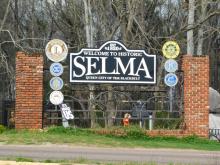
Selma, Alabama – and parts of 16 other communities in eight different counties – will soon be connected to a new, $230 million open access fiber network that aims to bring affordable broadband to historically marginalized sections of the Yellowhammer State. The deployment comes courtesy of a public private partnership (PPP) the city has struck with Meridiam Infrastructure and Meridiam-owned YellowHammer networks – an agreement that will launch the expansion of fiber access across Alabama’s Black Belt region.
Language added to a New York State budget bill is threatening to undermine a municipal broadband grant program established by Gov. Kathy Hochul’s office earlier this year. Buried near the bottom of the Assembly budget proposal is a Trojan horse legislative sources say is being pushed by lobbyists representing Charter Spectrum, the regional cable monopoly and 2nd largest cable company in the U.S. that was nearly kicked out of New York by state officials in 2018 for atrocious service.