Fiber to the Hilarity From Down Under

Due to the many exciting developments in the U.S., we rarely have time to peek at interesting projects overseas, but Australia is experiencing a political fight over its ambitious open access network. The opposition party wants to cut the costs of the project by transforming it from a FTTH network to a FTTN project - Fiber-to-the-node (or as I like to say, fiber-to-the-nowhere as it does nothing to address the largest bottleneck).

Thanks to Benoit Felten, we have been alerted to a "fabled Australian comic duo" sending up the opposition plan. Clarke and Dawe:

In Colorado, City of Durango Does Dark Fiber

This southwest Colorado community of about 17,000 contends with state barriers, but still makes the most of its fiber assets. We contacted Eric Pierson, Information Services Manager for the City of Durango, and Julie Brown, the City Finance Manager. The two shared some information on Durango's fiber network.

Currently, fifteen miles of City owned fiber run through town, providing connectivity for municipal and La Plata County facilities. Installation began in 1994 and the build-out continues. A combination of City capital improvement funds, grants from the State of Colorado Department of Local Affairs (DoLA), and funds from the Joint City/County Sales Tax fund have contributed to the $1.7 million network over the past twenty-one years.

Durango leases dark fiber to businesses and nonprofits to boost economic development and fund maintenance for the network. While dark fiber leasing could be far more lucrative, Durango's goal is to break even each year. According to Brown and Pierson, 2013 will yield about $10,000 to be shared with La Plata County and the Southwest Colorado Council of Governments.

Mercy Regional Medical Center partnered with Durango to install fiber as its primary bandwidth connection. Mercy is now an important anchor institution for a large medical office complex in what used to be an undeveloped area. In addition to the clinic, new businesses and residents continue to expand in the area.

According to Brown and Pierson, local ISPs that lease the fiber to serve residents and businesses have increased bandwidth for customers. A significant number of professionals that live in Durango work from home.

Even though Durango is not able to freely expand the network due to state restrictions that limit how it can use the fiber absent a costly referendum, community leaders found a way to optimize their network for residents and businesses. And should the state be wise enough to repeal this anti-competitive barrier, Durango will be well positioned to benefit local businesses.

Google Buys Provo Community-Owned Network

I just left the Broadband Communities Summit in Dallas, where I ran into many people doing great work to ensure everyone has access to affordable, reliable, and fast Internet networks.

Also while there, Google announced it had reached an agreement to offer Google Fiber in Provo by purchasing the municipal FTTH network. Provo has long been cited as a failure by critics of community-owned networks (even as it continued to attract jobs to the region).

Though Provo originally wanted to offer television, telephone, and Internet services directly using its trusted reputation in the community, the state legislature bowed to pressure from Comcast and CenturyLink (then Qwest) to limit local authority and tilt the playing field in favor of two distant corporations (that have still largely failed to invest in the networks needed by Utah communities). Provo was forced to use a wholesale-only business model.

That approach is rarely used today by communities that seek to build out the entire community at once because it is very difficult to generate enough revenue to pay the full costs of the network.

Despite Provo's struggles, Google recognized a community it wanted to work with. From Google's blog post:

Provo started building their own municipal network in 2004 because they decided that providing access to high speed connectivity was important to their community’s future. In 2011, they started looking for a partner that could acquire their network and deliver an affordable service for Provoans. We’re committed to keeping their vision alive, and, if the deal is approved and the acquisition closes, we’d offer our Free Internet service (5 Mbps speeds) to every home along the existing Provo network, for a $30 activation fee and no monthly charge for at least seven years. We would also offer Google Fiber Gigabit Internet—up to 100x faster Internet than today’s average broadband speeds—and the option for Google Fiber TV service with hundreds of your favorite channels. We’d also provide free Gigabit Internet service to 25 local public institutions like schools, hospitals and libraries.

ILSR Logo

At the Institute for Local Self-Reliance, we strongly encourage communities to own the essential infrastructure upon which they depend and we are dismayed to see such investments fail to meet their own goals or be privatized as has now happened in Provo.

But we also recognize the authority of communities to decide for themselves what the best path is and we believe that in these two isolated cases, Google Fiber will be a boon to the communities over the short term and resolve ongoing problems.

We have concerns over the longer term, but understand how difficult this business can be, particularly when state laws undermine the capacity of local governments to use the business models that give them the greatest opportunity to succeed.

As long as the Utah Legislature continues to kowtow to Comcast and CenturyLink demands, there would not have been an opportunity of Provo to fix the problems iProvo developed as a direct result of the initial crippling legislation.

I had an opportunity to speak with Milo Medin, head of Google Fiber, after his lunch keynote (which I hope to comment further on shortly) and he once again reiterated his (and Google's) opposition to states that restrict local authority to build these essential networks. He and we are on the same page - communities should be free to choose between building their own networks or partnering with others... or even doing nothing, though both Google and ILSR counsel strongly against that option.

One of the reasons Google chose Austin was because it was ready to work with them. In fact, we have long believed that if AT&T hadn't convinced the Texas Legislature to revoke local authority from communities, Austin Utilities probably would have already made network investments to benefit the community. As Google continues to look for partners, it will ignore entreaties from local governments that have had their heads in the sand, hoping they could avoid taking responsibility for ensuring great Internet networks.

Broadband at Speed of Light Cover

We continue to be excited that Google's investments in fiber access networks have changed the paradigm regarding access to the Internet. Those efforts have awakened the media to the pioneering work already being done in communities like Chattanooga, Lafayette, Bristol, Morristown, and many others (including Clarksville now). And we will continue to advocate for communities safeguarding their self-determination by having a measure of ownership over the networks on which they depend.

There is no doubt that communities are foolish to depend on distant national cable and DSL companies to build the next generation of Internet networks.

And don't be fooled by these two quick annoucements -- Google takes many months to negotiate agreements with local governments like Austin, Kansas City, and Provo. I would not be surprised to see another announcement or two in 2013, but would be surprised to see more than a handful more. Communities need to make their own plans, not hope for an outside entity to rescue them.

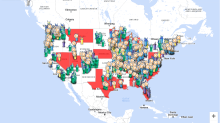
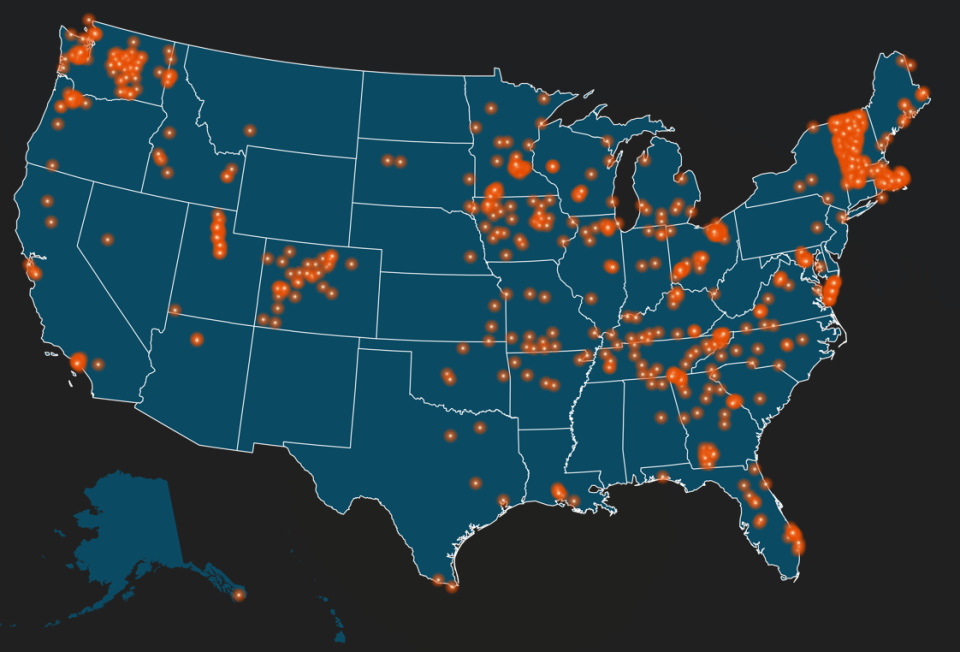
For cities that don't want to get into offering services, we have been identifying communities that have made smart investments in partnerships with other providers or on an open access basis -- see Danville, Palm Coast, Mount Vernon, Indianola, Princeton (IL), Cortez, and many others on our map of community-owned networks.

Google to Lease liNKCity Fiber in Missouri

Google Fiber is leasing fiber for transport from a small municipal FTTH network in North Kansas City. A recent Kansas City Business Journal article reports that Google finalized a deal with City Council for a 20-year agreement worth $3.2 million to lease fiber from liNKCity. This was more convenient for Google than laying (or attaching) its own fiber to get between areas it is building out.

Earlier this year, liNKCity made news by providing free gigabit service to North Kansas City Schools. The service was estimated to save the school district $500,000 over the next five years.

City and School District Team Up for Fiber in Royal Oak, Michigan

The City of Royal Oak, Michigan, a Detroit suburb and home to 57,000 residents, just announced it will be partnering with the school district to build a fiber optic network. According to the Royal Oak Patch, the cost is estimated at $400,000 and will link together eight city facilities and nine school buildings. According to the article:

“We are spending money now to save money long term,” said Manager of Information Systems Scott Newman.  “The new network will be much quicker, more reliable, have increased capacity, and cost the City less to operate.”

The cost of the project is being split between the City and the School District.  The School District will own and operate the network, and the City will have dedicated fiber for its share of the network’s capacity.  Construction is scheduled to begin this summer, and is planned to be completed this fall.

Update: We contacted Shawn Lewis-Larkin, Superintendent at Royal Oak Schools, for more detail on the project. He replied via email:

We obtained a price from a vendor for meeting the needs we have without constructing our own fiber network.  For 60 months the cost was going to be $775,656

vs.

Our 5 Year Cost to build and operate our cooperative network with the City will be $205,192.

Savings for Royal Oak Schools:  $570,463 Over 60 Months or yearly savings of $114,092

We are still amazed when public schools report such incredible savings, even though we encounter these savings on a regular basis.

Alex Marshall Examines Electricty / Internet Parallels

“My answer has been, as it is tonight, to point out these plain principles,” Roosevelt told the crowd. “That where a community -- a city or county or a district -- is not satisfied with the service rendered or the rates charged by the private utility, it has the undeniable basic right, as one of its functions of government, one of its functions of home rule, to set up ... its own governmentally owned and operated service.”

While FDR was referring to electricity in 1932, he could easily be speaking about today's critical need for Internet connectivity. Fortunately for a growing number of people in our country, many local leaders share his sentiments and those communities are investing in community owned telecommunications networks.

Government Technology recently reposted a Governing article by Alex Marshall, a Senior Fellow at the Regional Plan Association in New York City. The Director of our Telecommunications work, Christopher Mitchell, tells me he just bought Alex's new book from a local bookstore and has put it at the top of his reading list: The Surprising Design of Market Economies.

Marshall sees fiber optic connectivity as the utility of today and tomorrow. He explores the question of who should provide access - public institutions or the private market? In his research, Marshall finds that many local communities are not waiting for an "official" answer to that question and are taking control of getting their citizens online.

Marshall spoke with Nick Braden from the American Public Power Association (APPA):

“As was the case when America was electrifying a century ago, many unserved or underserved communities are ready, willing and able to take matters into their own hands, if necessary, to deploy the sophisticated broadband communications networks that will enable their communities and America to continue to be a leader in the global economy,” says Braden. “Many have already done so.”

Marshall notes the private sector's intense efforts to stop local public invest and how those efforts have permeated nineteen state legislatures, even contrary to overwhelming evidence of success. While court battles often end in the defendant's favor, when the private sector sues to stop municipalities and loses, the next step is money and lobbyists. Marshall talked to our own Christopher:

Given that the evidence shows that cities could offer better service at better prices than private companies, the logic behind these laws makes little sense. “They are the kind of arguments that can only work when accompanied by an army of lobbyists and large campaign contributions,” says Mitchell.

While the question will, of course, be debated far into the future, Marshall suggests a look back at 1932 for the right approach:

If the politicians falter, they should remember FDR’s words. It’s clear that fiber networks are a natural monopoly and need to be either run directly by the government, or so heavily regulated that it amounts to the same thing.

Catching Up on UC2B in Illinois - Community Broadband Bits Podcast #42

The home of the first web browser (Mosiac) is now building an exciting open access network - the twin cities of Urbana-Champaign received a stimulus award for UC2B (2B = Big Broadband). Episode #42 of Community Broadband Bits features Carol Ammons of the U-C Indepedent Media Center and Brandon Bowersox-Johnson, who is on the policy committee for the network and an Urbana City Council member.

In our interview, we discuss how Urbana-Champaign received a unique stimulus award - the only urban FTTH network and what they are doing with it. It came after many years of organizing and working toward a broadband solution for the community. Now the Independent Media Center is helping to teach people how to take full advantage of the network.

The network also received funds from the state, as Broadband Illinois has taken an active role in pushing for better broadband access and usage across the state.

We want your feedback and suggestions for the show - please e-mail us or leave a comment below. Also, feel free to suggest other guests, topics, or questions you want us to address.

This show is 20 minutes long and can be played below on this page or subscribe via iTunes or via the tool of your choice using this feed. Search for us in iTunes and leave a positive comment!

Listen to previous episodes here. You can can download this Mp3 file directly from here.

Thanks to Mount Carmel for the music, licensed using Creative Commons.

Carroll County Public Network Changes Education, Saves School Funds

Carroll County is a bedroom community, with a variety of economies all around it. Washington, D.C., Camp David, Baltimore, Harrisburg, Fort Detrick, and the Aberdeen Proving Ground are a few of the places surrounding Carroll County. There is very little major transportation infrastructure and no major waterways. Many of the county's 167,000 people commute daily to jobs outside of the bullseye.

Gary Davis, Chief Information Officer at the Carroll County Public Schools (CCPS) and Chairman of the Carroll County Public Network (CCPN) started at the school district in 2002 and immediately recognized that the telecommunications arrangement was insufficient.

Schools and other facilities were connected to the hub via 1.5 Mbps T1 connections and the whole wide-area-network was connected to the Internet via an expensive Frame Relay DS3 connection. The total cost ran as high as $600,000 per year.  

When CCPS approached Verizon about increasing bandwidth, Verizon’s proposal was extremely cost-prohibitive. Verizon wanted a long-term commitment that resulted in more than 10 times their current costs. Basically, Verizon would own the network but capital costs would be funded by CCPS and maintained with ridiculously high recurring fees. The return on investment for Verizon was just too low owing the the community demographics.

At that time, Davis met Robert Wack of the Westminster City Council and the two compared notes. Davis' vision for Carroll County Public Schools and Wack's ideas for Westminster and Carroll County were very similar. Both involved a high-speed network and Westminster is currently involved in its own municipal network project (to be covered in an upcoming post).

A 2003 feasibility study on telecommunications upgrades for the school and a second broader feasibility study for the entire county in 2005 resulted in a loose confederation between CCPS, Carroll County Government, Carroll Community College, and the Carroll County Public Library system. Davis is proud of the fact that the CCPN has broken through past silos. The public sector has worked together in Carroll County, preventing the rampant duplication of efforts that used to be the norm. 

Davis says the first focus was on improving educational opportunities with the network. The four entities were able to work together as the CCPN to secure better pricing by leveraging economies of scale. Carroll County applied $7.4 million from its capital project fund to get the project started, the original estimate in the 2005 feasibility study. CCPS also applied funds from its technology budget that had originally been earmarked for upgrades to phone switches.

Carroll County Schools Logo

Switching from the old telephone system to a VoIP system for the district's approximately 1,000 phone lines amounts to about 40% of today's savings at CCPS. Davis estimates annual savings to CCPS to be around $400,000, which also factors in costs associated with the network. Turning off old T1 connections and abandoning the pricey DS3 connection also contribute significantly to annual savings. Connections between district facilities now vary between 1 and 10 gigs.

Reducing spending is great, he says, but what really matters is the way the network improves the ability to educate. The old T1s and DS3 would not have been able to deliver the bandwidth for applications educators use today. For example, CCPS is experimenting by using the network to connect kids across the county who want to participate in Advanced Placement classes. These classes might not be offered otherwise because there may not be enough students at one location. In the pilot program, several students from schools across the county participate through video streaming, concentrating educator efforts and creating a more vibrant learning experience.

CCPS shares a 500 Mbps Internet connection with the local public library, ten times faster than the old DS3. The public library is also on a separate power grid, which makes it attractive as a secure back up data center for the school district, Carroll County Government, and Carroll Community College.

As the network has expanded, the CCPN has used a variety of funding. A state awarded BTOP grant, with matching funds from the county economic development fund, added to the original school district and county investment. Davis estimates that the county has invested about $12 million over the course of 10 years.

The network now consists of three rings with the fourth central ring in Westminster, the county seat. "Spokes" lead out to the southern end of the county, where community leaders hope to connect with Frederick or Baltimore County. Eight municipalities use the network's 110 miles of fiber over 450 square miles in Carroll County. There is one school in the northern part of the county that is not connected with fiber but uses high speed wireless supported by the fiber.

The network has changed education in Carroll County and done so with significant savings. Davis acknowledges that the change came about through the work of the CCPN Administration, which he describes as an ideal model. "Each member organization contributes its leaders' expertise and what all members CAN do together, they DO do together," says Davis.

For CCPS, the results speak for themselves.

Ashland, Oregon, Wants To Increase Local Internet Commerce

Ashland, Oregon, home to Ashland Fiber Net (AFN), may soon be taking aggressive steps to bring more online business to the community. According to an Ashland Daily Tidings article, the City Council is seeking public input into proposed goals for the community. A targeted effort to bring more Internet-based businesses to town is one of the draft goals. The goal seems logical for a community with a network already in place.

AFN serves about 6,000 business and residential customers in this community of 20,000 people. In addition to AFN's retail services, four other local ISPs operate on the infrastructure.

The network is HFC, a cable network, but with far fewer homes on each local loop than the big cable companies typically have. This means that subscribers are far more likely to consistently achieve advertised speeds. Residential services range from $35 per month for 6 Mbps / 1 Mbps service to $75 monthly for 20 Mbps / 5 Mbps. AFN is one of the rare community-owned networks to enforce monthly data caps.

Fiber to the business is an option, but popular business packages are $65 per month for 15 Mbps / 4 Mbps and $85 per month for 25 Mbps / 5 Mbps. AFN also offers rural wireless service to a limited area. 

Ashland also sees some common sense advantages to increasing the number of small home based businesses that use its fiber resource. To that end, AFN provides a "Home Office" business Internet package. From the article:

Councilor Greg Lemhouse has championed the goal to increase the number of Internet-based businesses.

"It's an aggressive goal that says the city is committed to growing this industry," he said.

Lemhouse said many such businesses can be operated out of people's homes.

People who want to run Internet-based businesses often are well educated and are committed to their communities, he said.

Home Internet businesses can also be family-friendly, allowing parents to work from home and stay connected to their children, Lemhouse said.

With the discussion also comes some analysis of what sort of Internet businesses are already keeping shop in town. Also from the article:

It's not clear how many Internet-based businesses exist in Ashland.

Defining an Internet-based business can be tricky.

Some Ashland businesses rely completely on the Internet, while others use it to augment their businesses, said Katharine Flanagan, director of sales, marketing and Ashland's Visitor Bureau for the Ashland Chamber of Commerce.

The majority of Ashland businesses now use the Internet as a main tool for business operations, she said. Some are like Blackstone Audio, an audio book company that has corporate-style office space but relies on the Internet to grow and enhance its business, Flanagan said.

Online e-commerce helps drive Ashland businesses like Yala, which sells everything from clothing to travel bedding, and Natura Health Products, a seller of vitamins and other health products, she said.

MassBroadband 123 Lights Up in Rural Massachusetts

The Massachusetts Broadband Initiative's (MBI) MassBroadband 123 network is becoming a reality. On March 28th, MBI lit up the first 35-mile stretch, linking Sandisfield, traveling through Otis, and connecting at the Springfield Technical Community College Technology Park hub. The inaugural connection was the first in a series of build outs that are scheduled to be completed by July 2013 [PDF of map and schedule].

MassBroadband 123 is the middle mile open access network snaking its way across central and western Massachusetts. The project, funded with $40 million in state bond proceeds and $45.4 million in stimulus funding, is scheduled to bring the 1,200 mile network to the anchor institutions in approximately 120 communities. While MassBroadband 123 will not offer last-mile connectivity to residents, it will bring the possibility to many rural areas that have little or no options today. Communities with their own networks, like Leverett, will be able to connect with MassBroadband 123. Hopes are that the open access nature of the network will inspire private providers to offer more last-mile connections.

MassLive.com reported on the first use of the network by school children in rural Otis. Kids at Farmington River Elementary School connected in Spanish with kids from Columbia and learned about physics from the NASA Goddard Space Fight Center in Maryland:

“It was really excellent,” said Mary G. Turo, principal of Farmington River Elementary, in a phone interview. 

...

“We are a little isolated,” Turo said. “Having the capability to bring the outside world to us, you cannot put a price on it. We want our kids to be ready for the future. In order to be ready to for the future they have to know what is going on outside their hometown .”

Judith Dumont, director of MBI, compares the expansion of the network to government efforts to expand electricity in the 1930s. From the article:

Back then, the profit motive wasn’t enough to bring electricity to small towns, so the government stepped in to help build economies.

“This project says it is not OK for these communities to be left out of the 21st century economy,” she said.

While we agree with Judith regarding the need for public and private investment, we would go a bit further to note that when the federal government stepped in with electrification, it made sure that the connections were controlled by the community via coops and local governments. We wish our present federal government learned those lessons too and didn't believe that throwing money at Wall Street firms would solve rural problems.

We believe MassBroadband 123 is an important tool to help rural Massachusetts communities but we believe further public investment will be necessary to make sure everyone is connected. And where public dollars are spent, networks should be accountable to the community - now and in the future.